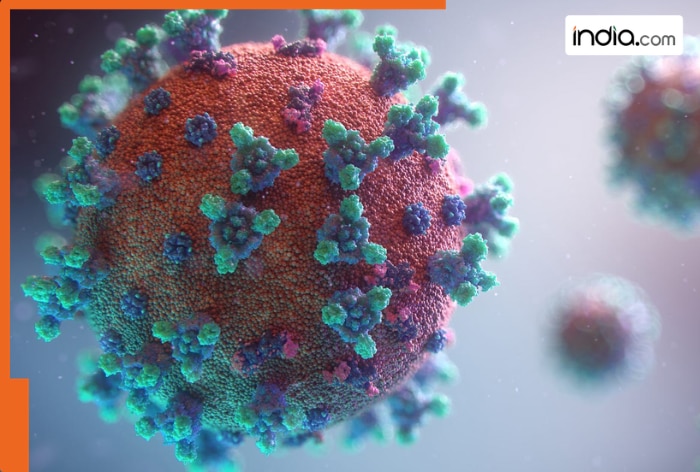
New 'Cicada' COVID Variant BA.3.2: US Emergence and Global Monitoring
A highly mutated COVID-19 variant, BA.3.2, nicknamed 'Cicada,' has emerged in the United States and over 20 other countries. Health officials worldwide, including the CDC and WHO, are closely monitoring its immune escape characteristics, though its prevalence in the US remains low. While not yet widespread in India, global health vigilance is advised due to its potential for future spread.
Key Highlights
- BA.3.2, nicknamed 'Cicada,' is a new, highly mutated COVID-19 variant.
- First detected in South Africa (November 2024), now in over 20 countries including US.
- Possesses 70-75 spike protein mutations, indicating potential immune evasion.
- Currently at low levels in the US but under close monitoring by health agencies.
- Existing vaccines likely offer protection against severe illness, but efficacy against infection may be reduced.
- Indian health authorities are monitoring for potential impact and spread.
A new and heavily mutated lineage of SARS-CoV-2, officially designated BA.3.2 and informally nicknamed 'Cicada,' has captured the attention of public health authorities globally, including the Centers for Disease Control and Prevention (CDC) in the United States and the World Health Organization (WHO). This variant, first identified in a respiratory sample in South Africa in November 2024, began to spread more noticeably in 2025 and has since been detected in at least 23 countries across various continents.
The nickname 'Cicada' stems from the insect's characteristic of remaining dormant underground for extended periods before emerging, mirroring the variant's quiet circulation before its recent prominence in surveillance systems. BA.3.2 is genetically distinct from the JN.1 lineages (such as XFG and LP.8.1) that have recently predominated in the United States. A key characteristic of BA.3.2 is its substantial number of mutations, specifically 70 to 75 substitutions and deletions in its spike protein. This high mutation count is a primary reason for concern, as these changes are believed to confer 'immune escape characteristics,' suggesting that the variant may partially evade the protection offered by existing vaccines or prior infections.
In the United States, BA.3.2 has been detected through multiple surveillance methods. The CDC reported its presence in nasal swabs from four travelers, three airplane wastewater samples, clinical samples from five patients, and 132 wastewater samples across 25 states. The first documented entry into the U.S. was in June 2025 via a traveler from the Netherlands, with the first clinical specimen confirmed in January 2026. Despite its widespread detection across numerous states, the current prevalence of BA.3.2 in the U.S. remains relatively low, accounting for approximately 0.19% to 0.55% of total genetic sequences analyzed in national surveillance as of February-March 2026. This indicates that while it is present and spreading, it is not yet the dominant strain, with XFG and its sublineages currently holding that position.
Internationally, BA.3.2 has demonstrated a more significant presence in some European countries. Between November 2025 and January 2026, it accounted for about 30% of sequenced samples in Denmark, Germany, and the Netherlands. This elevated prevalence in certain regions underscores its potential for wider circulation. The WHO officially classified BA.3.2 as a 'Variant Under Monitoring' (VUM) on December 5, 2025, a classification that highlights its need for close observation due to its genetic changes and potential implications. It's important to note that the WHO typically assigns Greek letters to 'Variants of Concern' or 'Variants of Interest,' a designation BA.3.2 has not yet received, signifying that while it's being watched, it hasn't reached the highest threat levels.
Regarding the severity of illness, early observations suggest that BA.3.2 does not currently cause more severe disease compared to existing variants. All reported patients in the U.S. from whom clinical samples were taken survived. However, experts like Andrew Pekosz, a virologist at Johns Hopkins, caution that its continued circulation and evolution increase the likelihood of it becoming a more efficient virus in terms of spread and disease causation. Robert H. Hopkins Jr., medical director of the National Foundation for Infectious Diseases, also expressed concern that the sheer number of mutations makes it less likely for current vaccines to be as highly effective against the variant in preventing infection, though they are still expected to offer meaningful protection against severe outcomes.
For an Indian audience, the news of BA.3.2 is relevant. While there is no confirmed widespread circulation of the 'Cicada' variant in India currently, its international spread to over 20 countries, including in Europe and Africa, necessitates vigilance. India's health authorities are actively monitoring the situation, particularly through surveillance at airports and other entry points, given that international travel is a primary driver of variant introduction. India's robust experience in managing previous COVID waves, coupled with widespread vaccination efforts, positions the country to respond to emerging threats. The current assessment is that while BA.3.2 might lead to increased infections due to its immune escape potential, there is no immediate indication of increased severity.
Public health experts continue to emphasize the importance of ongoing genomic surveillance, updated vaccination where available, and adherence to appropriate precautions to mitigate the potential impact of this and other evolving SARS-CoV-2 variants. The emergence of BA.3.2 serves as a reminder that the SARS-CoV-2 virus continues to evolve, necessitating continuous monitoring and adaptive public health strategies.
Frequently Asked Questions
What is the 'Cicada' COVID variant (BA.3.2)?
The 'Cicada' variant, officially known as BA.3.2, is a new, highly mutated lineage of the SARS-CoV-2 virus. It is distinct from recent dominant variants like JN.1 and is characterized by 70-75 mutations in its spike protein, which may allow it to evade existing immunity.
Where has BA.3.2 been detected?
BA.3.2 was first identified in South Africa in November 2024. It has since been detected in over 20 countries, including the United States (in 25 states via wastewater and clinical samples) and several European nations like Denmark, Germany, and the Netherlands.
Are current COVID-19 vaccines effective against BA.3.2?
Due to its high number of mutations, experts believe BA.3.2 has 'immune escape characteristics,' meaning it might partially reduce protection from current vaccines and prior infections. However, global health bodies generally expect existing vaccines to still offer meaningful protection, especially against severe illness, hospitalization, and death.
What are the symptoms of the 'Cicada' variant?
Early observations suggest BA.3.2 does not present entirely new symptoms, but some reports indicate a severe sore throat as a common symptom, alongside other typical COVID-19 symptoms. There is no clear evidence yet that it causes more severe illness.
How concerned should India be about the BA.3.2 variant?
While BA.3.2 has not been widely reported in India, its international spread means Indian health authorities are actively monitoring the situation, particularly through travel surveillance. India's experience and vaccination coverage provide preparedness, but continued vigilance is important.