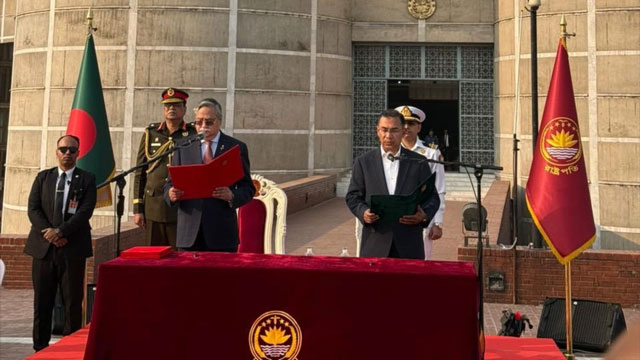
Bangladesh Finance Minister Vows Deregulation, End to Patronage Economy
Bangladesh's newly appointed Finance and Planning Minister, Amir Khosru Mahmud Chowdhury, has declared the country "over-regulated" and pledged to dismantle its patronage-driven economic system. On his first day in office, he emphasized immediate deregulation, institutional reforms, and fostering an inclusive economy.
Key Highlights
- New Finance Minister Amir Khosru pledges significant deregulation in Bangladesh.
- Minister identifies Bangladesh as an "over-regulated country" due to patronage politics.
- Vows to dismantle the "patronage-driven economy" for a level playing field.
- Prioritizes institutional reform, transparency, and economic inclusivity.
- Aims to reduce the cost of doing business and attract investment.
- Statements made on his first working day after new government formation.
Bangladesh's newly appointed Finance and Planning Minister, Amir Khosru Mahmud Chowdhury, has emphatically stated that the country has become "an over-regulated country" and pledged to usher in an era of serious deregulation and liberalization. These significant remarks were made on Wednesday, February 18, 2026, his first working day after assuming charge of the Finance Ministry under the new government led by Prime Minister Tarique Rahman.
Chowdhury, a prominent member of the Bangladesh Nationalist Party (BNP), outlined his immediate priorities, placing institutional reform, economic inclusivity, broad-based economic participation, and deregulation at the forefront of his agenda. He candidly acknowledged that state institutions are currently in a "very bad shape" and underscored that rebuilding governance structures is paramount for sustainable economic management. His vision includes restoring professionalism, transparency, and efficiency within these institutions, asserting that no program, however ambitious, can succeed without these foundational elements.
At the core of his reformative approach is a commitment to move Bangladesh away from what he termed a "patronage-driven economic model." He argued that years of patronage politics have resulted in layers of excessive regulations, which have not only increased the cost of doing business but also stifled fair competition. This, he explained, has hindered investment and limited economic opportunities for many. The Finance Minister emphasized the need to "democratize the economy" and create a "level playing field" where every citizen has an equal right to participate in economic activities and benefit from the country's growth.
His statements resonate with earlier remarks he made as a BNP Standing Committee member in August 2025 and January 2026, where he consistently advocated for urgent deregulation to boost investment and combat corruption. He had previously highlighted the cumbersome regulatory environment, citing examples such as the requirement for 19 different permissions to open a restaurant, which he believes actively discourages investment. He also pointed out Bangladesh's low ranking in the ease of doing business index, reinforcing the need for systemic changes.
The appointment of Amir Khosru Mahmud Chowdhury as the Finance and Planning Minister comes after the general elections held on February 12, 2026, which saw the Bangladesh Nationalist Party (BNP) secure a landslide victory. This election marked a significant political shift in Bangladesh, following a period of turmoil that included the July Revolution of 2024, which led to the resignation of former Prime Minister Sheikh Hasina and the subsequent governance by an interim government under Professor Muhammad Yunus.
Chowdhury's commitment to deregulation and institutional reform is seen as a critical step towards improving investor confidence and fostering a more dynamic economy. He reiterated that a simplified regulatory framework would reduce barriers, enhance competitiveness, and ultimately boost investor sentiment. The new government faces the monumental task of addressing pressing economic challenges, including inflation and the need for robust economic recovery. The minister expressed confidence that easing regulatory burdens and making business activities simpler would lead to improved economic indicators and regain momentum for the country's fragile economy.
For an audience in India, this news carries significant relevance. Bangladesh is a key economic partner and neighbor, and its economic stability and policy directions directly impact regional trade, investment, and geopolitical dynamics. The focus on reducing business costs and promoting a more transparent, level playing field could open new avenues for Indian businesses and investors looking at Bangladesh. The dismantling of a patronage-based economy, if successful, could also serve as an important regional precedent for good governance and inclusive growth.
Frequently Asked Questions
Who is the new Finance Minister of Bangladesh and what are his immediate priorities?
Amir Khosru Mahmud Chowdhury is the newly appointed Finance and Planning Minister of Bangladesh, sworn in on February 17, 2026. His immediate priorities include serious deregulation, institutional reform, ensuring economic inclusivity, and fostering broad-based economic participation.
Why does the Finance Minister believe Bangladesh is 'over-regulated'?
Minister Chowdhury attributes Bangladesh's 'over-regulated' status to years of 'patronage-based politics'. He argues that this has created excessive layers of regulations, which in turn increase the cost of doing business, limit fair competition, and contribute to poor institutional health.
What is meant by a 'patronage-driven economy' and how does the Minister plan to address it?
A 'patronage-driven economy' refers to a system where economic benefits and opportunities are largely determined by political favoritism rather than merit or fair competition. Finance Minister Chowdhury vows to dismantle this model by promoting deregulation, liberalization, and establishing a 'level playing field' to ensure equal rights for all citizens to participate in the economy.
How will these economic reforms impact the ease of doing business in Bangladesh?
The proposed reforms, particularly deregulation and streamlining institutional processes, are aimed at significantly lowering the cost of doing business and removing barriers to investment. This is expected to improve Bangladesh's ranking in global ease of doing business indices and attract more domestic and foreign investment.
What is the broader political context of these statements?
These statements come from the new government led by Prime Minister Tarique Rahman of the BNP, which assumed power after the general elections on February 12, 2026. This followed the July Revolution of 2024 and a period under an interim government, signifying a major political and economic transition in Bangladesh.