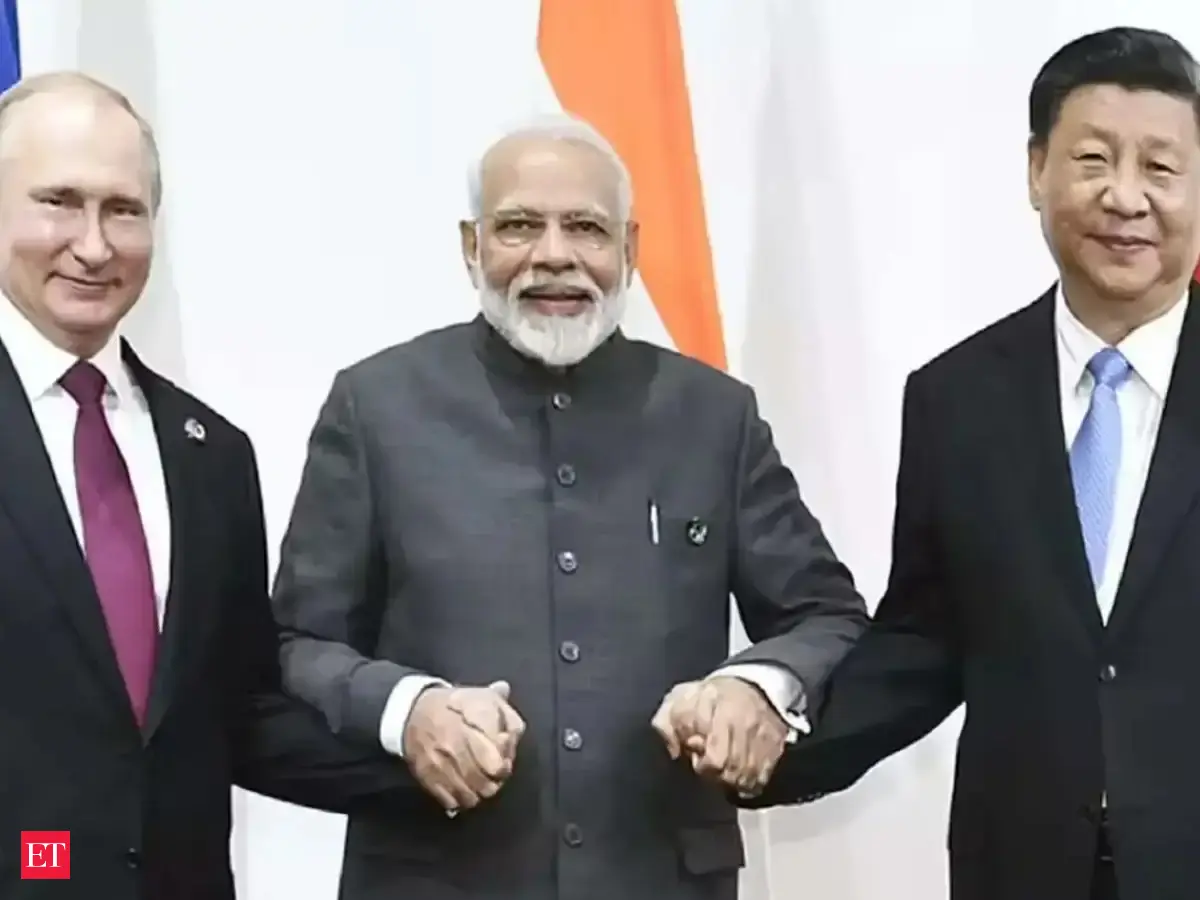
PM Modi Urges Putin: Move From 'Endless War' to 'End of War'
Prime Minister Narendra Modi recently urged Russian President Vladimir Putin to transition from an 'endless war' to an 'end of war' regarding the Ukraine conflict. The statement, made during a bilateral meeting at the SCO summit in Bishkek, Kyrgyzstan, underscores India's consistent call for dialogue and diplomacy as the path to peace.
Key Highlights
- PM Modi advocated for peace to Putin at the SCO Summit in Bishkek.
- Modi stressed moving from 'endless war' to 'end of war' for humanity's well-being.
- India reiterates its consistent stance on dialogue and diplomacy for Ukraine conflict.
- The meeting occurred on the sidelines of the Shanghai Cooperation Organisation summit.
- This follows Modi's earlier remark that 'today's era is not an era of war' in 2022.
- Global leaders were gathered for the high-profile SCO meeting in Bishkek.
Prime Minister Narendra Modi, during a significant bilateral meeting with Russian President Vladimir Putin on the sidelines of the Shanghai Cooperation Organisation (SCO) summit in Bishkek, Kyrgyzstan, delivered a powerful message, asserting that the 'world must move from endless war to end of war.' This recent interaction, which took place on August 31, 2026, saw PM Modi emphasize India's steadfast commitment to peace and its belief that 'every day spent in war sets humanity back.'
Modi's statement is a continuation of India's principled and consistent diplomatic posture regarding the ongoing conflict in Ukraine. He highlighted that India supports all efforts towards peace and will continue to do so, reiterating the nation's firm conviction that "a peaceful resolution to all issues at the earliest is the call of humanity." This direct appeal to the Russian President underscores India's role as a voice for de-escalation and negotiated settlement on the global stage.
The meeting in Bishkek follows a similar high-profile interaction between the two leaders at the SCO Summit in Samarkand in September 2022, where PM Modi famously told Putin that 'today's era is not an era of war.' The latest remarks in Bishkek reinforce this earlier sentiment, pushing for concrete steps towards ending hostilities and focusing on the broader well-being of humanity. The continued emphasis on moving away from conflict reflects India's deep-rooted values of peace, deeply influenced by figures like Mahatma Gandhi and Lord Buddha, whose philosophies advocate for non-violence and dialogue.
The SCO summit itself, held between August 31 and September 1, 2026, in Bishkek, served as a crucial platform for regional and international discussions amidst a complex geopolitical landscape. The gathering brought together leaders from member states, observers, and dialogue partners, including China's Xi Jinping, Pakistan's Prime Minister, and various Central Asian heads of state. While the summit addressed a wide array of topics, from economic cooperation to regional security, the bilateral discussions between key leaders, particularly Modi and Putin, garnered significant international attention due to the ongoing Russia-Ukraine conflict.
India has consistently championed dialogue and diplomacy as the most viable path to resolve the conflict. Its foreign policy has remained independent, navigating complex international pressures while advocating for humanitarian concerns and the cessation of hostilities. This approach has allowed India to maintain relations with both sides of the conflict while urging for a peaceful resolution. PM Modi's direct appeal to President Putin is seen as a significant diplomatic move, reflecting India's growing stature and its desire to contribute constructively to global peace efforts.
The implications of such a statement from a major global leader like PM Modi are substantial. It adds to the growing international chorus calling for an end to the protracted conflict, potentially influencing Russia's diplomatic considerations. For the Indian audience, this news reinforces the country's commitment to global peace, its diplomatic prowess, and its ability to engage with major world powers on critical issues, even those as sensitive as the Ukraine war. The message from Bishkek resonates with India's historical stance of non-alignment and its role as a proponent of multilateralism and peaceful coexistence.
In essence, the news from the SCO summit in Bishkek confirms India's consistent and firm position on the Ukraine conflict, with PM Modi directly appealing to President Putin to prioritize an 'end of war' over 'endless war,' highlighting the collective human cost of continued hostilities.
Frequently Asked Questions
What was PM Modi's key message to President Putin at the recent SCO Summit?
At the recent SCO Summit in Bishkek, Kyrgyzstan, Prime Minister Narendra Modi urged Russian President Vladimir Putin to transition from an 'endless war' to an 'end of war' in Ukraine, emphasizing that 'every day spent in war sets humanity back.'
When and where did this meeting between PM Modi and President Putin take place?
The meeting between PM Modi and President Putin occurred on August 31, 2026, on the sidelines of the Shanghai Cooperation Organisation (SCO) summit held in Bishkek, Kyrgyzstan.
Is this the first time PM Modi has spoken to Putin about ending the Ukraine conflict?
No, this is not the first time. PM Modi notably told President Putin that 'today's era is not an era of war' at the SCO Summit in Samarkand in September 2022. The recent statement reinforces India's consistent call for peace.
What is India's broader stance on the Russia-Ukraine conflict?
India has consistently maintained a principled stance, advocating for dialogue and diplomacy as the means to resolve the conflict. It supports all efforts towards peace and emphasizes the need for a peaceful resolution for the well-being of humanity, upholding an independent foreign policy.
Why is PM Modi's statement significant for an Indian audience?
For an Indian audience, PM Modi's direct statement is significant as it reiterates India's commitment to global peace, highlights its diplomatic influence, and demonstrates its ability to engage constructively with major world powers on critical international issues, reflecting India's historical ethos of peace and non-alignment.