Trump Claims US-Iran Talks with Ghalibaf Amidst Denials and Regional War
Former US President Donald Trump claimed the United States is negotiating with Iranian parliamentary speaker Mohammad Bagher Ghalibaf to end the West Asian conflict. However, Ghalibaf and Iran's Foreign Ministry swiftly denied these assertions, calling them 'fake news' or 'desires as news' aimed at market manipulation, amidst an ongoing regional war and mediation efforts by Pakistan.
Key Highlights
- Trump claimed direct/indirect negotiations with Iran's parliamentary speaker, Mohammad Bagher Ghalibaf.
- Ghalibaf and Iran's Foreign Ministry explicitly denied any talks.
- Trump made claims in a New York Post interview, threatening Iran's infrastructure.
- Ghalibaf characterized Trump's statements as 'fake news' to manipulate markets.
- Pakistan has reportedly been mediating between Washington and Tehran.
- The claims surface amid an ongoing conflict in the West Asia region.
In a significant development reported around late March 2026, former United States President Donald Trump asserted that the U.S. was engaged in negotiations with Mohammad Bagher Ghalibaf, the parliamentary speaker of Iran, concerning the ongoing conflict in West Asia. This claim was prominently featured in an interview Trump gave to the New York Post. Trump reportedly stated that he would ascertain 'in about a week' whether Ghalibaf was a viable partner for the U.S. in these discussions.
However, these assertions were met with immediate and unequivocal denials from the Iranian side. Mohammad Bagher Ghalibaf himself took to social media, specifically X, to refute Trump's claims, branding them as 'fake news' and an attempt to 'promote desires as news while threatening our nation at the same time.' He further suggested that such statements were intended to 'manipulate the financial and oil markets and escape the quagmire in which the U.S. and Israel are trapped.' Iran's Foreign Ministry spokesperson also corroborated Ghalibaf's denial, emphasizing that no 'direct' talks had occurred, only messages exchanged through intermediaries.
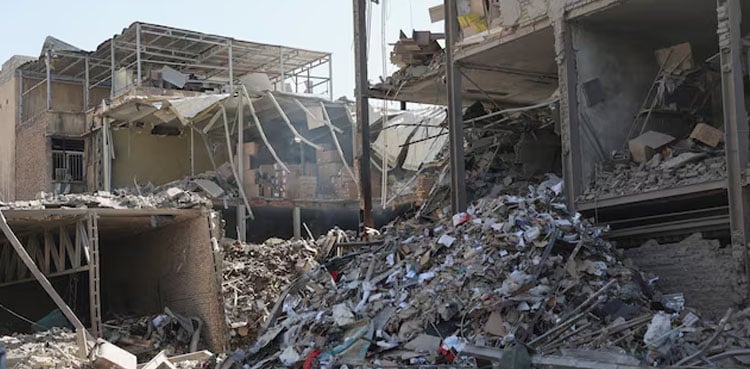
The context of these claims is a volatile period in West Asia, characterized by an ongoing conflict involving the U.S., Israel, and Iran. Reports indicate weeks of U.S. and Israeli strikes against Iranian nuclear and military facilities, alongside retaliatory actions. Trump, during the same period, issued stark warnings, threatening 'widespread destruction of Iran's energy resources and other vital infrastructure, including desalination plants,' if a deal to end the war was not reached 'shortly.' He also previously gave Iran a 48-hour ultimatum to reopen the Strait of Hormuz, a critical shipping route, under threat of U.S. attacks on its power plants.
Interestingly, despite the official denials, certain reports from March 2026 suggested that the Trump administration had been considering Ghalibaf as a potential negotiating partner or even a future leader of Iran. This perspective viewed Ghalibaf, a former Revolutionary Guard commander and a figure with significant influence across Iran's military and political systems, as someone who could credibly engage with Washington while maintaining domestic legitimacy. However, Ghalibaf's public stance has consistently been fiercely critical of the U.S. and Israel, often echoing or even exceeding the warnings issued by the Islamic Revolutionary Guard Corps.
Mediation efforts have reportedly been underway to de-escalate tensions and facilitate dialogue. Pakistan, alongside Turkey and Egypt, has emerged as a key intermediary, with its army chief and prime minister holding contacts with both Washington and Tehran in an attempt to broker a ceasefire. Trump had also claimed that Iran agreed to allow 20 ships carrying oil through the Strait of Hormuz as a 'sign of respect,' attributing this authorization to Ghalibaf. This particular claim was also part of the broader narrative of 'progress' that Trump tried to portray in the midst of conflicting signals and rising oil prices, which Ghalibaf suggested were influenced by 'fake news' to sway markets.
The overall situation highlights a complex diplomatic dance where public statements from leaders are often contradicted by the other side, and underlying geopolitical tensions remain high amidst active conflict and backchannel efforts. The India Today article accurately captured Trump's specific claim at the time, which was a significant 'face' to put on the claimed negotiations, even if immediately disputed by Iran. The article reflects a snapshot of a highly charged and uncertain period in international relations, where information, and its interpretation, plays a crucial role.
Frequently Asked Questions
What did former President Trump claim regarding US-Iran negotiations?
Former US President Donald Trump claimed in a New York Post interview that the United States was negotiating with Mohammad Bagher Ghalibaf, Iran's parliamentary speaker, to resolve the ongoing conflict in West Asia.
How did Mohammad Bagher Ghalibaf respond to Trump's claims?
Mohammad Bagher Ghalibaf vehemently denied Trump's assertions, stating on social media that 'no negotiations have been held with the US' and that Trump was promoting 'desires as news' or 'fake news' to manipulate financial and oil markets.
What was the broader context of Trump's claims and Ghalibaf's denials?
These conflicting statements emerged amidst a significant regional conflict in West Asia involving the US, Iran, and Israel, characterized by military strikes and high geopolitical tensions. Trump also issued threats against Iran's infrastructure, while Pakistan reportedly engaged in mediation efforts.
Why is Mohammad Bagher Ghalibaf a significant figure in these discussions?
Mohammad Bagher Ghalibaf is Iran's parliamentary speaker and a highly influential insider with a background in the Islamic Revolutionary Guard Corps. Despite his public anti-US stance, some in the Trump administration reportedly viewed him as a potential 'workable partner' or even a future leader, capable of engaging in negotiations while maintaining credibility within Iran's power structure.
Were any other countries involved in mediating talks between the US and Iran?
Yes, alongside Turkey and Egypt, Pakistan reportedly emerged as a key intermediary, with its military and political leaders engaging both Washington and Tehran in efforts to broker a ceasefire and facilitate dialogue during this period of heightened tensions.