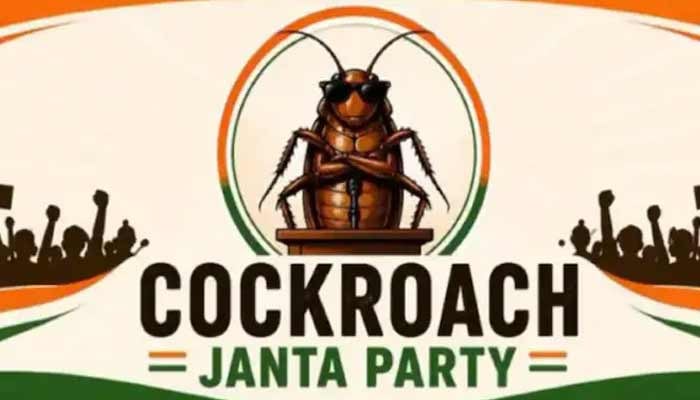
Delhi HC to hear plea against X account block of Cockroach Janta Party
The Delhi High Court is set to hear a plea filed by Abhijeet Dipke, founder of the satirical 'Cockroach Janta Party,' challenging the blocking of the party's X (formerly Twitter) account. Dipke alleges the account was suspended on national security grounds after being hacked, prompting him to seek judicial intervention. The movement gained rapid traction in response to remarks made by Chief Justice of India Surya Kant.
Key Highlights
- Founder challenges X account suspension in Delhi High Court.
- Allegations of hacking and national security concerns raised.
- Satirical movement gained significant social media following.
- Legal challenge follows rapid viral spread of the party.
- Case highlights issues of social media regulation and free speech.
Abhijeet Dipke, the founder of the satirical political movement 'Cockroach Janta Party' (CJP), has approached the Delhi High Court to challenge the blocking of the party's official X (formerly Twitter) account. The plea is expected to be heard soon. Dipke alleges that the X account was suspended on the grounds of national security, following a directive from the central government based on inputs from the Intelligence Bureau (IB). This action was taken under Section 69(A) of the Information Technology Act, 2000, which allows the government to restrict public access to information in the interest of national sovereignty, security, public order, or for preventing incitement to offenses. The account reportedly remains accessible from outside India.
The CJP movement rapidly gained prominence on social media, becoming a viral sensation for its satirical content and commentary on various issues affecting Indian youth, including unemployment, rising fuel prices, and delays in competitive examinations. The movement's inception is directly linked to remarks made by Chief Justice of India Surya Kant during a Supreme Court hearing on May 15, 2026. The Chief Justice reportedly compared unemployed youth to "cockroaches" and "parasites of society." While Justice Kant later clarified that his remarks were intended for individuals with "fake and bogus degrees" and not the general youth population, the initial comment had already sparked widespread outrage and fueled the creation of the CJP. The CJP was officially founded by Dipke on May 16, 2026, with its name being a parody of the ruling Bharatiya Janata Party (BJP).
Dipke claims that the party's social media accounts, including its X and Instagram accounts, were hacked before being suspended. He also stated that the party's website was taken down and its backup X account was removed, accusing the Centre of acting in a "dictatorial" manner. In a post from his personal X handle, Dipke expressed that the "Cockroach Janta Party's official Instagram account has been hacked. We have lost access to the account." He further asserted that his personal Instagram account was also compromised.
The rapid rise of the CJP saw its Instagram account garnering over 20 million followers in a short period, reportedly surpassing the follower counts of major political parties like the BJP and the Indian National Congress. The movement has attracted support from various personalities and opposition political leaders, including Mamata Banerjee, Abhishek Banerjee, Derek O'Brien, Sonam Wangchuk, and Anna Hazare. Some political figures from opposition parties have amplified the campaign online, viewing it as a reflection of youth frustration and dissent.
The case brought before the Delhi High Court is expected to raise critical questions surrounding social media account suspensions, platform security, and the due process followed in cases involving alleged national security concerns. Abhijeet Dipke, who is reportedly based in Boston, United States, has also mentioned receiving constant threats and expressed concern for his family's safety in India.
The movement's satirical nature and its rapid online popularity have positioned it as a significant cultural and political phenomenon in India, especially among the younger generation (Gen Z). The CJP's manifesto and content often address issues such as voter manipulation allegations, the role of corporate media, and the appointment of judges post-retirement, all framed within a satirical and meme-driven approach.
Abhijeet Dipke, the founder of CJP, has a background in political communications and has previously worked with the Aam Aadmi Party's (AAP) social media team. This past association has led to some speculation and questions regarding the CJP's alleged links with the AAP, although Dipke has maintained the movement's independence.
This legal challenge by Dipke underscores the ongoing debate in India about online freedom of expression, the power of social media platforms, and the government's regulatory actions in the digital space. The Delhi High Court's hearing will be a significant event in this context.
Frequently Asked Questions
What is the Cockroach Janta Party?
The Cockroach Janta Party (CJP) is a satirical Indian political movement founded by Abhijeet Dipke in response to remarks made by Chief Justice of India Surya Kant. It uses memes and social media to voice the frustrations of Indian youth, particularly concerning unemployment and governance.
Why was the Cockroach Janta Party's X account blocked?
The Cockroach Janta Party's X account was reportedly blocked in India on May 21, 2026, following a directive from the central government citing 'national security concerns.' The founder, Abhijeet Dipke, also alleges that the account was hacked prior to its suspension.
Who is Abhijeet Dipke?
Abhijeet Dipke is the founder of the Cockroach Janta Party. He is a political communications strategist and a former associate of the Aam Aadmi Party's social media team. He is currently pursuing a master's degree in public relations at Boston University.
What is the significance of the Delhi High Court case?
The Delhi High Court case challenges the blocking of the CJP's X account and is expected to raise important questions about social media regulation, freedom of speech, government powers regarding account suspension, and due process in cases involving alleged national security concerns.