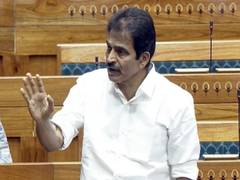
Congress MP moves privilege notice against PM Modi in Lok Sabha
Congress MP K.C. Venugopal has filed a privilege notice against Prime Minister Narendra Modi in the Lok Sabha. The notice alleges that the Prime Minister cast aspersions on Members of Parliament during a recent address to the nation, constituting a breach of parliamentary privilege.
Key Highlights
- Privilege notice filed by Congress MP K.C. Venugopal.
- Allegation of Prime Minister casting aspersions on MPs.
- Notice filed under Rule 222 of Lok Sabha procedures.
- Related to PM's address after a bill's defeat.
- Concerns breach of parliamentary privilege and contempt of the House.
A privilege notice has been filed in the Lok Sabha by Congress Member of Parliament K.C. Venugopal against Prime Minister Narendra Modi. The notice, submitted to Lok Sabha Speaker Om Birla, alleges that the Prime Minister committed a breach of parliamentary privilege during his televised address to the nation on April 18, 2026. According to the notice, the Prime Minister cast aspersions on Members of Parliament (MPs) by making remarks about their conduct and voting patterns within the House. This action is contended to be a "gross breach of privilege and contempt of the House." The privilege notice was moved under Rule 222 of the Rules of Procedure and Conduct of Business in Lok Sabha. The controversy stems from the Prime Minister's address following the defeat of the Constitution (131st Amendment) Bill, 2026, in the Lok Sabha on April 17, 2026. The bill failed to secure the required two-thirds majority as mandated under Article 368 of the Constitution. In his address, the Prime Minister reportedly criticized opposition parties for blocking the bill and attributed motives to their voting behavior. Congress leaders, including Jairam Ramesh, have supported the move, describing the Prime Minister's address as an "unabashed partisan demagoguery" and a "blatant abuse of power." Venugopal's notice highlights that an address to the nation by a sitting Prime Minister is traditionally reserved for moments of national importance and confidence-building, not for political criticism of opposition parties. He argued that questioning elected representatives in the discharge of their duties amounts to a personal attack and an affront to the authority of Parliament and the democratic rights of citizens. The notice urges the Speaker to take "immediate and decisive steps" to uphold the sanctity of Parliament and protect the constitutional rights of its members. Parliamentary privileges are special rights and immunities granted to MPs, individually and collectively, to enable them to perform their duties effectively without hindrance. A breach of privilege occurs when these rights are disregarded. The procedure for a privilege motion involves a notice submitted to the Speaker or Chairperson, who then decides whether to admit the motion. If admitted, it may be referred to the Committee of Privileges for investigation. This action represents a significant political development, underscoring the ongoing tensions between the ruling party and the opposition in India. The case will likely proceed through the parliamentary committee system for further examination. The specific claims made in the notice, such as "casting reflections, aspersions, imputing motives" to MPs, are central to the alleged breach of privilege. The timing of the address, following the defeat of a significant constitutional amendment bill, adds to the political undertones of this development. The Congress party has framed the Prime Minister's actions as a violation of parliamentary decorum and an abuse of power, demanding stringent action to safeguard parliamentary integrity.
Frequently Asked Questions
What is a privilege notice in the Indian Parliament?
A privilege notice is a formal complaint raised by a Member of Parliament (MP) alleging a breach of parliamentary privileges, which are special rights and immunities granted to MPs to enable them to perform their duties effectively. This can include actions that undermine the dignity or authority of the House or its members.
Who filed the privilege notice against Prime Minister Narendra Modi?
Congress MP K.C. Venugopal filed the privilege notice against Prime Minister Narendra Modi in the Lok Sabha.
What is the basis for the privilege notice?
The notice alleges that Prime Minister Narendra Modi cast aspersions on Members of Parliament during a recent address to the nation, which is considered a breach of parliamentary privilege and contempt of the House.
Under which rule was the privilege notice filed?
The privilege notice was filed under Rule 222 of the Rules of Procedure and Conduct of Business in the Lok Sabha.
What is the significance of the defeat of the Constitution (131st Amendment) Bill, 2026 in relation to this notice?
The Prime Minister's address, during which the alleged aspersions were cast, occurred shortly after the defeat of the Constitution (131st Amendment) Bill, 2026, in the Lok Sabha. The Congress alleges that the PM criticized opposition parties for this defeat and made remarks about their voting patterns in his address.