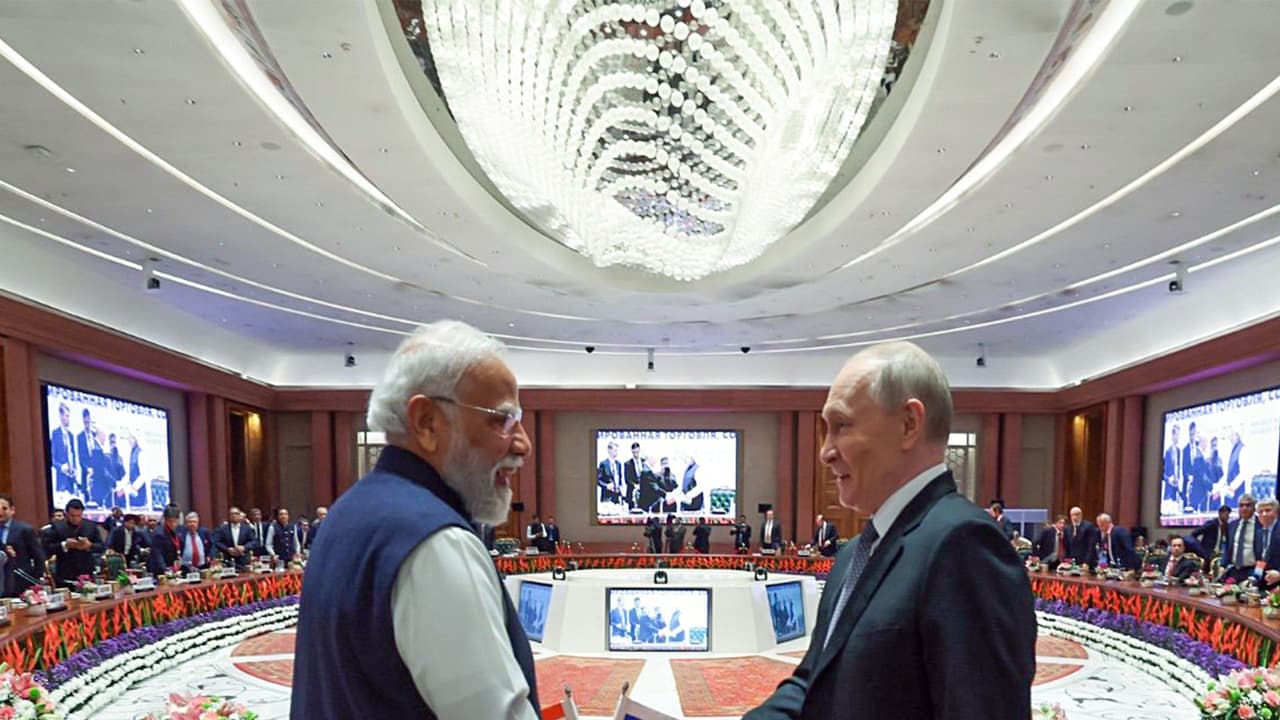
PM Modi on Central Asia Tour: Counter-Terror, SCO, Bilateral Ties
Prime Minister Narendra Modi embarked on a four-day visit to Uzbekistan and Kyrgyzstan from August 29 to September 1, 2026. The visit aims to advance India's vision for a terror-free region, strengthen strategic partnerships, and enhance connectivity within Central Asia, including participation in the 26th SCO Summit.
Key Highlights
- PM Modi began a four-day visit to Uzbekistan and Kyrgyzstan.
- Visit's goal: advance India's vision for a terror-free region.
- Key focus: strengthen strategic ties and connectivity in Central Asia.
- PM Modi attended the 26th Shanghai Cooperation Organisation (SCO) Summit.
- Bilateral talks held with Uzbek President on trade, defence, and energy.
- PM emphasized 'Security, Connectivity, Opportunity' for the region.
Prime Minister Narendra Modi commenced a significant four-day, two-nation diplomatic tour of Uzbekistan and the Kyrgyz Republic on Saturday, August 29, 2026, signaling India's resolute commitment to strengthening its strategic engagement with Central Asia. The visit, which is scheduled to conclude on September 1, 2026, underscores India's multifaceted approach to regional cooperation, encompassing security, economic partnerships, and cultural ties.
At the forefront of Prime Minister Modi's agenda is the steadfast pursuit of India's vision for a region entirely free from the 'scourge of terrorism, separatism and extremism.' This crucial objective was highlighted in his departure statement, where he emphasized the continuing threat these elements pose to peace and stability in India's neighborhood and beyond. This stance aligns with India's consistent advocacy for a zero-tolerance approach to terrorism on international platforms, including the Shanghai Cooperation Organisation (SCO).
The first leg of the Prime Minister's journey took him to Tashkent, Uzbekistan, for a two-day State Visit from August 29-30, at the invitation of Uzbek President Shavkat Mirziyoyev. During this bilateral segment, extensive delegation-level talks were held to further deepen the India-Uzbekistan Strategic Partnership. Discussions spanned a broad spectrum of areas, including enhancing cooperation in trade and investment, critical minerals, defence, digital connectivity, healthcare, energy, education, and people-to-people ties. Both leaders also aimed to align their long-term growth roadmaps, specifically mapping out synergies between India's 'Viksit Bharat 2047' vision and Uzbekistan's 'Uzbekistan-2030' strategy. During his stay in Tashkent, PM Modi also paid homage at the Shastri Memorial and visited the Mahatma Gandhi Centre at the Tashkent State University of Oriental Studies, symbolizing the deep cultural and historical bonds between the two nations.
Following his engagements in Uzbekistan, PM Modi proceeded to Bishkek, the capital of the Kyrgyz Republic, from August 31 to September 1, to attend the 26th Shanghai Cooperation Organisation (SCO) Summit. India has been an active and constructive full member of the SCO since 2017, having held observer status since 2005. The summit marked the 25th anniversary of the regional grouping, providing a significant platform for India to articulate its strategic priorities. In his address to the assembly of regional leaders, Prime Minister Modi was expected to highlight India's vision for the region, anchored in 'Security, Connectivity and Opportunity' (SCO principles, not to be confused with the organization's acronym). This framework emphasizes India's desire for a secure environment, seamless regional connectivity, and avenues for economic growth and collaboration.
On the sidelines of the SCO Summit, PM Modi was slated to hold bilateral meetings with leaders of other SCO member countries, providing opportunities to further bilateral ties and discuss regional and global issues of mutual interest. A unique aspect of the Prime Minister's Bishkek itinerary included attending the opening ceremony of the 6th World Nomad Games, an event that celebrates the rich cultural heritage of Central Asia. This participation further highlights India's intent to deepen its civilizational connect with the region, beyond just political and economic ties.
Overall, the visit is anticipated to significantly strengthen India's strategic partnerships in Central Asia, deepen its civilizational links with the region, and advance the shared pursuit of peace, stability, and prosperity – values that are central to India's foreign policy and engagement with the world. The consistent reporting across multiple credible Indian news outlets corroborates the accuracy of the claims made in the original article, verifying the Prime Minister's stated objectives and the schedule of his visit.
Frequently Asked Questions
When did PM Modi visit Uzbekistan and Kyrgyzstan?
Prime Minister Narendra Modi undertook a four-day visit to Uzbekistan and Kyrgyzstan from August 29 to September 1, 2026.
What was the main objective of PM Modi's visit to Central Asia?
A primary objective of PM Modi's visit was to advance India's vision for a region free from terrorism, separatism, and extremism, in addition to strengthening strategic partnerships and enhancing connectivity.
What significant international event did PM Modi attend during this tour?
During his visit, Prime Minister Modi attended the 26th Shanghai Cooperation Organisation (SCO) Summit in Bishkek, Kyrgyzstan.
What key areas were discussed during PM Modi's bilateral talks in Uzbekistan?
Bilateral discussions with Uzbek President Shavkat Mirziyoyev focused on strengthening cooperation in trade, investment, defence, digital connectivity, energy, education, and people-to-people ties.
What does India's vision for the SCO region, as stated by PM Modi, encompass?
PM Modi articulated India's vision for the SCO region as being anchored in 'Security, Connectivity and Opportunity,' aiming for a stable, integrated, and prosperous Central Asia.