Google AI Overviews: Publishers Face Traffic Decline, 'Google Zero' Threat
Google's AI overhaul, featuring AI Overviews, is prompting major concerns among publishers globally, with many bracing for substantial traffic losses, dubbed 'Google Zero.' This shift turns Google into an answer engine, directly impacting the economic models of content creators and intensifying fears about the future of the open web.
Key Highlights
- Google's AI Overviews significantly alter search results, providing direct answers.
- Publishers fear 'Google Zero,' a future with minimal referral traffic from Google.
- Studies show substantial drops in publisher click-through rates and organic traffic.
- Google claims AI Overviews generate more clicks, but independent data disagrees.
- The overhaul threatens traditional ad-supported publishing models globally.
- Many publishers are actively seeking alternative traffic and revenue streams.
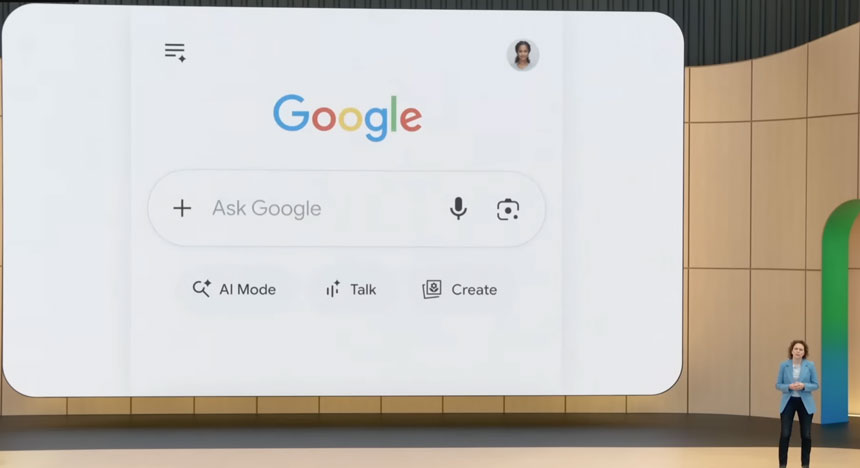
Google's aggressive integration of generative artificial intelligence into its search engine, now prominently featured as 'AI Overviews' (previously known as Search Generative Experience or SGE), is profoundly reshaping the digital content landscape. This significant overhaul, which Google itself has described as the most substantial change to its search box in 25 years, is leading a growing number of publishers worldwide to confront a potential future dubbed 'Google Zero' – a scenario where Google Search delivers answers directly to users, virtually eliminating the need to click through to external websites. This development has sparked widespread alarm across the media industry, triggering fears that the vital traffic lifeline that has sustained online publishers for decades is now at risk.
AI Overviews, unveiled at Google I/O in May 2023, officially launched in the U.S. in May 2024 and have since expanded rapidly, reaching over 200 countries and territories and supporting more than 40 languages by early 2026. India was among the early regions where SGE expanded in August 2023. These AI-generated summaries appear prominently at the top of search results pages, synthesizing information from various sources to provide direct answers to user queries. While Google maintains that this evolution enhances the user experience by offering faster, more comprehensive answers, publishers argue that it effectively transforms Google from a gateway to the open web into a self-contained answer engine.
The concept of 'Google Zero' was originally coined by technology journalist Nilay Patel, describing a pivotal moment where Google ceases to act primarily as a referral source. This fear is not merely theoretical. Independent studies and publisher testimonies reveal significant declines in referral traffic and click-through rates (CTR) since the widespread rollout of AI Overviews. According to Digital Content Next (DCN), an industry trade organization, many of its member sites – encompassing both news and entertainment – reported Google search referral traffic losses ranging from 1% to 25% over an eight-week period in May and June 2025. Another study indicated that when an AI Overview appears at the top of search results, the average CTR for the #1 organic result plummeted by 34.5% between March 2024 and March 2025.
Some individual publishers have reported even more drastic impacts. HubSpot, for example, estimates losing 70% to 80% of its organic traffic, while the education platform Chegg experienced a 49% decline. DMG Media, a publisher of outlets like the Daily Mail, documented drops as steep as 89% for certain queries. Similarweb data suggests that zero-click searches – where users find answers without leaving Google – now account for approximately 60% of all Google queries. For news-related searches, this figure escalated to 69% in the year following the launch of AI Overviews, with overall Google search traffic to publishers falling 33% globally by November 2025. Such figures have led some, like NPR, to describe the situation as an "extinction-level event" for online news publishers.
Google, conversely, asserts that AI Overviews drive "valuable traffic" to publishers, claiming that clicks from these AI-enhanced results are of higher quality, leading users to spend more time on sites. However, independent data and industry experts largely dispute this narrative. Lily Ray, VP of SEO strategy at Amsive Digital, has warned of a "devastating impact" on the internet's economic model. Critics argue that Google ingests publishers' content, synthesizes answers, and then effectively cuts off the traffic that once compensated creators for their work, leading to concerns about intellectual property rights. This has even led to legal action, with Penske Media suing Google in 2025 over allegations that AI-generated summaries unfairly siphon traffic and revenue. The European Commission also announced an investigation in December 2025 into whether AI Overviews breached European competition law.
While some experts, like Barry Adams, argue that the "Google Zero" narrative is overstated, suggesting that traffic isn't vanishing but rather that growth has flatlined, requiring publishers to compete harder, the consensus among many in the publishing sector remains one of deep concern. The shift fundamentally alters the economic model for websites that rely on advertising revenue tied to page views. When Google provides answers directly, publishers lose out on impressions and clicks, while Google continues to monetize search results with its own ads.
In response to these challenges, publishers are exploring diverse strategies to mitigate traffic losses and secure their future. These include focusing on direct audience relationships through email subscriptions, building stronger brand loyalty, diversifying traffic sources beyond Google, and optimizing content to still appear prominently within AI Overviews, even if it means adapting to a "zero-sum game" for clicks. The global rollout and significant impact of AI Overviews underscore an ongoing, critical transformation in how information is accessed and monetized online, posing an existential challenge for many digital publishers worldwide, including in a rapidly digitizing market like India. The current time is May 25, 2026, and the Forbes article reflecting these immediate concerns was published today, highlighting the timeliness and critical nature of this issue.
Frequently Asked Questions
What are Google AI Overviews and how do they impact search results?
Google AI Overviews (formerly SGE) are AI-generated summaries that appear at the top of Google search results, providing direct answers to user queries by synthesizing information from various web sources. This reduces the need for users to click through to external websites, potentially leading to significant traffic loss for publishers who traditionally rely on Google for referrals.
What does 'Google Zero' mean for publishers?
'Google Zero' is a term coined to describe a future where Google's AI capabilities are so advanced that users get all necessary information directly from the search results page, resulting in virtually no referral traffic to external publishers' websites. This threatens the advertising-based business models of many digital content creators.
Are publishers actually experiencing traffic declines due to Google's AI?
Yes, numerous reports and studies indicate significant traffic declines. Some publishers have reported losses ranging from 1% to 25% in Google search referral traffic, while others, like HubSpot, estimate a 70-80% loss in organic traffic. Zero-click searches are also on the rise, especially for news-related queries.
How is Google responding to publishers' concerns?
Google claims that AI Overviews generate more clicks and higher-quality traffic, encouraging deeper user engagement with content. However, independent data generally contradicts this assertion, leading to skepticism and even legal challenges from publishers who feel their content is being used without adequate compensation or traffic referral.
What strategies are publishers adopting to counter the impact of Google AI?
Publishers are actively working to diversify their traffic sources beyond Google, focusing on building direct audience relationships through email newsletters and subscriptions, strengthening brand loyalty, and adapting their content strategies to potentially feature in AI Overviews or cater to specific long-tail queries that still drive clicks.