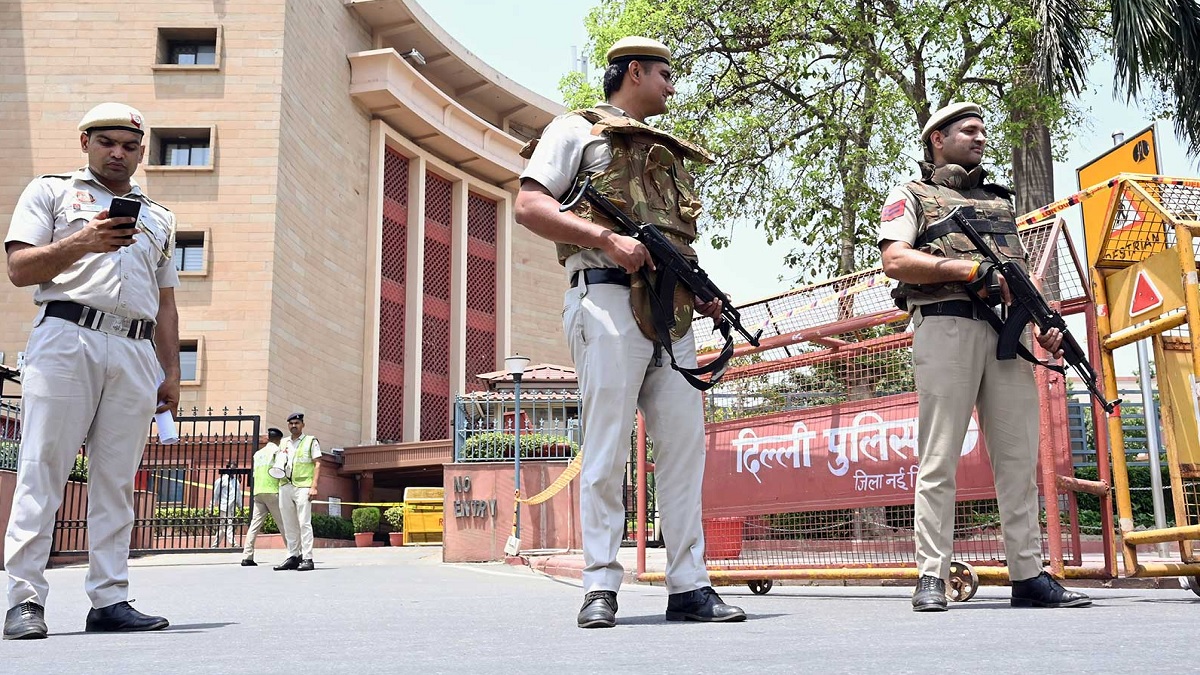
IAF Wing Commander Honey-Trapped, Leaked Defence Secrets to Pakistan
An Indian Air Force Wing Commander was arrested in May 2026 for allegedly leaking sensitive defence information to a Pakistani intelligence operative after being 'honey-trapped' through social media. The officer was under surveillance by IAF intelligence before his arrest by Delhi Police under the Official Secrets Act. A charge sheet has been filed, and the matter is sub-judice.
Key Highlights
- IAF Wing Commander arrested for leaking defence secrets.
- Allegedly honey-trapped by a Pakistani intelligence operative.
- Charged under India's Official Secrets Act.
- Arrested on May 30, 2026, after IAF surveillance.
- Charge sheet filed on July 30, 2026; case is sub-judice.
- Information shared via social media chats and video calls.
A serving Indian Air Force (IAF) Wing Commander was arrested on May 30, 2026, by the Delhi Police for allegedly leaking sensitive defence-related information to a suspected Pakistani intelligence operative. The officer reportedly fell victim to a 'honeytrap' orchestrated through social media by a woman believed to be working for handlers based in Pakistan.
The arrest followed an extensive surveillance operation by the IAF's intelligence wing, which had been monitoring the officer's activities for several months. Once sufficient evidence was gathered, the IAF alerted and handed over the case to the Delhi Police's special cell for further investigation and legal action. An IAF spokesperson confirmed that the officer was under active surveillance and due to proactive measures, he was caught, reiterating the Air Force's zero-tolerance policy for such activities.
Police sources indicate that the 44-year-old Wing Commander, whose name has not been publicly disclosed as the case is sub-judice, was allegedly contacted by the woman on social media. The interaction reportedly intensified through text messages and video calls. Investigators suspect the officer, who was reportedly going through a difficult personal phase, was persuaded to share confidential documents and sensitive details related to the Indian defence system through photographs and videos.
Further allegations suggest that the officer also asked a colleague to install a specific mobile application on their phone. Agencies suspect this application could have functioned as spyware or remote-access malware, potentially capable of extracting data, tracking location, and intercepting conversations, indicating a possible attempt to broaden the scope of information gathering. The investigation has revealed that the woman was likely part of a larger espionage network targeting Indian defence personnel.
Following the arrest, the officer was booked under relevant provisions of the Official Secrets Act, a stringent law designed to combat espionage and the unauthorized disclosure of classified information. He was initially held in police custody and later sent to Tihar Jail under judicial custody. On July 30, 2026, the Delhi Police submitted a comprehensive charge sheet before the competent court, marking a significant development in the procedural aspect of the case. The matter is now proceeding through the judicial system, and further details will be examined by the court.
This incident underscores ongoing concerns within India's security establishment regarding sophisticated attempts by Pakistan-based intelligence operatives to compromise serving defence personnel through social media-based 'honeytraps' and other digital espionage tactics. Security agencies are continuously scrutinizing such attempts to target military personnel and civilians alike. Past similar cases have been reported, including the arrest of Group Captain Arun Marwah in 2018 for leaking classified documents and a resident of Alwar last year for allegedly spying for Pakistan's ISI after being honey-trapped. The case highlights the persistent threat of cyber-enabled espionage and the vulnerability of individuals to psychological manipulation by hostile intelligence agencies. The ongoing investigation aims to identify all foreign handlers and ascertain whether a wider espionage network was active.
Frequently Asked Questions
What are the main allegations against the IAF Wing Commander?
The IAF Wing Commander is accused of leaking sensitive and classified defence information to a Pakistani intelligence operative after being 'honey-trapped' by a woman on social media. He also allegedly tried to install data-stealing software on a colleague's phone.
When was the IAF officer arrested and what charges does he face?
The officer was arrested on May 30, 2026, following surveillance by the IAF intelligence wing. He has been booked under the provisions of the Official Secrets Act. A charge sheet was filed on July 30, 2026.
How did the 'honeytrap' operation allegedly work?
The officer was reportedly contacted by a woman on social media, who then engaged him in chats and video calls. Capitalizing on his personal difficulties, she allegedly persuaded him to share confidential defence-related information, possibly as part of a larger espionage network.
What is the current status of the case?
The investigation has been completed, and a charge sheet was submitted to the competent court on July 30, 2026. The matter is now sub-judice, meaning it is under judicial consideration.
Why is this news significant for India?
This case highlights the persistent threat of cyber-enabled espionage and 'honeytrap' operations by hostile foreign intelligence agencies, particularly from Pakistan, targeting Indian defence personnel. It underscores critical national security concerns and the need for heightened vigilance against such tactics.