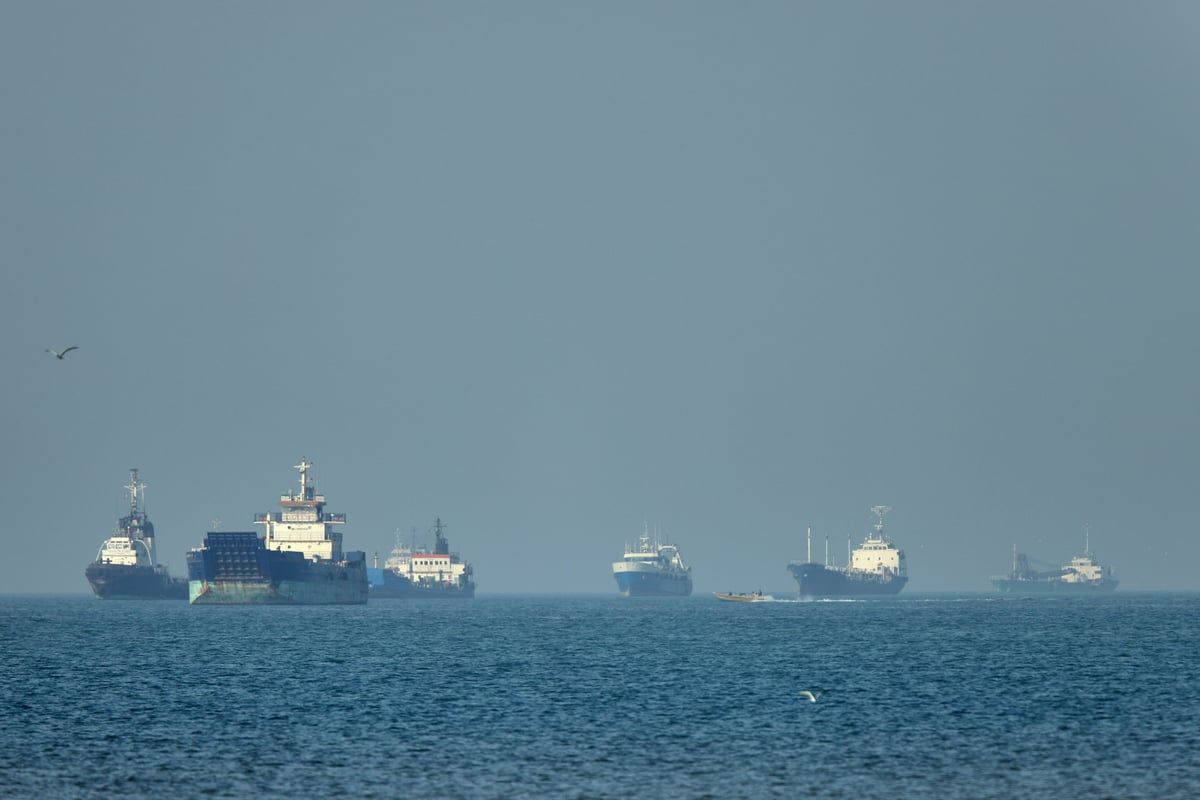
UAE intercepts Iran missile and drone attack amid ceasefire challenges
The United Arab Emirates reported that its air defenses intercepted a missile and drone attack early Friday morning, straining a fragile ceasefire in the ongoing Iran war. This incident occurred hours after the U.S. military announced it had thwarted Iranian attacks on its destroyers in the Strait of Hormuz and conducted retaliatory strikes on Iranian military facilities. Despite these escalations, U.S. President Donald Trump stated the ceasefire remains in effect, though he issued a warning to Iran.
Key Highlights
- UAE air defenses intercepted incoming missiles and drones from Iran.
- The incident challenges the fragile ceasefire between the US and Iran.
- US forces intercepted Iranian attacks on Navy ships in the Strait of Hormuz.
- US conducted retaliatory strikes on Iranian military facilities.
- President Trump insists the ceasefire is holding despite the exchanges.
Early on Friday, May 8, 2026, the United Arab Emirates announced that its air defense systems were actively engaged in intercepting a missile and drone attack originating from Iran. This development has significantly challenged the fragile ceasefire that had been in place since April 8, 2026 [8, 20, 26]. The UAE's Ministry of Defence advised residents to exercise caution and avoid any debris from the interceptions [20, 26].
This event followed closely on the heels of a significant exchange between the United States and Iran. Hours before the UAE's announcement, the U.S. military reported intercepting Iranian attacks targeting three of its Navy destroyers in the Strait of Hormuz on Thursday night [8, 9, 20, 26]. In response, U.S. forces conducted what they termed "self-defense strikes" against Iranian military facilities believed to be responsible for the attacks [8, 9, 15, 26]. The U.S. Central Command stated that these were "unprovoked Iranian attacks" and emphasized its commitment to protecting American forces without seeking escalation [9, 26]. Fortunately, no U.S. ships were reported to have been hit [8, 9, 15, 26].
Despite these escalating hostilities, U.S. President Donald Trump expressed optimism that the ceasefire was still holding. However, he also issued a stern warning to Iran, suggesting that failure to reach a peace deal that allows for the resumption of disrupted oil and natural gas shipments would result in severe consequences [27]. The tenuous ceasefire, brokered after weeks of intense conflict and U.S.-Israeli strikes on Iran, had brought a temporary end to hostilities that had driven global energy prices up and impacted regional stability [7, 8, 20].
The Iran war, which began on February 28, 2026, following U.S. and Israeli strikes on Iran, has had considerable repercussions for India. The conflict has led to oil price volatility, increased shipping costs, and disruptions to trade routes, all of which negatively impact India's economy [10, 11, 13, 21]. India, heavily reliant on oil imports from the Middle East, faces higher energy costs and a widening trade deficit [10, 11, 13]. Furthermore, airspace restrictions across the region have led to significant flight cancellations and increased costs for Indian airlines [12].
Geopolitically, the conflict has also led to a realignment in the Middle East. The UAE, historically a close ally of Saudi Arabia, has increasingly distanced itself from Riyadh, particularly regarding their approaches to Iran. The UAE's decision to quit OPEC and its strengthening security cooperation with Israel, supported by the U.S., indicates a shift in regional alliances [17, 22, 23]. This realignment also involves India, as part of the I2U2 (India, Israel, the United Arab Emirates, and the United States) grouping, which is seeking to increase its influence [17].
The article's reporting aligns with numerous other news outlets, confirming the UAE's report of intercepting missiles and drones from Iran, the U.S. military's actions in the Strait of Hormuz, and President Trump's statements regarding the ceasefire. The context of the broader Iran-Israel war and its impact on global energy markets and regional alliances is also consistent across various credible sources [1, 5, 6, 7, 8, 9, 14, 15, 16, 17, 18, 19, 20, 21, 22, 23, 24, 25, 26, 27, 28]. The timeline of events and the involvement of key nations are corroborated by multiple reports. The original article from The Hindu is accurate in its reporting of these immediate events.
Frequently Asked Questions
What significant event occurred in the UAE on May 8, 2026?
On May 8, 2026, the United Arab Emirates announced that its air defense systems were actively engaged in intercepting a missile and drone attack originating from Iran.
How did this incident affect the existing ceasefire?
The incident challenged the fragile ceasefire that had been in place between the U.S. and Iran since April 8, 2026, raising concerns about a potential escalation of the conflict.
What was the U.S. military's involvement around the same time?
Hours before the UAE's announcement, the U.S. military reported intercepting Iranian attacks targeting its Navy destroyers in the Strait of Hormuz and conducted retaliatory strikes on Iranian military facilities.
What is the U.S. President's stance on the ceasefire?
Despite the escalating hostilities, U.S. President Donald Trump stated that the ceasefire was still holding, though he issued a warning to Iran about potential consequences if a peace deal is not reached.
What are the broader implications of the Iran war for India?
The Iran war has significant economic implications for India, including oil price volatility, increased shipping costs, and disruptions to trade routes, impacting the country's energy security and import bill.