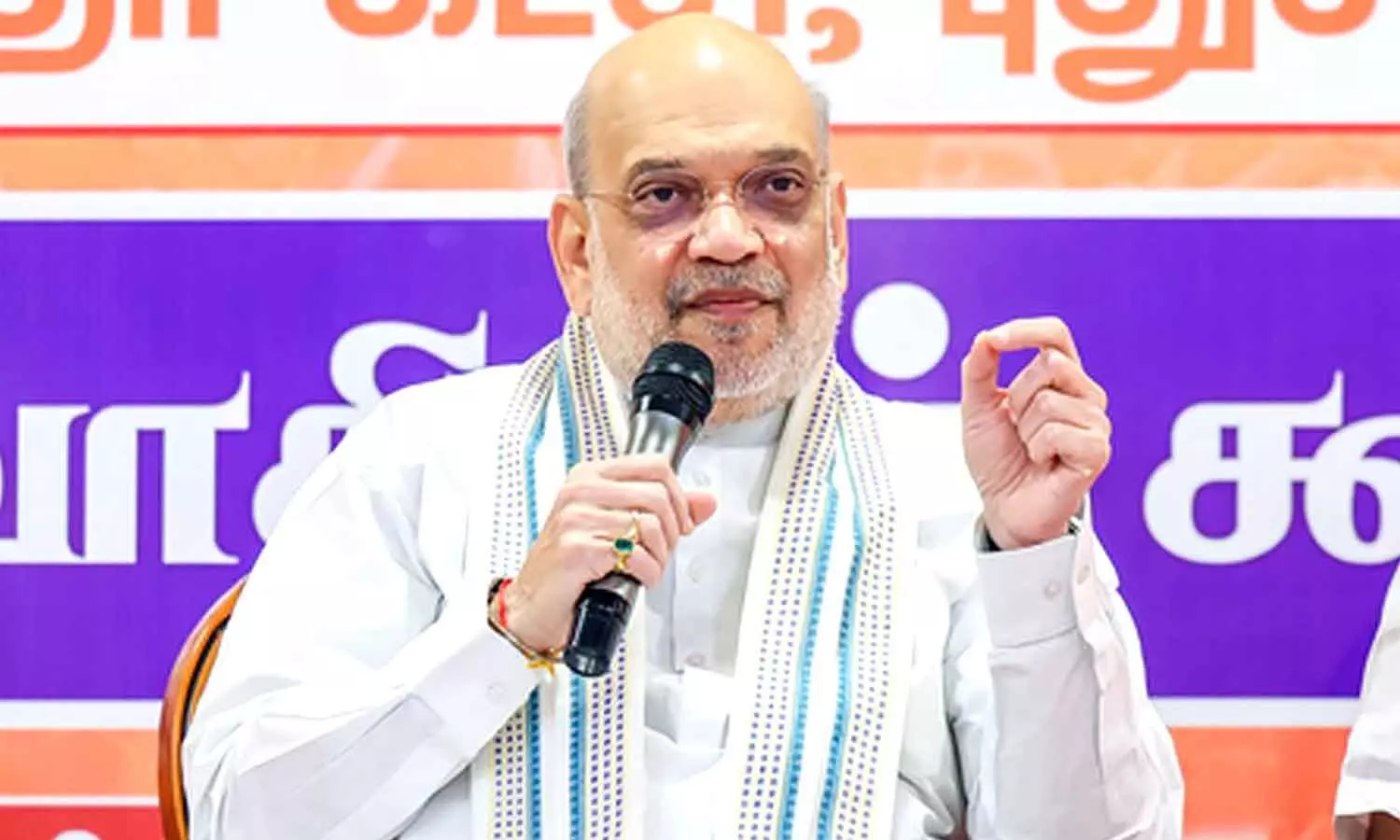
Southern CMs Meet Amit Shah at Zonal Council to Discuss Key Issues
Union Home Minister Amit Shah chaired the 31st Southern Zonal Council meeting in Chennai, bringing together Chief Ministers from Tamil Nadu, Karnataka, Andhra Pradesh, and Kerala. Discussions focused on critical inter-state matters like delimitation, water disputes, and cooperative federalism, aiming to strengthen regional cooperation.
Key Highlights
- 31st Southern Zonal Council meeting held on August 20, 2026, in Chennai.
- Union Home Minister Amit Shah chaired the significant regional gathering.
- Chief Ministers of Tamil Nadu, Karnataka, Andhra Pradesh, and Kerala attended.
- Delimitation, water disputes, and fiscal federalism were key discussion points.
- Andhra Pradesh CM Chandrababu Naidu raised bifurcation-related issues.
- Karnataka CM D.K. Shivakumar advocated for fair fund allocation to southern states.
The 31st meeting of the Southern Zonal Council, a crucial platform for inter-state dialogue and cooperation, was successfully convened on Thursday, August 20, 2026, in Mahabalipuram (Kovalam) near Chennai, Tamil Nadu. The significant gathering was chaired by Union Home Minister Amit Shah, underscoring the Centre's commitment to addressing regional concerns and fostering cooperative federalism.
The meeting saw the participation of several key political leaders from the southern states. Among the Chief Ministers in attendance were C. Joseph Vijay of Tamil Nadu, D.K. Shivakumar of Karnataka, N. Chandrababu Naidu of Andhra Pradesh, and V.D. Satheesan of Kerala. Additionally, Telangana was represented by its Deputy Chief Minister, Mallu Bhatti Vikramarka.
These Zonal Councils are statutory bodies established under the States Reorganisation Act, 1956, designed to serve as advisory forums for discussing and resolving issues of common interest between the Centre, states, and Union Territories. The Southern Zonal Council comprises the states of Andhra Pradesh, Karnataka, Kerala, Tamil Nadu, Telangana, and the Union Territories of Puducherry, Andaman and Nicobar Islands, and Lakshadweep. Union Home Minister Amit Shah serves as the Chairman of these councils, while the Chief Minister of the host state, in this case, C. Joseph Vijay of Tamil Nadu, assumes the role of Vice-Chairman on a rotational basis.
A primary focus of the deliberations was the politically sensitive issue of the delimitation of Lok Sabha constituencies. Karnataka Chief Minister D.K. Shivakumar strongly articulated the southern states' concerns, urging the Council to pass a resolution that calls on the Union government to maintain the 1971 census as the basis for future delimitation. He also advocated for retaining the existing strength of 543 Lok Sabha seats for the next 25 years and accommodating women's reservation within this framework. Tamil Nadu Chief Minister C. Joseph Vijay echoed these sentiments, highlighting how population control measures adopted by southern states could disproportionately reduce their parliamentary representation under new delimitation based on later census figures.
The meeting also served as a crucial platform for discussions on fiscal federalism and ensuring equitable resource allocation. Chief Minister Shivakumar emphasized the significant economic contributions of the southern states, noting their collective contribution of nearly 33% to India's GDP despite having only about 20% of the country's population. He called for greater fiscal and political equity, demanding fairness in the allocation of central funds and due recognition for their role as the 'engine of the Indian economy'. Tamil Nadu CM Vijay also reaffirmed the principle that 'strong states make a stronger India,' advocating for robust cooperative federalism. [cite: 3 (from related articles)]
Inter-state water disputes, a perennial point of contention in the region, were also prominently featured on the agenda. Discussions aimed at finding amicable solutions to long-standing issues such as the Cauvery water dispute between Karnataka and Tamil Nadu, and the Krishna river dispute affecting Telangana and Andhra Pradesh. Such dialogues are vital for regional harmony and sustainable development.
Andhra Pradesh Chief Minister N. Chandrababu Naidu utilized the forum to raise critical issues stemming from the Andhra Pradesh Reorganisation Act. He sought the Centre's intervention in resolving pending matters related to the division of institutions, assets, and liabilities between Andhra Pradesh and Telangana, as well as outstanding financial concerns following the state's bifurcation. Furthermore, Naidu pressed for central support and funding for crucial infrastructure projects in Andhra Pradesh, including the Dugarajapatnam Port, Visakhapatnam–Vijayawada Metro projects, improved railway connectivity, airport development, and industrial corridors.
Beyond regional matters, the council addressed broader national issues. The implementation of Fast Track Special Courts for the speedy investigation and disposal of cases involving crimes against women and children, particularly rape offenses, was discussed. Education-related topics, including the implications of the National Education Policy, such as the three-language policy and the National Eligibility cum Entrance Test (NEET), were also part of the agenda, with southern states reiterating their concerns on these matters.
The spirit of cooperative federalism, which underpins the functioning of Zonal Councils, was a recurring theme, with Union Home Minister Amit Shah emphasizing that strong states are fundamental to building a strong nation. These meetings provide a structured mechanism for fostering mutual understanding and collaboration, proving crucial in resolving complex disputes and promoting regional cooperation across various sectors. The outcomes of this 31st Southern Zonal Council meeting are expected to shape inter-state relations and policy frameworks in the southern region for the foreseeable future.
Frequently Asked Questions
What was the purpose of the 31st Southern Zonal Council meeting?
The meeting aimed to foster inter-state cooperation and provide a platform for Southern states and Union Territories to discuss issues of common interest with the Union government, particularly those related to cooperative federalism, regional development, and resolving disputes.
Which prominent leaders attended the meeting chaired by Amit Shah?
The meeting was chaired by Union Home Minister Amit Shah and attended by the Chief Ministers of Tamil Nadu (C. Joseph Vijay), Karnataka (D.K. Shivakumar), Andhra Pradesh (N. Chandrababu Naidu), and Kerala (V.D. Satheesan), along with the Deputy Chief Minister of Telangana (Mallu Bhatti Vikramarka).
What key issues were discussed during the Southern Zonal Council meeting?
Key issues included the delimitation of Lok Sabha constituencies, inter-state water disputes (like Cauvery and Krishna rivers), fiscal equity and fund allocation to southern states, implementation of the Andhra Pradesh Reorganisation Act, infrastructure development, and national issues like Fast Track Courts and education policies.
Why is delimitation a contentious issue for Southern states?
Southern states, which have successfully implemented population control measures, fear that delimitation based on later census figures could lead to a reduction in their Lok Sabha seats, thereby diminishing their political representation and voice in Parliament.
What is the role of the Southern Zonal Council?
The Southern Zonal Council acts as an advisory body under the States Reorganisation Act, 1956. It facilitates dialogue and discussion between the Centre, states, and Union Territories on matters of common interest, aiming to resolve disputes amicably and promote regional cooperation for overall national development.