Ukraine Drones Hit Moscow Refinery Twice This Week; Zelenskyy Responds
Ukraine launched a major drone attack on Moscow's oil refinery on June 18, 2026, marking the second strike this week on the facility. Ukrainian President Volodymyr Zelenskyy declared it a "justified response" to Russian attacks. The incident caused significant fires and disrupted flights, escalating the conflict.
Key Highlights
- Moscow oil refinery hit by Ukrainian drones for second time this week.
- Zelenskyy calls drone strikes a "justified response" to Russian aggression.
- Major drone attack caused significant fires and disrupted Moscow airport flights.
- Earlier attack on the same refinery occurred on June 16, halting operations.
- Russia claims to have intercepted hundreds of Ukrainian drones.
- Strikes aim to cripple Russian energy infrastructure, impacting war funding.
On Thursday, June 18, 2026, Ukraine launched a significant drone attack on the Moscow Oil Refinery, marking the second such strike on the facility within the same week. This substantial assault resulted in considerable fires at the refinery and led to temporary disruptions in commercial flights at Moscow's airports, including Sheremetyevo, Domodedovo, Vnukovo, and Zhukovsky.
Ukrainian President Volodymyr Zelenskyy swiftly acknowledged responsibility, describing the strikes as a "fully justified response" to Russia's ongoing attacks on Ukrainian cities and communities. He emphasized that these actions were part of Ukraine's efforts to exert pressure on Russia and target facilities that sustain Moscow's war machine.
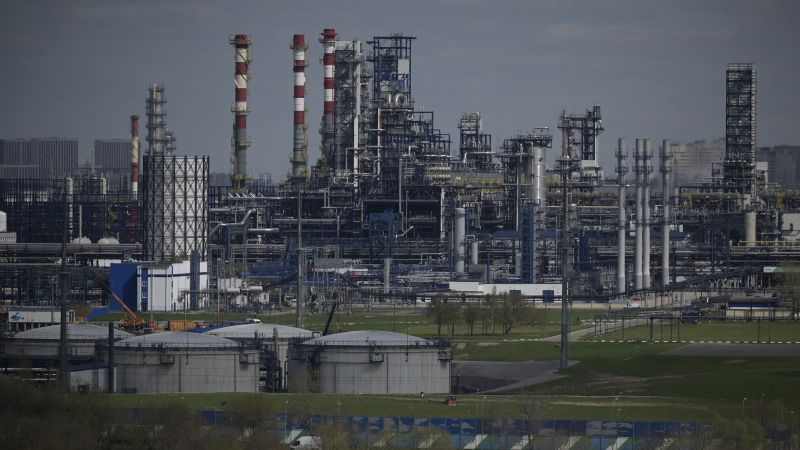
The Moscow Oil Refinery, located in the Kapotno district, approximately 15 kilometers (9 miles) from the Kremlin, is a crucial energy asset. It is one of Russia's largest refineries, supplying up to 40% of Moscow's petrol and about 50% of its diesel fuel, and accounts for over a third of the capital region's fuel market. The attack on June 18 followed a previous strike on the same refinery on June 16, which reportedly caused a fire and halted its operations.
Russian officials, including Moscow Mayor Sergei Sobyanin, confirmed the drone attack, stating that air defense systems were engaged in repelling a "large-scale attack." Sobyanin reported that while many drones were intercepted, several managed to reach the refinery, causing damage. Russia's Defense Ministry claimed to have intercepted a staggering 555 Ukrainian drones across multiple regions overnight, with nearly 200 reportedly downed as they approached the capital. However, the number of drones actually shot down could not be independently verified.
Images and videos circulating on social media and released by Russian media showed massive fires and thick black smoke billowing from the refinery, creating a dramatic visual impact over the city. Beyond the refinery, drone debris reportedly caused damage to other targets in the Moscow region, including a shopping center (Sadovod), a residential building in Zhukovsky, a fitness center, and other private houses and industrial facilities. One woman was reported injured in the broader Moscow region.
The drone strikes on Moscow's energy infrastructure are part of a broader, escalating campaign by Ukraine to disrupt Russia's oil industry, aiming to cut off revenue streams funding the war and to make the consequences of the invasion felt within Russia itself. This strategy has seen Ukraine increasingly employ long-range strike weapons, demonstrating its growing capabilities. The attacks have been described by some as the largest drone assault on Moscow since the beginning of the full-scale invasion more than four years ago.
The latest attack on June 18 coincided with Russian President Vladimir Putin hosting leaders of the Association of Southeast Asian Nations (ASEAN) in Kazan, some 700 kilometers (430 miles) east of Moscow. The incident highlights the vulnerability of Russian infrastructure, even in the capital, and serves as an embarrassment for the Kremlin.
Zelenskyy's remarks linking the attack to previous Russian bombardments, including a strike on a historic Kyiv monastery complex earlier in the week, underscore the retaliatory nature of Ukraine's actions. He also indicated that the attack came hours after he had important coordination calls with US President Donald Trump and French President Emmanuel Macron, and that Ukraine had secured key pledges of further support at the G7 summit in France.
This ongoing targeting of Russian energy facilities reflects a strategic shift by Ukraine to impact Russia's economy and its capacity to wage war, forcing a domestic reckoning with the conflict. The attacks contribute to an already developing fuel crisis in Russia, which has seen the country, a major oil producer, resorting to importing fuel by sea.
Frequently Asked Questions
What happened at the Moscow Oil Refinery?
The Moscow Oil Refinery was struck by Ukrainian drones on June 18, 2026, resulting in significant fires and smoke. This was the second attack on the facility within the same week, following an earlier strike on June 16.
What was Ukrainian President Zelenskyy's reaction to the attack?
Ukrainian President Volodymyr Zelenskyy confirmed the attack and described it as a "fully justified response" to Russia's ongoing attacks on Ukrainian cities and communities, emphasizing that it targets facilities sustaining Russia's war machine.
What were the immediate consequences of the drone attack in Moscow?
Besides the fires at the refinery, the drone attack led to the temporary disruption of commercial flights at major Moscow airports and caused damage to various other structures in the Moscow region, including a shopping center and residential buildings.
Why is Ukraine targeting Russian oil refineries?
Ukraine is targeting Russian oil refineries and energy infrastructure as a strategic measure to cut off revenue streams that fund Russia's war effort and to bring the consequences of the invasion directly to Russian territory.
How significant was this drone attack compared to previous ones?
Russian officials and various news outlets described the June 18, 2026, drone attack as one of the largest and most extensive on Moscow since the start of the full-scale invasion, with Russia claiming to have intercepted hundreds of drones.