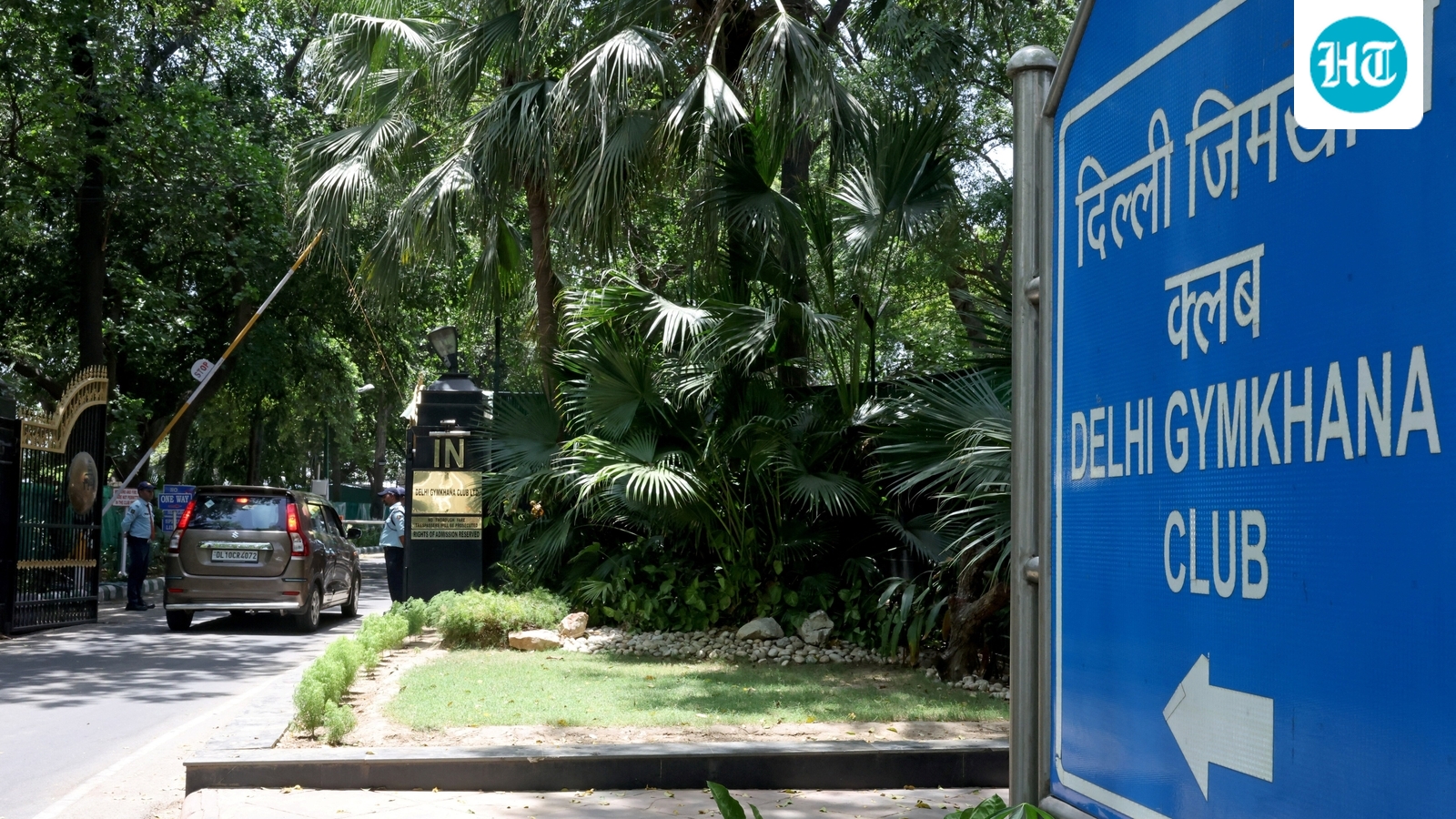
Delhi Gymkhana Club Challenges Eviction from Lutyens' Delhi Land
The Delhi Gymkhana Club has moved the Delhi High Court to challenge the Centre's directive to vacate its 27.3-acre premises in Lutyens' Delhi by June 5, 2026. The government cites public purpose, including defense and security needs, while the club and its members contest the lease termination and eviction notices, amidst a long-running legal battle over its management and land lease conditions.
Key Highlights
- Delhi Gymkhana Club moved Delhi High Court against eviction order.
- Centre directed club to vacate 27.3-acre Lutyens' Delhi premises by June 5, 2026.
- Government cites 'public purpose' including defense infrastructure needs.
- Legal challenge involves perpetual lease termination and eviction notices.
- Centre assured HC no coercive action without due process and prior notice.
- Supreme Court recently allowed more club members to approach High Court.
The prestigious Delhi Gymkhana Club is embroiled in a significant legal battle with the Central government over its continued occupation of a 27.3-acre land parcel located in the prime Lutyens' Delhi area. The core of the dispute revolves around an order issued by the Land and Development Office (L&DO) under the Ministry of Housing and Urban Affairs on May 22, 2026, directing the club to vacate its premises at 2, Safdarjung Road, by June 5, 2026.
Following this directive, the Delhi Gymkhana Club, along with some of its members (including Vijay Khurana) and the Delhi Gymkhana Club Ltd Staff Welfare Association, promptly moved the Delhi High Court to challenge the Centre's eviction order. The club argued against the termination of its perpetual lease and the subsequent eviction proceedings. The matter is currently sub judice, with the Delhi High Court scheduled to hear the pleas on September 29, 2026.
The government's rationale for seeking the eviction is rooted in the 'public purpose' clause (Clause 4) of the original perpetual lease deed, which was executed in 1928. The Centre claims that the land, strategically located near the Prime Minister's residence and other high-security installations, is 'critically required for strengthening and securing of defence infrastructure and other vital public security purposes'. Union Housing and Urban Affairs Minister M.L. Khattar reiterated in June 2026 that the government has the right to reclaim its land when needed for public purposes.
This current eviction notice is part of a broader, long-running legal and administrative tussle between the government and the Delhi Gymkhana Club. The dispute intensified in 2020 when the Ministry of Corporate Affairs (MCA) initiated proceedings before the National Company Law Tribunal (NCLT) under Sections 241 and 242 of the Companies Act, 2013, alleging oppression, mismanagement, and nepotism in the club's affairs. In April 2022, the NCLT superseded the club's elected general committee and permitted the Centre to nominate 15 directors to manage the club's affairs. This government-nominated management has since been overseeing the club, leading to allegations from some members that the current management cannot effectively challenge the government's eviction actions, as both the lessor and lessee are under government control.
Further escalating the matter, the L&DO issued a show-cause notice on June 29, 2026, invoking the Public Premises (Eviction of Unauthorised Occupants) Act, 1971, and asking the club to explain why an eviction order should not be passed against it. This notice directed the club and its occupants to submit a response by July 7, 2026. However, the Centre has provided assurances to the Delhi High Court that it would not take 'immediate possession' or any coercive action without adhering to due legal process and issuing prior notice. The High Court, while refusing immediate interim relief against the May 22 order, noted that the apprehension of forcible takeover was 'premature' given the Solicitor General's statements.
Adding another layer to the legal complexities, the Supreme Court recently (September 15, 2026) granted liberty to 11 aggrieved members of the Delhi Gymkhana Club to approach the Delhi High Court with their concerns regarding the Centre's takeover of the club's management and the eviction proceedings. These members contended that the government-nominated management had overstayed its mandated timeline for elections and restoration of elected control, describing the Centre's actions as a 'colourable exercise' of power that violates their fundamental rights under Articles 14 and 19, and their right to property under Article 300A of the Constitution. They also questioned the lack of specific project identification or compensation offers in the eviction notification.
The financial aspect also plays a role, with reports indicating a significant increase in ground rent. Historically, the club paid a nominal annual rent, but a revision in 2023 based on current land rates reportedly led to a jump to over ₹4 crore annually, with total dues, including penalties, rising to ₹47.6 crore by 2026. The government alleges that the club failed to clear these dues and violated other lease conditions, including alleged misuse of the property and subletting. The club, however, disputes these claims, calling the rent hike 'financially impossible'.
The Delhi Gymkhana Club, founded in 1913 as the Imperial Delhi Gymkhana Club, holds significant historical and social importance in India. Once a preserve of the British elite, it evolved into a prominent networking hub for India's powerful after independence. The ongoing dispute has sparked wider public debate about colonial-era privileges, the use of public land, and the Modi government's perceived push against entrenched elite institutions. The staff of the club also face uncertainty and fear for their livelihoods due to the potential shutdown. The case continues to attract considerable attention, highlighting the tension between historical institutions and contemporary public interest demands.
Frequently Asked Questions
Why is the Centre asking the Delhi Gymkhana Club to vacate its premises?
The Centre, through the Land and Development Office, ordered the club to vacate the 27.3-acre land, citing 'public purpose'. It states the land is 'critically required for strengthening and securing of defence infrastructure and other vital public security purposes,' given its strategic location in Lutyens' Delhi near high-security installations, including the Prime Minister's residence.
What is the Delhi Gymkhana Club's response to the eviction order?
The Delhi Gymkhana Club, its members, and staff welfare association have filed suits in the Delhi High Court challenging the Centre's order. They are contesting the termination of their perpetual lease deed and the subsequent eviction notices, arguing for due process and protection of fundamental rights.
What is the historical context of the land lease?
The 27.3-acre land was leased to the Imperial Delhi Gymkhana Club (now Delhi Gymkhana Club) on a perpetual lease in 1928. A key clause in the lease deed allows the government to re-enter the premises if the land is required for a 'public purpose'.
Has the government intervened in the club's management before?
Yes, in 2022, the National Company Law Tribunal (NCLT) allowed the Ministry of Corporate Affairs to nominate 15 directors to the club's general committee, replacing the elected body, following allegations of oppression, mismanagement, and nepotism. This earlier intervention is part of the broader ongoing dispute.
What is the current status of the case?
The Delhi High Court is actively hearing the pleas filed by the club and its members, with the next hearing scheduled for September 29, 2026. The Centre has assured the High Court that no coercive eviction action will be taken without following due legal process and issuing prior notice. The Supreme Court has also allowed other aggrieved members to approach the High Court with their concerns.