Xi Jinping to Visit North Korea to Deepen China-DPRK Ties
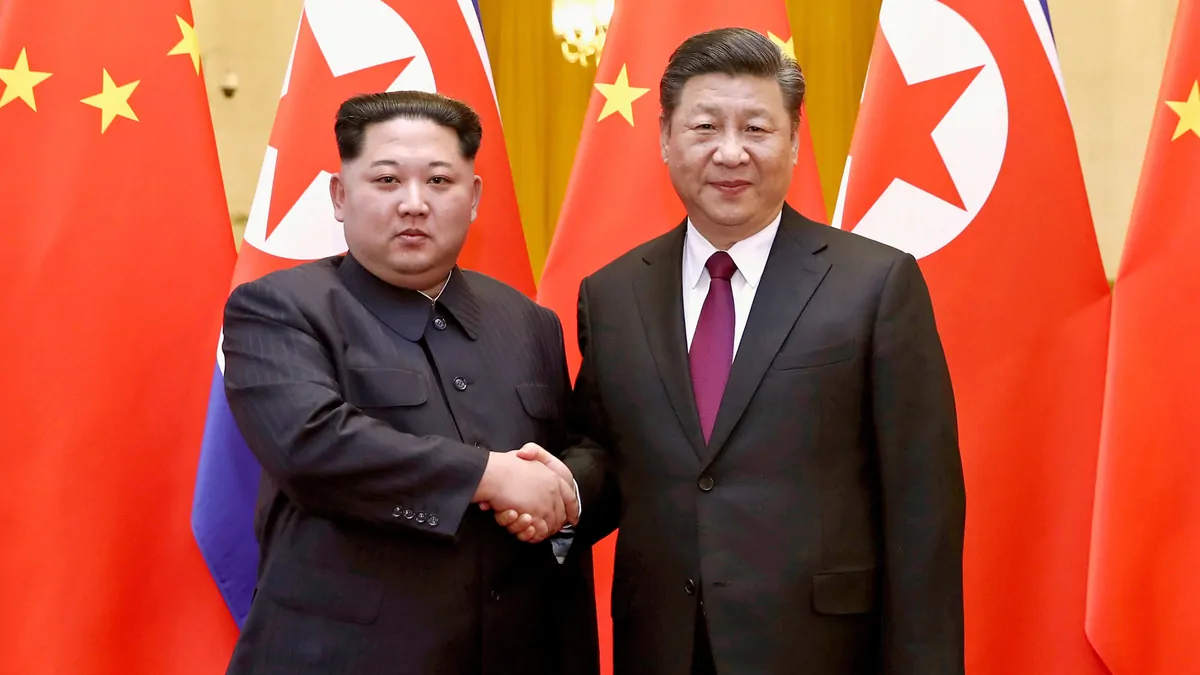
Chinese President Xi Jinping is set to visit North Korea for a state visit on June 8-9, marking his first trip to the country in seven years. The visit aims to deepen bilateral ties and reaffirm the relationship between the two nations amidst shifting geopolitical landscapes. It follows North Korea's recent display of military capabilities, including a new warship, and comes as China seeks to bolster its influence in the region.
Key Highlights
- Xi Jinping's visit to North Korea is scheduled for June 8-9.
- This marks Xi's first visit to North Korea in seven years.
- The visit aims to deepen China-North Korea relations.
- North Korea recently showcased new military hardware.
- The visit occurs amidst global geopolitical shifts and evolving regional dynamics.
Chinese President Xi Jinping is scheduled to undertake a state visit to North Korea from June 8 to 9, his first trip to the reclusive nation in nearly seven years. This high-stakes visit, announced by state media outlets of both countries, signifies a crucial moment for Beijing to reinforce its ties with its nuclear-armed neighbor and assert its influence in Northeast Asia. The summit is poised to deepen the relationship between China and North Korea amidst a backdrop of significant geopolitical realignments, including North Korea's strengthening military cooperation with Russia and the intensifying U.S.-China rivalry.
Xi's visit reciprocates North Korean leader Kim Jong Un's visit to Beijing in September 2025 and occurs shortly after Xi hosted U.S. President Donald Trump and Russian President Vladimir Putin for back-to-back summits in Beijing. This timing suggests an effort by China to project stability and its role as a key global player, contrasting with what it portrays as U.S. global influence in decline. For North Korea, the visit presents a vital opportunity to showcase its diplomatic leverage and demonstrate to Washington that it has powerful allies, even as it faces international isolation and sanctions.
The historical context of China-North Korea relations is one of strategic alliance, dating back to a mutual defense treaty signed in 1961, which remains China's only such pact with any nation. Despite periodic strains, particularly over North Korea's nuclear program, China remains North Korea's largest trading partner and a critical source of economic and diplomatic support. Beijing's strategic interest lies in maintaining stability on the Korean Peninsula and preventing instability that could arise from North Korea's collapse, while also serving as a buffer against the U.S.-backed South Korea.
Recent developments have underscored North Korea's military advancements, with leader Kim Jong Un showcasing a new 5,000-tonne warship, the 'Choe Hyon-class' missile destroyer, equipped with "most powerful weapons." This display of military capability, including modifications to its weapon and sensor suites, highlights North Korea's continued focus on modernizing its armed forces. This military modernization is a key concern for the international community, particularly the United States, and will likely be a significant topic during Xi's visit, although China has historically been wary of North Korea's nuclear brinkmanship.
From North Korea's perspective, Xi's visit is a significant political feat, offering a chance to normalize its status as a nuclear weapon state and potentially seek sanctions relief. Kim Jong Un will likely seek increased trade, investment, and economic agreements from Beijing, his primary economic lifeline. China, while keen to maintain stability and its strategic interests, will navigate a cautious approach to avoid overtly violating international sanctions, though it may support improvements in cross-border flows and infrastructure.
The visit also occurs as North Korea strengthens its ties with Russia, a move that adds another layer of complexity to the regional dynamics. China, while valuing its relationship with Pyongyang, also seeks to manage North Korea's growing closeness to Moscow and potentially exert influence to encourage moderation in its nuclear program. The summit is expected to reaffirm the strategic coordination between China and North Korea, particularly in the context of a challenging global order and the desire to counter Western influence. Discussions are likely to revolve around bilateral ties, regional security, economic cooperation, and the broader geopolitical landscape, with a focus on strengthening their alliance against perceived external threats. The media coverage of such high-level meetings is often formulaic and symbolism-focused, making the precise substance of discussions difficult to ascertain, but the strategic implications for Northeast Asia are profound.
Frequently Asked Questions
When is Xi Jinping scheduled to visit North Korea?
Xi Jinping is scheduled to visit North Korea for a state visit on June 8 and 9, 2026.
What is the significance of this visit?
This visit marks Xi Jinping's first trip to North Korea in nearly seven years and is seen as a move to deepen bilateral ties and reaffirm their strategic relationship amidst shifting global geopolitics.
What is the historical relationship between China and North Korea?
China and North Korea share a long history of strategic alliance, formalized by a mutual defense treaty in 1961. China is North Korea's largest trading partner and a crucial source of economic and diplomatic support.
Has North Korea recently displayed any military advancements?
Yes, North Korea recently showcased a new 5,000-tonne warship, the 'Choe Hyon-class' missile destroyer, equipped with advanced weaponry, highlighting its ongoing military modernization efforts.