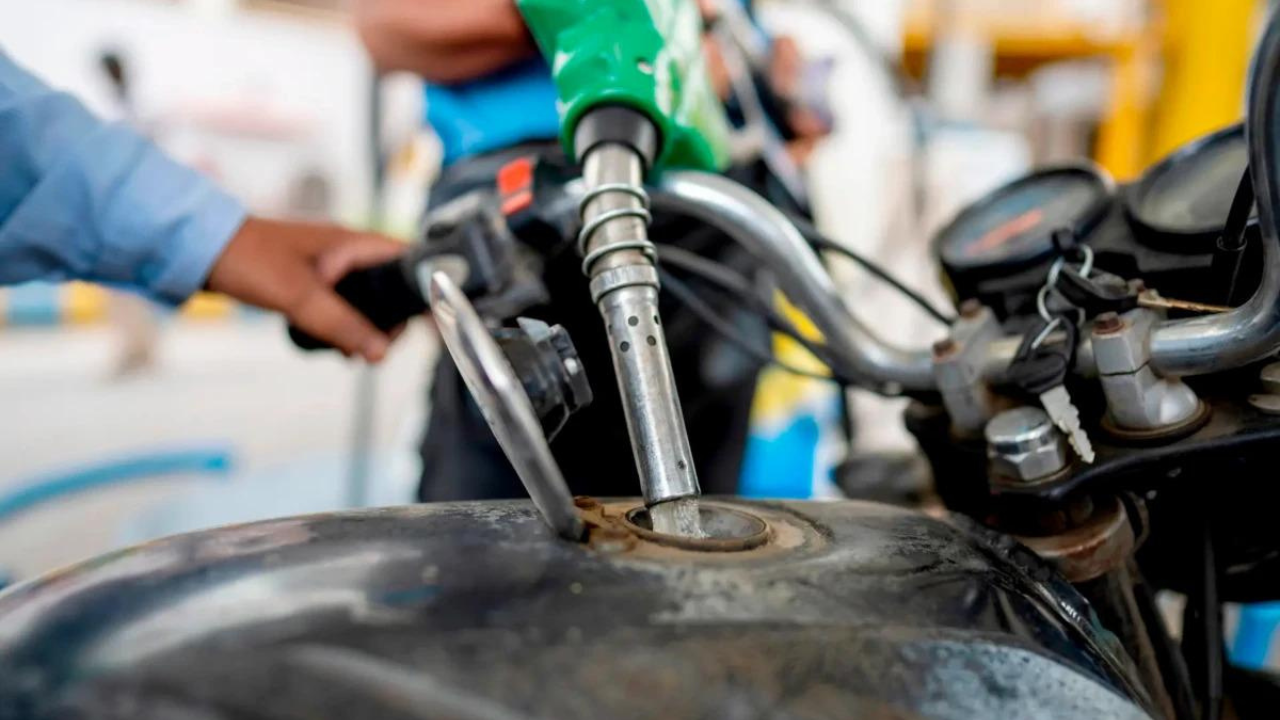
E20 Fuel Row: Protests Mount, 'E20 Janta Party' Demands Choice, Gadkari Faces Heat
An online movement named 'E20 Janta Party,' inspired by the 'Cockroach Janta Party' protests, is gaining traction in India, demanding consumers have the option of purchasing 100% petrol alongside E20 blended fuel. This has led to calls for Union Minister Nitin Gadkari's resignation and planned protests by transport unions. Concerns over mileage, engine performance, and transparency are central to the debate.
Key Highlights
- E20 Janta Party demands consumer choice for 100% petrol.
- Transport unions plan August 4 protest march to Parliament.
- Concerns raised about E20 fuel affecting vehicle mileage and engines.
- Nitin Gadkari faces calls for resignation over the E20 policy.
- Online campaign gains significant social media following.
- Government maintains E20 fuel is safe and beneficial.
A growing online movement, the 'E20 Janta Party,' has emerged in India, drawing inspiration from the recent 'Cockroach Janta Party' (CJP) protests that led to the resignation of Union Education Minister Dharmendra Pradhan. This new digital outfit is now targeting the government's Ethanol Blended Petrol (EBP) programme, specifically the E20 fuel blend, and has called for the resignation of Union Road Transport and Highways Minister Nitin Gadkari.
The 'E20 Janta Party', which describes itself as an independent citizens' movement focused on transparency and consumer rights, is not demanding a complete rollback of the E20 policy. Instead, its primary demand is for consumers to have the choice to purchase 100% pure petrol alongside the E20 blend at fuel stations. The movement also calls for clearer fuel labelling, publication of data on the costs and benefits of fuel blends, and independent studies on the impact of E20 on mileage, engine performance, emissions, and maintenance costs.
This online campaign has rapidly gained a significant following on social media platforms like Instagram and X (formerly Twitter), with accounts attracting hundreds of thousands of followers. The meme-heavy, satirical style employed by the E20 Janta Party mirrors the approach of the CJP, which successfully leveraged social media to mobilize public opinion and pressure the government.
In parallel, several transport unions and associations, including the Delhi Taxi and Tourist Transporters and Tour Operators Association, have announced a protest march to Parliament on August 4th, echoing similar concerns about E20 fuel. These organizations allege that the ethanol-blended fuel has led to reduced fuel efficiency, increased maintenance costs, and potential damage to vehicle engines, particularly in older models. They are demanding an independent scientific review of the E20 policy.
Union Minister Nitin Gadkari has been a vocal proponent of the ethanol-blending programme, emphasizing its role in reducing crude oil imports, enhancing energy security, and supporting the agricultural sector by creating a larger market for sugarcane and other crops. The government, through Gadkari and other ministers, has consistently defended the E20 policy, stating that extensive testing has found no evidence of widespread engine failures directly attributable to the fuel.
However, Gadkari himself has acknowledged in Parliament that E20 fuel might reduce fuel efficiency by 2% to 6% depending on the vehicle category and age. He also noted that certain rubber parts and gaskets in BS-III vehicles manufactured between 2005 and 2016 might require replacement, though this can be managed during routine servicing. Despite these acknowledgments, the government maintains that E20 fuel offers benefits such as improved acceleration, better ride quality, and lower carbon emissions compared to lower blends like E10.
Concerns have also been raised regarding the premature rollout of E20, with claims that vehicle manufacturers had not fully optimized engines for the blend at the time of its implementation. The government has stated that automobile manufacturers continue to honour warranty claims for vehicles running on E20 fuel.
Notably, Union Petroleum Minister Hardeep Singh Puri met with representatives of 'Team Bharat,' an outfit spearheading some of the protests, indicating the government's attempt to engage with protesters and prevent the issue from escalating, a tactic apparently learned from the CJP protests.
The controversy has also seen Union Minister Nitin Gadkari approach the Bombay High Court against social media platforms over alleged defamatory AI-generated content and deepfakes linking him and his family to financial benefits from the E20 policy. Gadkari's petition argues that he has been wrongly projected as the main architect of the policy, which is primarily administered by the Ministry of Petroleum and Natural Gas.
The Deccan Herald article accurately reflects the current situation, highlighting the rise of the 'E20 Janta Party,' the demands for consumer choice, the planned transport union protests, and the calls for Nitin Gadkari's resignation, all stemming from the ongoing debate surrounding the E20 fuel policy in India. The article's headline is not sensationalized but accurately captures the core developments.
Frequently Asked Questions
What is E20 fuel?
E20 fuel is petrol blended with 20% ethanol and 80% regular petrol. Ethanol is a type of alcohol produced from crops like sugarcane and grains. The Indian government has been promoting its use to reduce crude oil imports, lower emissions, and support farmers.
What are the main demands of the 'E20 Janta Party'?
The E20 Janta Party demands that consumers be given the option to purchase 100% pure petrol alongside E20 fuel at petrol stations. They also call for greater transparency in fuel labelling, publication of data on the fuel's impact, and independent studies on its performance.
What concerns do transport unions have about E20 fuel?
Transport unions and vehicle owners have raised concerns that E20 fuel may lead to reduced vehicle mileage, increased maintenance costs, and potential damage to engines, especially in older vehicles not designed for higher ethanol blends.
What is the government's stance on E20 fuel?
The Indian government, through ministers like Nitin Gadkari, defends the E20 policy, stating it is safe, environmentally beneficial, and helps achieve energy security and support farmers. While acknowledging potential minor reductions in fuel efficiency for some vehicles, the government maintains that extensive testing has not shown widespread engine failures directly linked to E20 fuel.