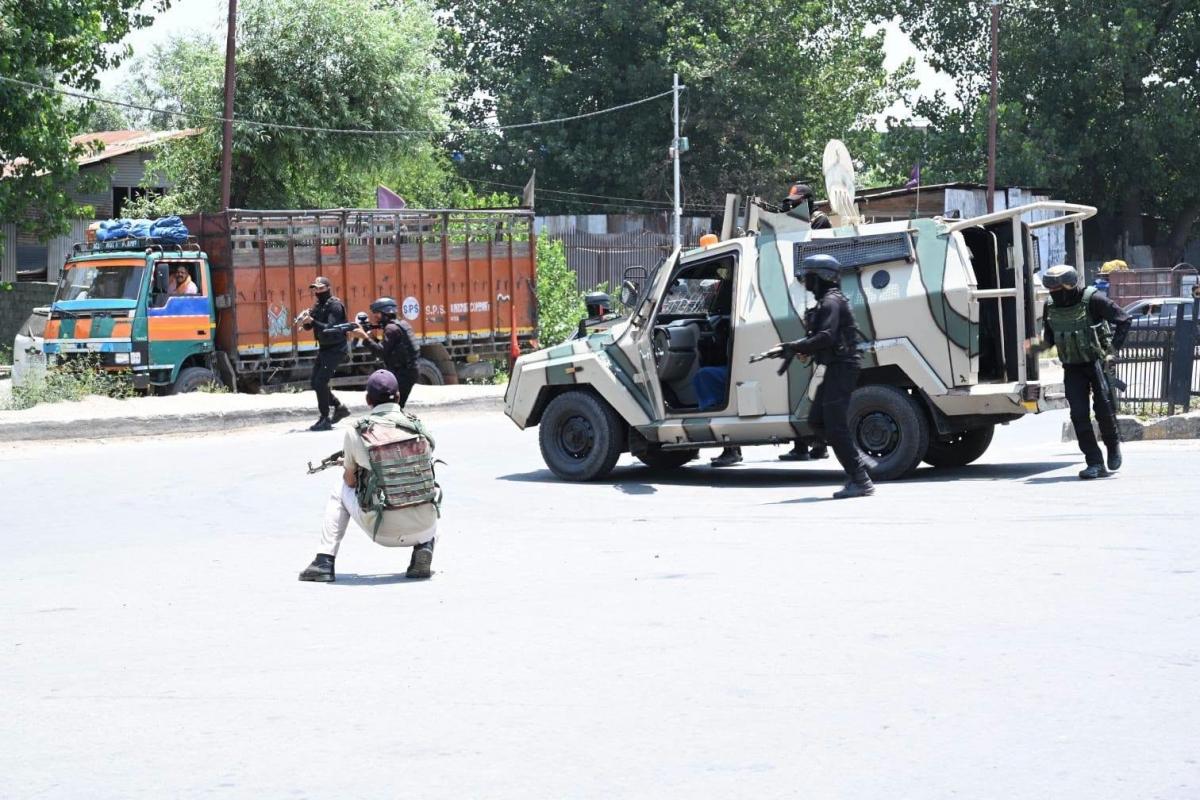
Amarnath Yatra 2026: Advanced Security Measures Deployed for Pilgrim Safety
The Amarnath Yatra, commencing July 3, 2026, will feature an advanced, multi-layered security grid. The Indian Army has deployed anti-drone systems, radars, and anti-aircraft guns, alongside extensive ground surveillance, to ensure pilgrim safety amidst heightened threat perceptions. This comprehensive security architecture is coordinated by various agencies.
Key Highlights
- Amarnath Yatra 2026 begins July 3, concluding August 28.
- Army deploys anti-drone systems, radars, and anti-aircraft guns.
- Integrated Drone Detection and Interceptor System (IDDIS) utilized.
- Low Level Lightweight Radar (LLLR) deployed for first time.
- Thousands of security personnel on ground, aerial surveillance ongoing.
- Pilgrimage routes declared 'no flying zones' for unauthorized drones.
The annual Shri Amarnath Yatra, a revered Hindu pilgrimage to the sacred cave shrine in Jammu and Kashmir, is set to commence on July 3, 2026, and will conclude on August 28, 2026, spanning 57 days. In anticipation of lakhs of devotees, the Indian Army, in close coordination with the Central Reserve Police Force (CRPF), Jammu and Kashmir Police, and other security agencies, has established a comprehensive, technology-driven security shield along the pilgrimage routes.
At the forefront of these enhanced security measures is the deployment of an Integrated Drone Detection and Interceptor System (IDDIS), designed to detect, track, and neutralize potential aerial threats. The IDDIS combines both 'soft-kill' and 'hard-kill' capabilities. Its 'soft-kill' mechanism can neutralize hostile drones by jamming their communication and navigation links, while its 'hard-kill' capability enables the physical destruction of rogue drones using laser-based interception technology.
For the first time during the Amarnath Yatra, a Low Level Lightweight Radar (LLLR) has been deployed. This advanced radar system operates in two surveillance modes and is capable of detecting low-flying aerial objects, including drones, at ranges varying from 20 to 50 kilometers. Complementing these drone detection and interception systems, the Army has also positioned L-70 and ZU anti-aircraft guns at critical locations along the Yatra routes. These land-to-air defense systems are capable of providing close-range air defense and securing areas within approximately a five-kilometer radius.
The need for such an advanced aerial security grid stems from the fact that the Amarnath Yatra has been identified as a high-value target by 'Pakistan-backed terrorist groups' for over two decades. Union Home Minister Amit Shah has personally instructed agencies to establish an 'impregnable multi-layered security grid' and emphasized the increased use of drones and monitoring technology. Consequently, all routes leading to the Amarnath Cave have been declared a 'no flying zone' from July 1, 2026, until the conclusion of the pilgrimage on August 28, 2026, to prevent unauthorized aerial activities.
Beyond aerial surveillance, thousands of personnel from the Indian Army, CRPF, Jammu and Kashmir Police, and other central armed police forces have been extensively deployed across the Yatra routes. Drone sorties are regularly conducted during morning and evening hours, with additional flights as required, to ensure continuous aerial surveillance over nearly 100 transit camps established along the traditional 48-km Nunwan-Pahalgam route in Anantnag district and the shorter 14-km Baltal route in Ganderbal district. Surveillance systems are also strategically installed on high ridges to monitor vulnerable areas and pilgrim movement.
Security arrangements on the ground are equally stringent, featuring a three-tier security system around Yatri Niwas and other base camps. A network of high-end CCTV cameras monitors the Jammu-Srinagar National Highway, crucial for both pilgrim and regular traffic. Quick Reaction Teams (QRTs) have been activated, and body scanners are in place at camps. Pilgrims are issued Radio Frequency Identification (RFID) cards for real-time tracking, and a comprehensive Rs 5 lakh insurance cover is also provided. Furthermore, authorities are conducting 24x7 highway surveillance, random night checkpoints, and verification drives for hotels, restaurants, lodgements, tenants, and laborers near border areas to thwart any potential terror threats.
The ceremonial 'Pratham Puja' (first prayer) marking the official start of the pilgrimage was performed by Jammu and Kashmir Lieutenant Governor Manoj Sinha on June 29, 2026, where he prayed for peace and prosperity and urged devotees to participate in large numbers. Ahead of the Yatra, token distribution for on-the-spot registration commenced on June 30, 2026, at various designated centers, with pilgrims lining up to secure their spots. The first batch of pilgrims is scheduled to be flagged off from the Bhagwati Nagar base camp in Jammu on July 2, 2026, underscoring the final preparations for this significant annual event.
All stakeholders, including the Shri Amarnath Ji Shrine Board (SASB), civil administration, Army, police, paramilitary forces, local communities, and service providers, are working in complete synergy to ensure a safe, hassle-free, and spiritually fulfilling journey for all devotees. The enhanced measures reflect an evolving approach to countering both conventional and emerging threats, ensuring the safety of one of India's most important religious pilgrimages.
Frequently Asked Questions
When does the Amarnath Yatra 2026 begin and end?
The Amarnath Yatra 2026 is scheduled to commence on July 3, 2026, and will conclude on August 28, 2026, lasting for a duration of 57 days.
What advanced security technologies are being used for the Amarnath Yatra?
The Indian Army has deployed an Integrated Drone Detection and Interceptor System (IDDIS), a Low Level Lightweight Radar (LLLR) for the first time, and L-70 and ZU anti-aircraft guns to counter aerial threats.
Why are such extensive security measures necessary for the Yatra?
The heightened security measures are implemented due to the Amarnath Yatra being a high-value target for 'Pakistan-backed terrorist groups' for over two decades, necessitating robust protection for pilgrims.
What other security arrangements are in place besides aerial defense?
Beyond aerial defense, a multi-layered ground security grid includes thousands of personnel, CCTV surveillance on highways, Quick Reaction Teams, RFID tracking for pilgrims, body scanners, and continuous monitoring of transit camps. All Yatra routes are also 'no flying zones'.
Has the Amarnath Yatra officially begun with ceremonial rituals?
Yes, Jammu and Kashmir Lieutenant Governor Manoj Sinha performed the 'Pratham Puja' on June 29, 2026, marking the ceremonial start of the annual pilgrimage.