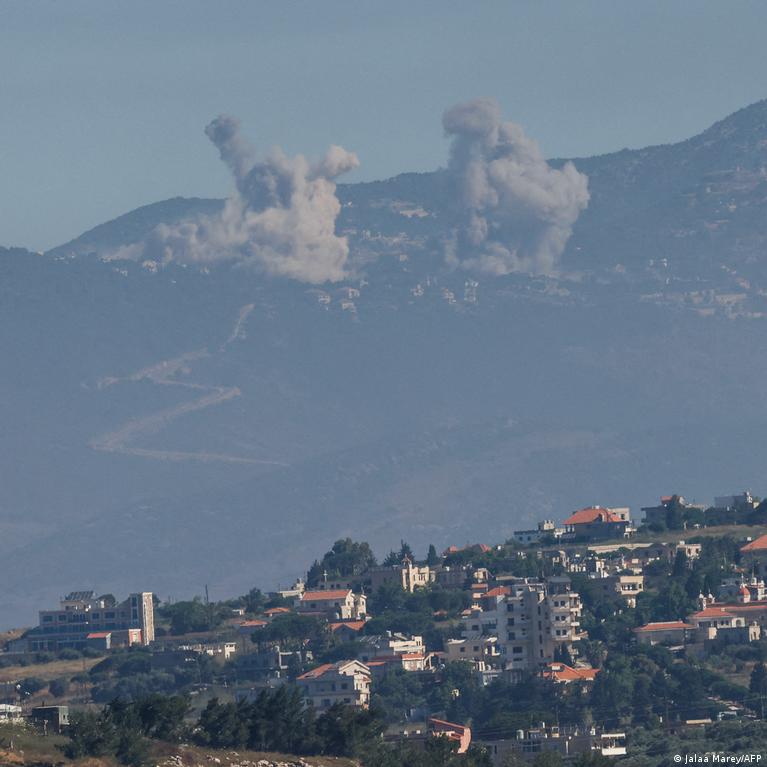
IDF Vows Continued Operations in Lebanon Amid Fragile Ceasefire
An IDF spokesman confirmed ongoing military operations in Lebanon, stressing that attacks would continue as needed to ensure Israeli security. This statement follows intense clashes with Hezbollah despite a newly agreed ceasefire and a broader US-Iran deal to de-escalate regional tensions.
Key Highlights
- IDF spokesman confirmed continued attacks in Lebanon.
- Statement made amid renewed Israeli-Hezbollah clashes.
- A new ceasefire was agreed on June 19, 2026.
- Ceasefire followed a US-Iran memorandum of understanding.
- Israeli leadership vows to maintain security zone in Lebanon.
- Hezbollah accuses Israel of ceasefire violations and vows retaliation.
An Israeli Defense Forces (IDF) spokesman announced on June 19, 2026, that the IDF would continue its attacks in Lebanon for as long as necessary, emphasizing the military's freedom to operate against threats. This declaration comes amidst a volatile period marked by renewed intense fighting between Israel and the Iran-backed Hezbollah militant group, despite a freshly agreed ceasefire scheduled to take effect the same day.
The statement from the IDF spokesman highlighted that troops on the ground in Lebanon retain the freedom to act against threats and that Israeli forces would remain in a 'buffer zone' as long as Israeli citizens were under threat from Hezbollah. This position was echoed and reinforced by top Israeli leadership. Prime Minister Benjamin Netanyahu vowed that Israel would 'exact a very heavy price' from Hezbollah following the killing of four Israeli soldiers, including a battalion commander, in an attack on a tank in the Lebanese village of Kfar Tebnit. He further asserted that Israeli troops would maintain their presence in the security zone along the border with Lebanon 'for as long as required' to protect northern communities. Defense Minister Israel Katz reiterated this stance, stating that the IDF would remain in southern Lebanon to protect Israel from the Hezbollah threat and that any violation of the ceasefire would be met with significant force.
The renewed hostilities on June 19, 2026, were particularly significant as they occurred just days after the United States and Iran had reached a memorandum of understanding (MoU) aimed at ending the broader 'Iran war' and de-escalating conflicts on all fronts, including in Lebanon. This MoU, signed by U.S. President Donald Trump and Iran's President Masoud Pezeshkian, called for a cessation of hostilities, yet neither Israel nor Hezbollah were direct parties to this agreement. The flare-up of violence, which included Israeli airstrikes on over 80 Hezbollah targets across southern Lebanon and significant casualties on both sides, posed a major test to the durability of the U.S.-Iran deal and even led to the postponement of planned U.S.-Iran negotiations in Switzerland.
Lebanese officials reported that Israeli strikes killed at least 47 people and wounded 97 others in Lebanon on June 19, 2026, with the dead including women and children. Hezbollah, for its part, accused Israel of continuous violations of ceasefire agreements since November 2024, including the latest U.S.-Iran MoU. The group stated it would continue to respond to Israeli attacks to defend Lebanese territory and people. This mutual accusation of ceasefire violations underscores the deeply entrenched nature of the conflict and the challenges in achieving lasting peace.
The ongoing conflict in southern Lebanon has been a long-standing issue, with Israel having conducted multiple military operations and maintained a security presence in the area over decades due to threats from various militant groups, including the PLO and later Hezbollah. The current situation, characterized by cross-border exchanges since October 2023 following the Hamas attack on Israel, escalated further with an Israeli ground invasion and large-scale air campaign in October 2024. Despite various ceasefire attempts and international mediation efforts involving the U.S., Iran, and Qatar, the security situation remains highly fragile. The IDF's insistence on continuing operations as needed reflects Israel's primary security objective of neutralizing threats from Hezbollah and protecting its northern borders, even if it means maintaining a presence in a 'security zone' within Lebanon.
Frequently Asked Questions
What is the current status of the conflict between Israel and Hezbollah?
As of June 19, 2026, a new ceasefire has been agreed upon between Israel and Hezbollah following a significant flare-up in fighting. However, statements from both sides indicate ongoing tensions and a willingness to continue military actions if perceived violations occur or security demands it.
What role does the U.S.-Iran deal play in this conflict?
A U.S.-Iran memorandum of understanding was recently signed, aiming to end hostilities across various fronts, including Lebanon. While it sought to de-escalate regional tensions, the renewed fighting between Israel and Hezbollah, who were not direct signatories, demonstrates the fragility of the agreement's impact on this specific conflict.
Why is Israel insisting on continuing attacks and maintaining a 'security zone'?
Israel's leadership, including Prime Minister Netanyahu and Defense Minister Katz, stated that continued operations and maintaining a 'security zone' in southern Lebanon are necessary to protect Israeli citizens and communities from Hezbollah's threats. This stance comes after deadly attacks on Israeli soldiers attributed to Hezbollah.
What are the humanitarian consequences of the recent fighting?
The recent escalation on June 19, 2026, led to significant humanitarian impact, with Lebanese officials reporting at least 47 people killed and 97 wounded in Israeli strikes, including women and children. This has also caused displacement of civilians in southern Lebanon.