PM Modi's Uzbekistan Visit: Strategic Ties, Uranium Deal, and Top Honour
Prime Minister Narendra Modi concluded a significant two-day visit to Uzbekistan, where he received a warm welcome, was conferred the nation's highest honour, and finalized a crucial long-term uranium supply deal. The visit elevated bilateral ties to a Comprehensive Strategic Partnership.
Key Highlights
- PM Modi undertook a two-day State Visit to Uzbekistan.
- Received warm welcome from President Shavkat Mirziyoyev.
- Conferred Uzbekistan's highest state honour, 'Order of Oliy Darajali Dustlik'.
- India and Uzbekistan signed a long-term uranium supply arrangement.
- Bilateral ties elevated to a Comprehensive Strategic Partnership.
- Target set for $5 billion bilateral trade by 2030.
Prime Minister Narendra Modi embarked on a significant two-day State Visit to Uzbekistan on Saturday, August 29, 2026, marking his fourth visit to the Central Asian nation. The visit, undertaken at the invitation of Uzbek President Shavkat Mirziyoyev, aimed at further strengthening the strategic partnership between the two countries.
Upon his arrival in Tashkent, Prime Minister Modi received a remarkably warm and personal welcome from President Mirziyoyev at the international airport, a gesture that underscored the growing importance of bilateral ties. The two leaders even shared a car ride from the airport to the presidential palace. The Uzbek capital was illuminated with the vibrant tricolour hues of the Indian national flag, adding to the ceremonial reception, and the Indian diaspora in Uzbekistan also extended a high-energy welcome with cultural performances.
The core of the visit involved delegation-level talks between PM Modi and President Mirziyoyev at the Kuksaroy Presidential Palace in Tashkent. These discussions were comprehensive, covering a broad spectrum of cooperation areas, including trade and investment, defence and security, critical minerals, digital connectivity, energy, healthcare, pharmaceuticals, education, and people-to-people exchanges.
A pivotal outcome of the visit was the decision to elevate the bilateral Strategic Partnership between India and Uzbekistan to a 'Comprehensive Strategic Partnership'. This upgrade reflects the deepening and expanding scope of cooperation between the two nations, coinciding with the 15th anniversary of their strategic partnership. Both leaders expressed their commitment to setting concrete goals within this new framework, aiming for stronger institutional mechanisms to guide future engagements.
Another major development was the finalization of a 'long-term arrangement for uranium supply' from Uzbekistan to India. This strategic agreement is crucial for India's energy security and its civilian nuclear energy programme, as India seeks to diversify its uranium sources and expand its nuclear power capacity.
In a special recognition of his contributions to strengthening bilateral friendship, President Mirziyoyev conferred upon Prime Minister Modi the 'Order of Oliy Darajali Dustlik' (Order of Friendship), Uzbekistan's supreme state award. This marks PM Modi's 36th international award, and he dedicated it to the enduring bond between the people of India and Uzbekistan. Modi expressed gratitude, highlighting the significance of 'Dostlik,' meaning friendship, as the core sentiment of the relationship.
Economically, the two countries set an ambitious target of increasing annual bilateral trade to $5 billion by 2030. This is a substantial increase from the current trade volume, which is over $1 billion. To achieve this, discussions included improving market access, connectivity, and banking and payment systems. Three sister-city and sister-state agreements were also formalized to enhance sub-national cooperation. Both leaders also agreed to host a Business Summit to deepen economic and investment ties.
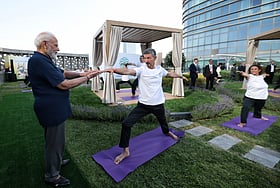
Beyond economic and strategic ties, cultural and developmental aspects were also in focus. PM Modi visited the Yangi Uzbekistan Park and laid a wreath at the Independence Monument. He also participated in a Yoga session organized by the Yoga Federation of Uzbekistan, acknowledging its growing popularity. India also announced a grant of $1 million for afforestation efforts in Uzbekistan's Aral Sea region, aligning with environmental rehabilitation initiatives.
The Prime Minister's visit to Uzbekistan is the first leg of a four-day diplomatic tour, which will also include a trip to Bishkek, the Kyrgyz Republic, to attend the 26th Shanghai Cooperation Organisation (SCO) Summit. This highlights India's broader engagement with Central Asia and its commitment to regional stability and prosperity. The comprehensive nature of the discussions and the significant agreements reached underscore a robust and forward-looking India-Uzbekistan relationship.
Frequently Asked Questions
What were the key outcomes of PM Modi's visit to Uzbekistan?
During PM Modi's two-day visit, India and Uzbekistan elevated their relationship to a Comprehensive Strategic Partnership, formalized a long-term arrangement for uranium supply, and set a target of $5 billion in bilateral trade by 2030. PM Modi was also conferred Uzbekistan's highest state honour.
What is the 'Order of Oliy Darajali Dustlik'?
The 'Order of Oliy Darajali Dustlik' (Order of Friendship) is Uzbekistan's supreme state award. It was conferred upon Prime Minister Narendra Modi by President Shavkat Mirziyoyev in recognition of his contributions to strengthening the friendship between India and Uzbekistan.
Why is the uranium supply deal significant for India?
The long-term uranium supply arrangement with Uzbekistan is significant for India's energy security. It will support the expansion of India's civilian nuclear energy programme and help diversify its sources of nuclear fuel.
When did PM Modi visit Uzbekistan?
Prime Minister Narendra Modi visited Uzbekistan on August 29 and 30, 2026, as part of a two-day State Visit before proceeding to Kyrgyzstan for the SCO Summit.
What other areas of cooperation were discussed during the visit?
Beyond uranium supply and strategic partnership, discussions covered expanding cooperation in trade, investment, defence, digital connectivity, critical minerals, healthcare, pharmaceuticals, education, and various cultural and people-to-people ties.