Exiled Prince Pahlavi urges Trump to end Iran's Islamic Republic
Exiled Iranian Prince Reza Pahlavi called on then-US President Donald Trump to support the Iranian people in their quest to end the Islamic Republic. His appeal came during the Munich Security Conference amidst widespread anti-government protests and a violent crackdown in Iran, with global diaspora rallies supporting regime change.
Key Highlights
- Reza Pahlavi appealed to Donald Trump for intervention in Iran.
- Pahlavi explicitly called for an end to the Islamic Republic.
- The plea was made at the Munich Security Conference.
- Trump had previously expressed support for Iranian regime change.
- The call coincided with major anti-government protests in Iran.
- Iranian diaspora held widespread rallies supporting Pahlavi's call.
Exiled Iranian Prince Reza Pahlavi, son of Iran's last Shah, made a significant appeal to then-US President Donald Trump, urging him to aid the Iranian people in their efforts to dismantle the Islamic Republic. This call to action was delivered at the prestigious Munich Security Conference. Pahlavi explicitly stated, 'It is time to end the Islamic republic,' emphasizing that this demand echoed from the 'bloodshed of my compatriots who are not asking us to fix the regime but to help them bury it.'
The prince's plea came amid a period of intense unrest in Iran, characterized by nationwide anti-government protests that had escalated significantly in January, leading to a severe crackdown by authorities. Rights groups reported thousands of deaths and arrests during this violent repression. Pahlavi had actively encouraged Iranians, both within the country and in the diaspora, to persist with their demonstrations, even calling for them to chant slogans from their homes and rooftops to coincide with international rallies.
Donald Trump had previously signaled his stance on the situation, stating on the Friday preceding Pahlavi's Saturday address that a change of government in Iran would be 'the best thing that could happen.' Furthermore, the US administration had taken steps to increase military pressure on Tehran, including the deployment of a second aircraft carrier to the Middle East. Trump had also warned of potential military action in support of the protests and had earlier threatened military intervention.
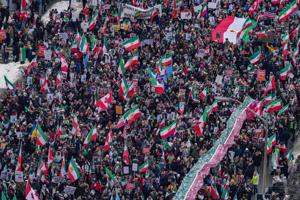
The context of Pahlavi's appeal was further amplified by extensive rallies organized by the Iranian diaspora across numerous cities worldwide. Events in Munich, Toronto, Los Angeles, and other locations saw hundreds of thousands of Iranian exiles and supporters gathering to call for regime change and to express solidarity with protesters inside Iran. Many of these rallies featured participants waving the pre-1979 revolution green, white, and red flags bearing the lion-and-sun emblem of the former monarchy, and chanting slogans like 'Javid Shah' (Long live the Shah) and 'Regime change in Iran.'
Pahlavi, who has resided outside Iran since before the 1979 Islamic Revolution that overthrew his father's monarchy, positioned himself as a potential transitional leader. He declared his readiness to guide Iran towards a 'secular democratic future' through a democratic and transparent process. However, the Iranian opposition remains fragmented, and Pahlavi has faced criticism, particularly for his supportive stance towards Israel, including a publicly noted visit in 2023 that reportedly hindered efforts to unify opposition groups. He has also not distanced himself from the autocratic rule of his father.
The article also touches upon the ongoing diplomatic tensions between the US and Iran, noting that Washington continued diplomatic engagement with Tehran's government, with talks on the nuclear program confirmed to take place even amidst the escalating pressure and calls for regime change. The extensive international coverage of Pahlavi's statements and the diaspora rallies underscore the global significance of the events unfolding in and around Iran. These events highlight the persistent internal dissent against the Islamic Republic and the external calls for its transformation, drawing the attention of major world powers. The situation remains a critical point in international geopolitics, with potential long-term implications for the Middle East and global stability.
Frequently Asked Questions
Who is Reza Pahlavi and what is his significance?
Reza Pahlavi is the exiled son of Mohammad Reza Pahlavi, Iran's last Shah, who was overthrown during the 1979 Islamic Revolution. He is a prominent opposition figure advocating for a secular, democratic Iran and is seen by many in the diaspora as a potential leader for a transitional government.
What was Reza Pahlavi's main message to Donald Trump?
At the Munich Security Conference, Reza Pahlavi urged Donald Trump to help the Iranian people 'bury' the current regime and explicitly called for 'time to end the Islamic Republic.' He emphasized that Iranians desired fundamental change, not just reforms.
What was Donald Trump's stance on the situation in Iran at the time?
Donald Trump had previously stated that a change of government in Iran would be 'the best thing that could happen.' He also had deployed a second aircraft carrier to the Middle East and warned of possible military action in support of the Iranian people amidst ongoing protests.
What was the broader context of Pahlavi's appeal?
Pahlavi's appeal took place amidst widespread anti-government protests within Iran, which were met with a violent crackdown. Simultaneously, the Iranian diaspora organized large solidarity rallies globally, including major demonstrations in Munich, Toronto, and Los Angeles, all calling for regime change in Iran.
What challenges does Reza Pahlavi face in unifying the Iranian opposition?
Despite his prominent role, the Iranian opposition remains fragmented among various groups. Pahlavi has faced criticism for certain actions, such as a highly publicized visit to Israel in 2023, which reportedly hampered efforts to unite opposition factions. He has also not publicly distanced himself from the autocratic rule of his father.