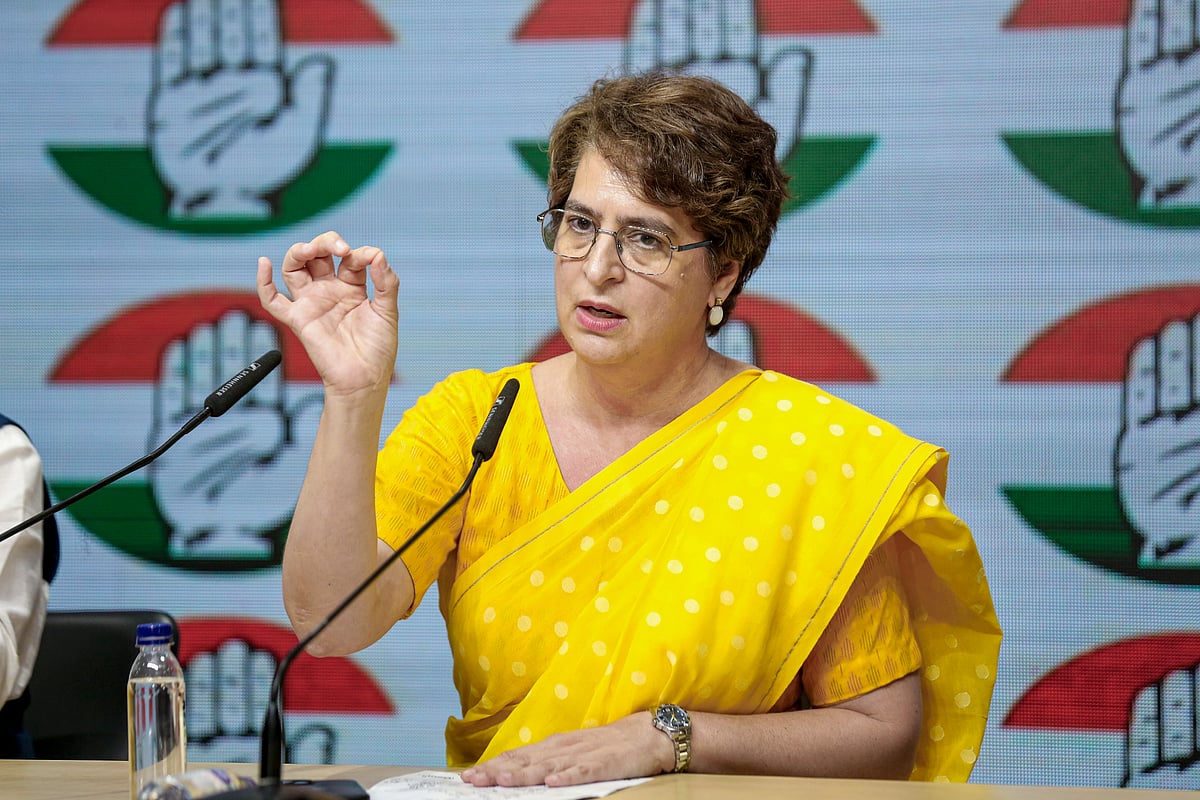
Kharge criticizes PM's speech after women's quota bill fails Lok Sabha test
Congress President Mallikarjun Kharge has criticized Prime Minister Narendra Modi's national address following the defeat of a Constitution amendment bill aimed at expanding Lok Sabha seats and implementing women's reservation. Kharge accused the PM of turning an official address into a political speech, alleging that Modi mentioned the Congress party 59 times while barely referencing women's issues. The bill failed to pass the Lok Sabha due to a lack of the required two-thirds majority.
Key Highlights
- Kharge slams PM Modi's speech as politically motivated and partisan.
- The Constitution amendment bill for women's reservation failed to pass in Lok Sabha.
- The bill aimed to expand Lok Sabha seats and implement 33% women's reservation.
- Kharge claims PM Modi prioritized attacking Congress over discussing women's empowerment.
- The bill's failure is linked to the ongoing delimitation process and census data.
Congress President Mallikarjun Kharge has sharply criticized Prime Minister Narendra Modi's address to the nation, delivered after a key Constitution amendment bill related to women's reservation failed to secure the necessary two-thirds majority in the Lok Sabha. Kharge alleged that Prime Minister Modi transformed an official address into a politically charged speech, heavily focused on criticizing the Congress party. He specifically stated that Modi mentioned the Congress 59 times, while women's issues were barely touched upon, thus highlighting his perceived skewed priorities. The failed bill, the Constitution (131st Amendment) Bill, 2026, sought to increase the Lok Sabha's strength from 543 to 850 seats to facilitate the implementation of 33% reservation for women. It was linked to the processes of delimitation and census, which has drawn further political contention. The bill received 298 votes in favor but fell short of the required majority, with 230 members voting against it.
Kharge's criticism extended to accusations of misusing official platforms during an election period and violating the Model Code of Conduct. He reiterated the Congress party's historical support for women's reservation, pointing to past legislative efforts. The opposition parties, including the Congress, have argued that the government's bill was primarily a delimitation exercise disguised as a women's reservation bill, intended to redraw electoral maps for political advantage. They have also called for the immediate implementation of the Women's Reservation Act, 2023, without linking it to delimitation or census, by utilizing the existing Lok Sabha strength of 543 seats. This proposal for immediate implementation was also put forth in a private bill by DMK MP P. Wilson in the Rajya Sabha.
Prime Minister Modi, in his address, expressed disappointment over the bill's defeat, attributing it to opposition parties obstructing progress for political reasons. He compared the bill's failure to "female foeticide" and accused some opposition leaders of celebrating its defeat, calling it an insult to women's dignity and an act of taking women for granted. The government, through Union Home Minister Amit Shah, also criticized the opposition for not allowing the passage of the bill.
The Women's Reservation Act, 2023 (Nari Shakti Vandan Adhiniyam), which mandates 33% reservation for women in Lok Sabha and state assemblies, was passed by Parliament in September 2023. However, its implementation is contingent upon a future census and subsequent delimitation exercise, which is why the government introduced the Constitution (131st Amendment) Bill, 2026, along with related delimitation bills. The opposition argues that linking the implementation to delimitation and a future census is a deliberate delay tactic by the government.
Political analysts suggest that the government's move to introduce a bill that was unlikely to pass, especially during an election period, was a strategic political maneuver. The intention was to position the opposition as anti-women's reservation, thereby garnering electoral benefits. The debate also highlights the complexities of delimitation, where redrawing constituency boundaries based on population can significantly alter political representation, with concerns raised about potential disadvantages for southern states.
The news report is verified as accurate based on multiple credible sources that corroborate the central claims regarding Kharge's statements, the failure of the bill, and the ensuing political exchange. The headline accurately reflects the main thrust of the article, which is Kharge's criticism of the Prime Minister's speech.
Frequently Asked Questions
What was the Constitution (131st Amendment) Bill, 2026, and why did it fail to pass in the Lok Sabha?
The Constitution (131st Amendment) Bill, 2026, was a proposed amendment aimed at increasing the Lok Sabha's strength from 543 to 850 seats to facilitate the implementation of 33% reservation for women. It failed to pass in the Lok Sabha because it did not secure the required two-thirds majority, receiving 298 votes in favor and 230 against.
Why did Mallikarjun Kharge criticize Prime Minister Modi's speech?
Congress President Mallikarjun Kharge criticized PM Modi's speech, delivered after the bill's defeat, for being politically charged and for focusing more on attacking the Congress party (mentioning it 59 times) than on women's issues. Kharge accused the PM of misusing an official address for political gain.
What is the current status of the Women's Reservation Act, 2023?
The Women's Reservation Act, 2023 (Nari Shakti Vandan Adhiniyam), which mandates 33% reservation for women in Lok Sabha and state assemblies, was passed in September 2023. However, its implementation is contingent upon a future census and subsequent delimitation exercise, which has led to the recent legislative efforts and political debate.
What is the opposition's main argument regarding the women's reservation and delimitation bills?
The opposition, including the Congress, argues that the government's proposed bills were primarily about delimitation (redrawing electoral boundaries) rather than genuinely facilitating women's reservation. They believe the government used the women's reservation as a cover to push through delimitation changes for political advantage and are demanding the immediate implementation of the 2023 Act without linking it to delimitation or a future census.