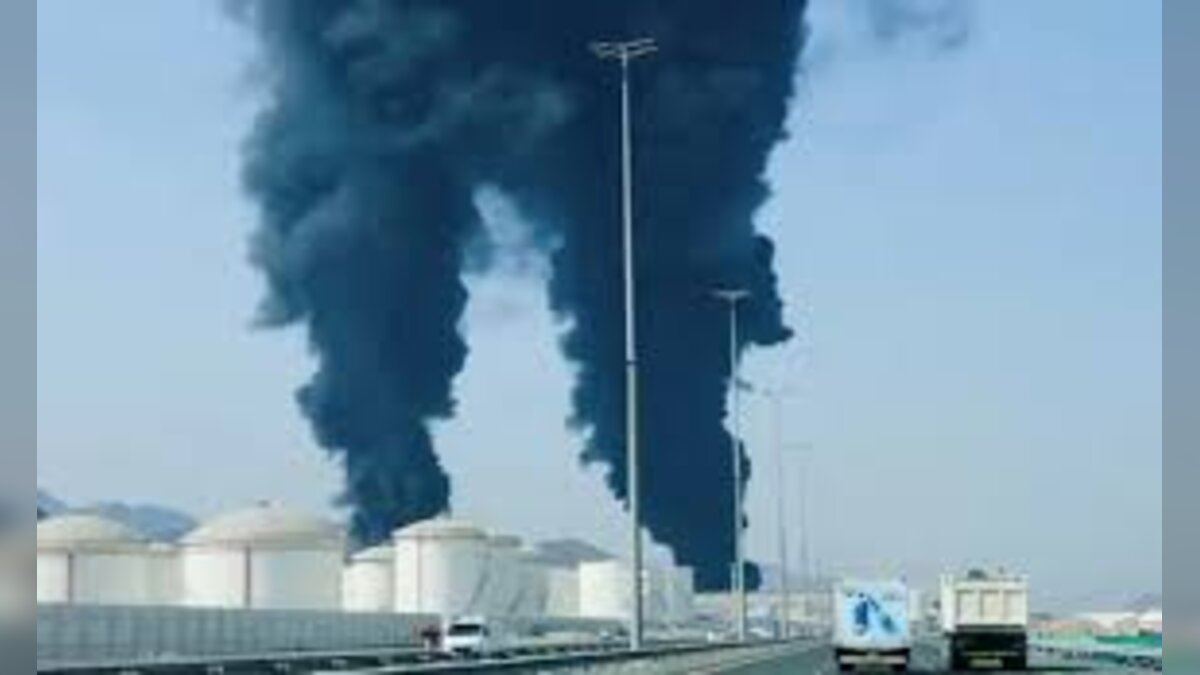
Iran strikes UAE oil terminal amid fragile ceasefire; global prices surge
Iran launched drone and missile attacks on the UAE's Fujairah oil terminal on May 4th, causing a significant fire and injuring three Indian nationals. This attack, occurring despite a fragile ceasefire, targeted a critical oil export facility that bypasses the Strait of Hormuz, sending global oil prices soaring.
Key Highlights
- Iran targeted Fujairah oil terminal with drones and missiles.
- The attack injured three Indian nationals and caused a large fire.
- Fujairah terminal is vital for UAE oil exports, bypassing the Strait of Hormuz.
- The incident occurred despite a fragile ceasefire between the US and Iran.
- Global oil prices surged significantly following the attack.
- Iran denies involvement, blaming 'US military adventurism'.
On May 4th, 2026, the United Arab Emirates (UAE) reported that Iran launched missile and drone attacks, targeting the crucial Fujairah oil terminal. This assault resulted in a significant fire at the Fujairah Oil Industry Zone and caused moderate injuries to three Indian nationals. The attack is particularly noteworthy as it occurred despite a fragile ceasefire that had been in place between the US and Iran since April 8th, 2026, shattering weeks of relative calm in the region..
The Fujairah oil terminal holds strategic importance as it is the endpoint of the Abu Dhabi Crude Oil Pipeline (ADCOP), a vital bypass for the UAE's oil exports that circumvents the Strait of Hormuz. This makes it a critical piece of infrastructure for ensuring the continued flow of oil to global markets, even during times of heightened tension or potential blockades of the Strait. The targeting of this facility by Iran signals a deliberate message to Abu Dhabi, indicating that even alternative export routes are not safe from Iranian reach..
UAE authorities stated that their air defense systems intercepted multiple projectiles, including ballistic missiles, cruise missiles, and drones. However, one Iranian drone managed to penetrate the defenses and strike the oil terminal, igniting the fire. The UAE's Ministry of Defense confirmed the interception of numerous threats, with reports indicating that 12 ballistic missiles, four drones, and three cruise missiles were detected approaching the country..
Iran has officially denied any involvement in the attacks. A statement from the Khatam al-Anbiya central command, the unified combatant command headquarters of the Iranian Armed Forces, categorically denied launching any missile or drone operations against the UAE. They suggested that reports were unfounded and, in some statements, attributed such incidents to 'US military adventurism' in the Strait of Hormuz..
The attacks have had a significant impact on global energy markets, with oil prices experiencing a sharp surge. Brent crude futures rose significantly, with reports indicating prices climbing above $114 and even reaching $120 per barrel, driven by concerns over potential supply disruptions. This price volatility underscores the delicate balance of the global oil market and its sensitivity to geopolitical events in the Middle East..
The incident also highlights the precariousness of the ceasefire. Tensions remain high, particularly concerning the Strait of Hormuz, a vital chokepoint for global energy trade. The US, under President Donald Trump's 'Project Freedom' initiative, has been attempting to escort commercial vessels through the strait, a move that Iran has warned against. The recent attacks are seen by some as a response to these US actions, further complicating diplomatic efforts..
For India, the attack has particular relevance due to the injuries sustained by three Indian nationals and India's significant reliance on oil imports from the Middle East. India has condemned the attacks and reiterated its support for a peaceful resolution through dialogue and diplomacy, emphasizing the need for safe and unimpeded navigation through the Strait of Hormuz to ensure global energy security. The World Bank has projected a significant surge in global energy prices, and further hostilities could severely impact economies in the Global South..
Past incidents involving attacks on energy infrastructure in the region, including previous strikes on Fujairah in March 2026, have already disrupted oil loadings and increased insurance costs for vessels operating in the area. The repeated targeting of Fujairah underscores the strategic importance of such bypass routes and the vulnerability of global energy supplies to regional conflicts..
The EurAsian Times, the source of the article, has been noted for its right-center bias and sometimes sensationalized reporting, with mixed factual reporting according to Media Bias Fact Check. While this particular article reports on verifiable events, readers are advised to cross-reference information with other credible sources..
The broader context includes the ongoing war between Iran and a US-Israel coalition, which began in late February 2026. This conflict has already led to significant disruptions in global oil supply, with the International Energy Agency characterizing it as the largest oil supply disruption in history. The attacks on the Fujairah terminal are part of this larger pattern of escalating tensions and the weaponization of energy infrastructure..
Frequently Asked Questions
What happened at the Fujairah oil terminal?
On May 4th, 2026, the Fujairah oil terminal in the UAE was targeted by Iranian drone and missile attacks, causing a significant fire and injuring three Indian nationals. The attack occurred despite a fragile ceasefire between the US and Iran.
Why is the Fujairah oil terminal important?
The Fujairah oil terminal is a critical piece of infrastructure for the UAE's oil exports. It serves as the endpoint of the Abu Dhabi Crude Oil Pipeline (ADCOP), allowing oil to bypass the Strait of Hormuz and reach global markets.
Did Iran claim responsibility for the attack?
No, Iran has officially denied involvement in the attack, with its military stating that no such operations were launched against the UAE. Some Iranian statements attributed similar incidents to 'US military adventurism'.
How did the attack affect global oil prices?
The attack caused a significant surge in global oil prices, with Brent crude climbing above $114 and reaching up to $120 per barrel due to concerns about supply disruptions.
What is the significance of this attack in relation to the US-Iran ceasefire?
The attack shattered a fragile ceasefire that had been in place since April 8th, 2026, reigniting tensions between the US and Iran, particularly concerning the Strait of Hormuz and US efforts to reopen it for shipping.