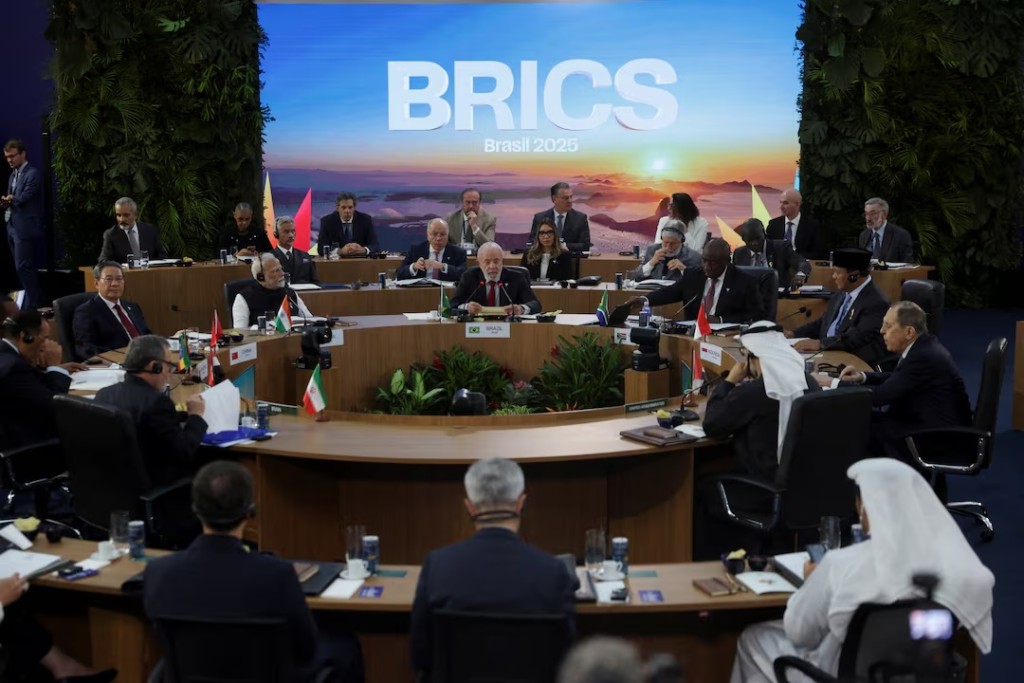
Iran Welcomes India's Peace Bid, Blames UAE for BRICS Rift on West Asia
Iran's Deputy Foreign Minister Kazem Gharibabadi stated that Tehran welcomes India's peace initiatives for West Asia, while accusing the UAE of obstructing a BRICS consensus on the regional conflict. This comes ahead of a key BRICS foreign ministers' meeting in New Delhi, where the West Asia crisis and maritime transit through the Strait of Hormuz are central discussions.
Key Highlights
- Iran welcomes India's initiative for peace in West Asia.
- UAE accused of blocking BRICS consensus on regional conflict.
- Comments made ahead of BRICS foreign ministers' meeting in New Delhi.
- Iran developing new service-based framework for Strait of Hormuz transit.
- Differences between Iran and UAE are causing BRICS divisions.
- India is holding the BRICS chair for 2026.
Iran has publicly expressed its willingness to embrace any peace initiative put forth by major global powers like India to foster peace and stability in West Asia. This significant statement was made by Iranian Deputy Foreign Minister Kazem Gharibabadi during his visit to New Delhi, ahead of a crucial meeting of BRICS foreign ministers hosted by India. The two-day conclave, scheduled for May 14-15, is set to extensively deliberate on the escalating West Asia crisis and its broader implications, including impacts on global energy supplies.
A central point of contention highlighted by Gharibabadi is the apparent blockage of a unified BRICS consensus on the regional conflict. He explicitly stated that a demand by "one member country" within the BRICS bloc to condemn Iran has prevented the grouping from reaching a joint position. While not directly naming the nation, Gharibabadi's remarks clearly pointed to the United Arab Emirates (UAE), noting that it is the only BRICS member among Iran's immediate neighbors. Multiple other news sources explicitly confirm that Iran is blaming the UAE for this lack of consensus.
These sharp differences between Iran and the UAE, both of whom became full members of BRICS on January 1, 2024, alongside Egypt, Ethiopia, and Saudi Arabia, have been a recurring theme in recent BRICS discussions. It stalled India's efforts to build a consensus position during a meeting of the grouping's deputy foreign ministers and special envoys on the Middle East and North Africa just last month. Iran is pushing for a stronger collective position within BRICS against alleged US-Israel military actions in the region, while the UAE reportedly insists on condemning Iran's role. Gharibabadi emphasized Iran's desire for India's BRICS chairship to be successful and warned against signaling division to the world.
Another significant development shared by the Iranian Deputy Foreign Minister concerns maritime transit through the critical Strait of Hormuz. Gharibabadi informed journalists that Iran and Oman are jointly developing a new "service-and-payment-based framework" for the passage of merchant vessels through the strait, adhering to international norms. This comes in the context of heightened military tensions in the region, which have impacted international maritime trade, leaving numerous vessels, including Indian-flagged ships, stranded. Gharibabadi confirmed that Iran has already allowed some Indian vessels to transit and more could be granted permission. However, Indian government sources have reportedly denied that Iran has sought to charge Indian ships for passage and reiterated that India would not agree to such payments. This suggests ongoing delicate negotiations and differing perspectives on the proposed framework. India has been actively engaged in diplomatic efforts and has even launched 'Operation Urja Suraksha' with its Navy quietly guiding ships out of the Persian Gulf to ensure safe passage for its vessels.
India's role as the current BRICS chair for 2026 has been praised by Iran for its impartiality. New Delhi finds itself in a challenging diplomatic balancing act, engaging closely with Tehran while maintaining strategic ties with the UAE. Prime Minister Narendra Modi is reportedly scheduled to visit Abu Dhabi on May 15. The overall situation underscores the complexities of geopolitical dynamics within the expanded BRICS bloc and the broader West Asia region, with significant implications for global trade and energy security, especially for an energy-dependent nation like India.
Frequently Asked Questions
What is Iran's stance on India's role in West Asia peace efforts?
Iran's Deputy Foreign Minister Kazem Gharibabadi has stated that Tehran welcomes any initiative by major powers like India to bring peace and stability to the West Asia region.
Which BRICS nation is accused of blocking consensus on the West Asia conflict?
Iran has accused one unnamed BRICS member of blocking a unified consensus regarding the West Asia conflict. However, Iranian statements indirectly, and other news reports directly, identify this nation as the United Arab Emirates (UAE).
What is the significance of the BRICS meeting in New Delhi?
The BRICS foreign ministers' meeting in New Delhi, hosted by India as the current chair, is crucial for deliberating on the West Asia crisis and its impact on global energy supplies, as well as for assessing the internal unity and effectiveness of the expanded BRICS bloc.
How is the Strait of Hormuz situation affecting Indian vessels?
Military tensions in the Strait of Hormuz have caused disruptions, leading to many Indian-flagged vessels being stranded. Iran is developing a new service-and-payment-based framework for transit, and while some Indian vessels have been allowed passage, India has clarified it will not pay for such transit.
When did Iran and UAE join BRICS?
Iran and the United Arab Emirates officially became full members of the BRICS bloc on January 1, 2024, following an invitation at the 15th BRICS summit in Johannesburg in August 2023.