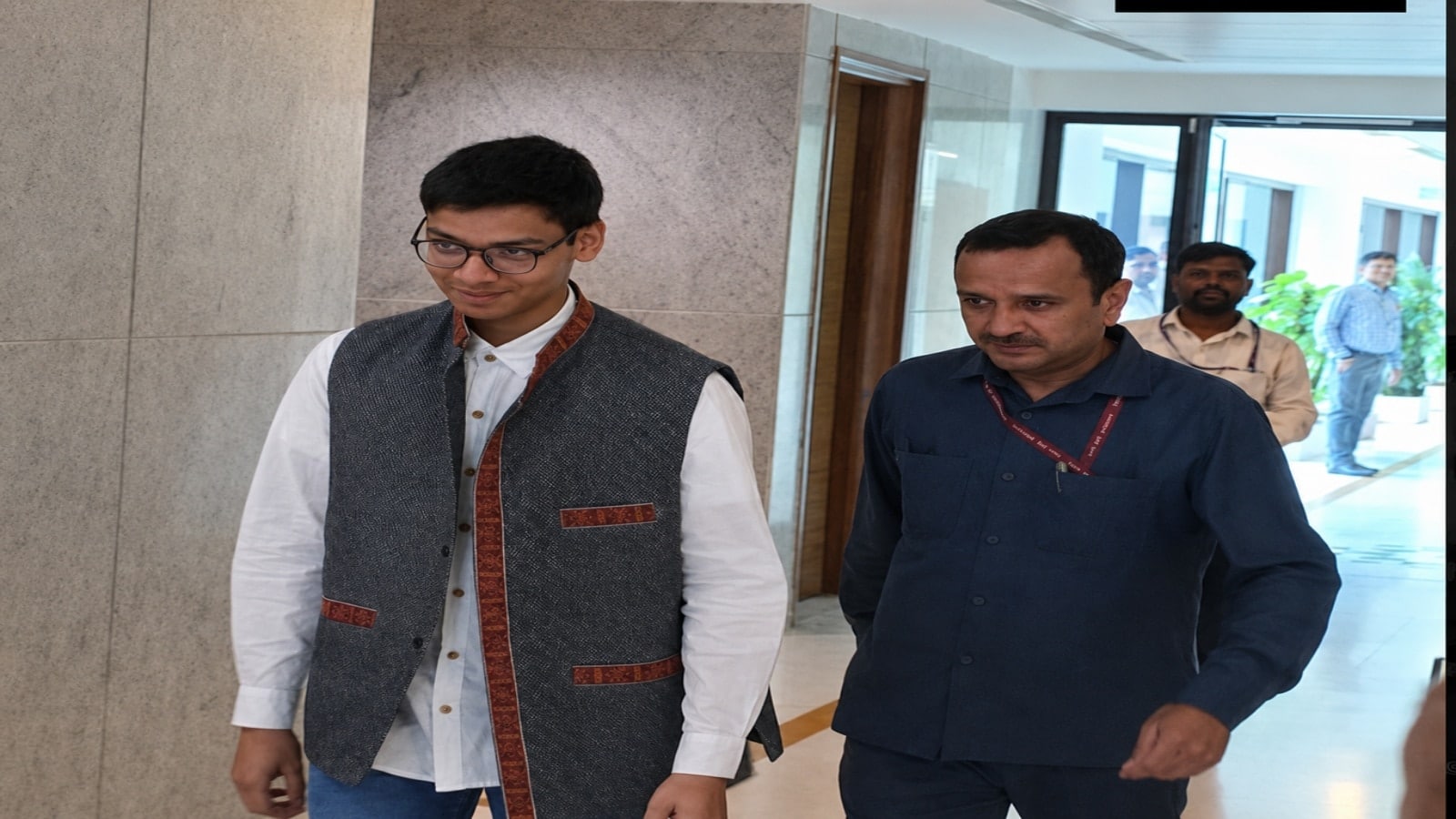
CBSE Whistleblower Advises CJP Founder on Internet Activism
CBSE whistleblower Sarthak Sidhant offered nuanced advice to Cockroach Janta Party (CJP) founder Abhijeet Dipke regarding internet activism, emphasizing its potential but hinting at necessary depth. This comes as both figures champion youth concerns over India's education system and governance. Dipke is set to lead a protest in Delhi on June 6.
Key Highlights
- Sarthak Sidhant exposed CBSE On-Screen Marking irregularities.
- Abhijeet Dipke founded the viral satirical Cockroach Janta Party (CJP).
- Sidhant's message to Dipke focused on effective internet activism.
- Dipke plans a major protest in Delhi on June 6 over education issues.
- CBSE controversy led to official transfers and a parliamentary inquiry.
- CJP gained rapid youth support critiquing governance and unemployment.
The Hindustan Times has published an exclusive report detailing a message from Sarthak Sidhant, the 17-year-old Central Board of Secondary Education (CBSE) whistleblower, to Abhijeet Dipke, the founder of the viral satirical movement, Cockroach Janta Party (CJP). The report highlights Sidhant's perspective on internet activism, suggesting that while online engagement is valuable, there might be further considerations for sustained impact.
Sarthak Sidhant, hailing from Ranchi, Jharkhand, gained national attention for meticulously uncovering alleged irregularities in the CBSE's On-Screen Marking (OSM) system for Class 12 board examinations. His investigation revealed discrepancies in the tendering process for vendor selection, claiming that criteria were altered to favour a particular service provider. Sidhant's findings, shared through social media posts and a detailed blog, led to significant repercussions. The government swiftly responded by transferring two top CBSE officials, including the chairman Rahul Singh, and ordering a high-powered inquiry into the procurement of marking services. Furthermore, Sidhant was summoned to depose before the Parliamentary Standing Committee on Education, where he presented his detailed observations on the alleged flaws. This intervention by a young student has brought crucial scrutiny to the CBSE's evaluation processes and the broader issue of transparency in public institutions.
On the other hand, Abhijeet Dipke, a 30-year-old public relations professional and political strategist, founded the Cockroach Janta Party (CJP) in May 2026. The movement emerged as a satirical response to controversial remarks made by the Chief Justice of India, Surya Kant, who reportedly referred to unemployed youth and online activists as 'cockroaches' and 'parasites.' The CJP quickly garnered massive online traction, amassing millions of followers across social media platforms within days, even surpassing the following of the ruling Bharatiya Janata Party on Instagram. The CJP describes itself as a 'political front of the youth, by the youth, for the youth: Secular, Socialist, Democratic, and Lazy,' focusing on issues such as unemployment, inflation, and education-related concerns.
Dipke, who recently completed his Master's in Public Relations from Boston University, announced his decision to return to India, rejecting multiple job offers in the US, to lead a peaceful protest. He is scheduled to arrive in India on June 6, 2026, to hold a demonstration at Jantar Mantar, New Delhi, demanding the resignation of Union Education Minister Dharmendra Pradhan. This protest aims to highlight various examination-related irregularities, including alleged paper leaks affecting national competitive exams like NEET, CBSE, and CUET. Dipke has also reported receiving death threats and experiencing hacking attempts on CJP's social media accounts, with its X (formerly Twitter) account being temporarily withheld in India.
Sarthak Sidhant's exclusive message to Abhijeet Dipke, as reported by Hindustan Times, implies a critical assessment of the role of online activism. While the full context of 'Internet activism fine, but…' is contained within the exclusive article, it suggests that Sidhant, having navigated the complexities of official channels to bring about change, might be offering advice on how to translate viral online movements into tangible, long-term impact. His experience highlights the importance of thorough investigation, evidence-based advocacy, and engaging with established democratic processes, even while leveraging the power of social media to raise awareness. This exchange underscores a growing trend in India where digitally native youth are actively participating in political and social discourse, demanding accountability from institutions and leaders.
The confluence of these two young figures – one a meticulous whistleblower leveraging traditional and digital methods, the other a satirical online phenomenon mobilizing youth sentiment – represents a powerful, evolving dynamic in Indian activism. Their efforts collectively bring critical issues concerning the education system, governance, and youth empowerment to the forefront of national dialogue, compelling both the government and the public to acknowledge and address these concerns. The ongoing controversies surrounding the CBSE examinations and the widespread appeal of the CJP movement reflect a broader frustration among young Indians and their determination to seek systemic changes.
Frequently Asked Questions
Who is Sarthak Sidhant and what did he expose?
Sarthak Sidhant is a 17-year-old student from Ranchi who gained prominence as a whistleblower. He exposed alleged irregularities and flaws in the Central Board of Secondary Education's (CBSE) On-Screen Marking (OSM) system, particularly concerning the tender process for selecting evaluation vendors.
What is the Cockroach Janta Party (CJP) and who founded it?
The Cockroach Janta Party (CJP) is a satirical political movement founded by Abhijeet Dipke in May 2026. It rapidly gained online popularity as a response to controversial remarks by the Chief Justice of India and advocates for youth issues such as unemployment and education reform.
What is Abhijeet Dipke's plan upon returning to India?
Abhijeet Dipke is returning to India on June 6, 2026, to lead a peaceful protest at Jantar Mantar in New Delhi. He plans to demand the resignation of Union Education Minister Dharmendra Pradhan over alleged examination-related irregularities, including paper leaks affecting various national exams.
What was the government's response to the CBSE OSM controversy?
Following Sarthak Sidhant's revelations, the government responded by transferring two top CBSE officials and ordering a high-powered inquiry into the procurement of the marking services. Sidhant also presented his findings to a Parliamentary Standing Committee.
Why is Sarthak Sidhant's message to Abhijeet Dipke significant?
Sarthak Sidhant's message to Abhijeet Dipke, while acknowledging internet activism, likely offers nuanced advice on translating online engagement into effective, sustained change. It highlights the evolving landscape of youth activism in India, combining digital outreach with engagement in traditional democratic processes to demand accountability.