Iran's Internet Blackout Enables Deadly Crackdown on Protests | Quick Digest
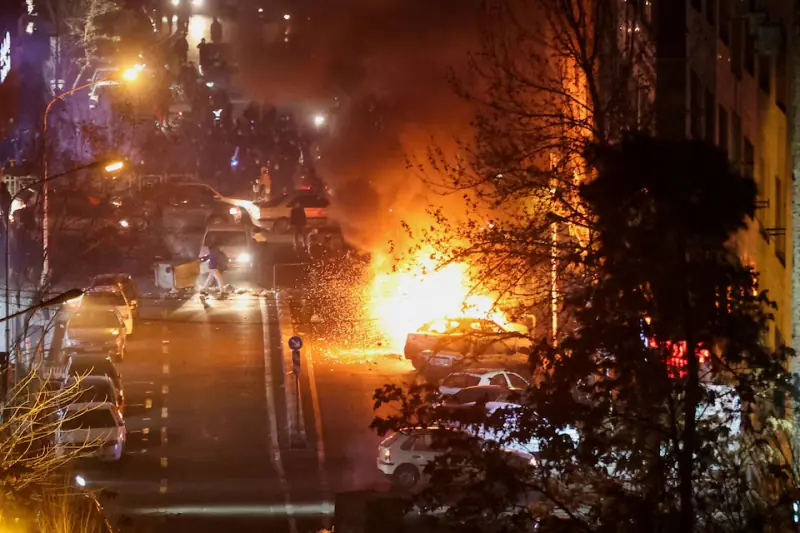
Iran implemented a nationwide internet blackout on January 8, 2026, coinciding with a severe crackdown on widespread protests. Economic grievances sparked the unrest, which escalated into anti-government calls. Human rights groups report hundreds killed and thousands arrested amid intense state violence.
Iran initiated a widespread internet shutdown on January 8, 2026.
Protests erupted over economic woes, quickly escalating to anti-regime calls.
Security forces reportedly used live ammunition during the crackdown.
Hundreds, possibly thousands, of protesters have been killed and arrested.
Internet blackouts have historically preceded severe crackdowns in Iran.
Iran has plunged into its most severe internet blackout to date since January 8, 2026, a tactic widely seen as enabling a deadly crackdown on escalating anti-government protests. The Middle East Eye article, published on January 14, 2026, details how this communications blackout has created an environment where state forces reportedly use live ammunition against demonstrators and obscure the true extent of human rights violations.
These protests, which commenced around December 28, 2025, were initially triggered by worsening economic conditions and soaring inflation, but rapidly evolved into calls for the downfall of the Islamic Republic. This pattern of internet shutdowns preceding intense state repression has been observed in previous protest waves in Iran, notably in 2017, 2019, and 2022.
Human rights organizations have provided harrowing casualty figures. Iran Human Rights (IHRNGO) reported on January 12, 2026, that at least 648 protesters, including nine children, had been killed, with thousands injured and over 10,000 arrested since the protests began. Iran International, citing senior government and security sources, reported on January 13, 2026, an estimated 12,000 deaths, primarily on January 8 and 9 during the internet shutdown, describing it as the largest mass killing in Iran's contemporary history. Amnesty International also confirmed a violent crackdown with dozens killed and investigated intensified lethal force since the blackout. Experts from the Center for Human Rights in Iran express grave concerns over lethal repression under the blackout's cover.
The veracity of the claims made in the Middle East Eye article is strongly corroborated by multiple credible international human rights organizations and news outlets, affirming the severe nature of the crackdown and the role of the internet blackout. The headline accurately reflects the critical events unfolding in Iran.
Read the full story on Quick Digest