IAEA: No Damage to Iran Nuclear Sites Amid Regional Attacks, Urges Restraint
The IAEA Director General Rafael Grossi confirmed on March 2, 2026, that UN inspectors found no damage to Iranian nuclear facilities despite recent US-Israeli strikes and retaliatory actions in the Middle East. Grossi urged maximum restraint from all parties to prevent further escalation and ensure nuclear safety. Iran's ambassador had alleged new strikes on Natanz before the extraordinary board meeting.
Key Highlights
- IAEA DG Grossi confirmed no damage to Iran's nuclear sites on March 2, 2026.
- Statement made at extraordinary Board of Governors meeting requested by Russia.
- Iran's envoy alleged new US-Israeli strikes, particularly at Natanz.
- IAEA monitoring center active, no elevated radiation detected.
- Grossi urged restraint to prevent escalation and ensure nuclear safety.
- Past incidents at Natanz in 2020, 2021, and 2025 caused significant damage.
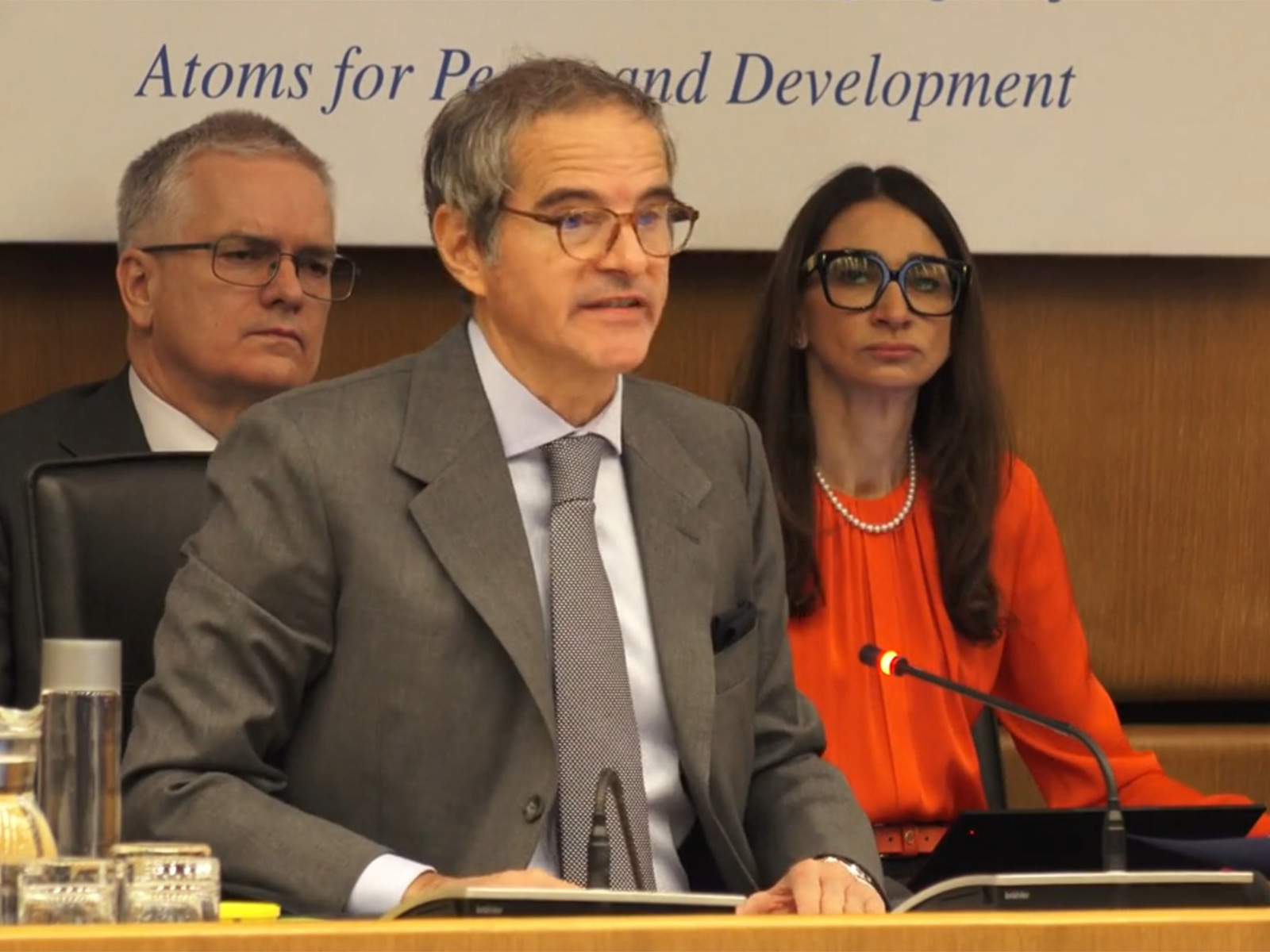
On March 2, 2026, the International Atomic Energy Agency (IAEA) Director General Rafael Mariano Grossi delivered an introductory statement to an Extraordinary Board of Governors meeting, confirming that the UN's nuclear watchdog has found no indication of damage to Iran's nuclear installations despite recent military attacks in the Islamic Republic of Iran and the wider Middle East. The extraordinary session was convened at the request of Russia, following a similar request from Iran over the weekend, amidst reports of Israeli-US strikes on Iran and subsequent retaliatory missile attacks.
During the closed-door session in Vienna, Grossi emphasized the IAEA's immediate response to the escalating situation, stating that its Incident and Emergency Centre (IEC) is fully operational. A dedicated team is actively collecting information and assessing potential radiological emergencies. Furthermore, the regional safety monitoring network has been put on alert and is in continuous liaison with the IAEA. Crucially, Grossi reported that, so far, no elevation of radiation levels above the usual background has been detected in countries bordering Iran.
The Director General reiterated that the IAEA has "no indication that any of the nuclear installations, including the Bushehr Nuclear Power Plant, the Tehran Research Reactor or other nuclear fuel cycle facilities have been damaged or hit." This statement directly addresses concerns raised by Iran, whose ambassador, Reza Najafi, had alleged at the special session that US-Israeli airstrikes had targeted the Natanz enrichment facility just prior to the meeting.
Grossi stressed the paramount importance of all parties exercising "utmost restraint in all military operations" to prevent further escalation. He highlighted the severe risks posed by military action near nuclear sites, noting that Iran, along with other countries in the region such as the United Arab Emirates, Jordan, and Syria, operate nuclear power plants and research reactors, as well as associated fuel storage facilities. Any armed attacks on such installations, he warned, could lead to radioactive releases with grave consequences both within and beyond the affected state's borders. Grossi underscored the necessity of returning to diplomatic paths and negotiations to achieve the long-term assurance that Iran will not acquire nuclear weapons, which is vital for maintaining the effectiveness of the global non-proliferation regime.
This recent statement from the IAEA comes against a backdrop of ongoing tensions and a history of alleged attacks on Iran's nuclear infrastructure. The Natanz facility, in particular, has repeatedly been a flashpoint. In July 2020, an explosion at a centrifuge assembly facility at Natanz caused significant damage, which Iran attributed to sabotage, likely by Israel, setting back its nuclear program by an estimated one to two years. Another major incident occurred in April 2021, when a blackout, also suspected to be an Israeli attack, damaged the electrical distribution grid at Natanz, impacting uranium enrichment capabilities.
More recently, in June 2025, Israeli airstrikes reportedly targeted several of Iran's nuclear facilities, including Natanz, with the above-ground section described as "functionally destroyed." Subsequent US attacks on June 22, 2025, reportedly hit Natanz's underground facilities with bunker-busting bombs. The IAEA Director General, at that time, confirmed extensive damage at Esfahan and impacts at Fordow. These past incidents underscore the volatility surrounding Iran's nuclear program and the deep-seated mistrust between the involved parties. While the IAEA confirmed damage in 2020, 2021, and 2025, its current assessment for March 2026 is that no immediate damage to nuclear sites has been observed, emphasizing the continuous need for stringent monitoring and diplomatic solutions.
Frequently Asked Questions
What was the main outcome of the IAEA Extraordinary Board of Governors meeting on March 2, 2026?
The main outcome was IAEA Director General Rafael Grossi's confirmation that the agency has no indication of damage to any Iranian nuclear installations despite recent military attacks in the region. He also called for utmost restraint and a return to diplomacy.
Why was this extraordinary meeting of the IAEA Board of Governors convened?
The meeting was requested by Russia, following Iran's request, in response to alleged US-Israeli strikes on Iran's nuclear facilities and subsequent retaliatory actions.
What is the IAEA's current assessment of Iran's nuclear sites after the alleged strikes?
As of March 2, 2026, the IAEA Director General stated that the agency has found no indication that any of Iran's nuclear installations, including Bushehr, Tehran Research Reactor, or other fuel cycle facilities, have been damaged or hit. The regional radiation monitoring network also reported no elevated levels.
Has Iran's Natanz nuclear facility been attacked previously?
Yes, the Natanz facility has been subject to multiple attacks and incidents. Significant damage occurred in July 2020 and April 2021 due to suspected sabotage, and again in June 2025 following Israeli and US strikes.
What is the IAEA's primary message to all parties involved in the Middle East conflict?
The IAEA's primary message is an urgent call for maximum restraint in all military operations to avoid further escalation and to protect nuclear safety. Director General Grossi emphasized the critical need for diplomacy and negotiations to prevent catastrophic consequences and uphold the global nuclear non-proliferation regime.