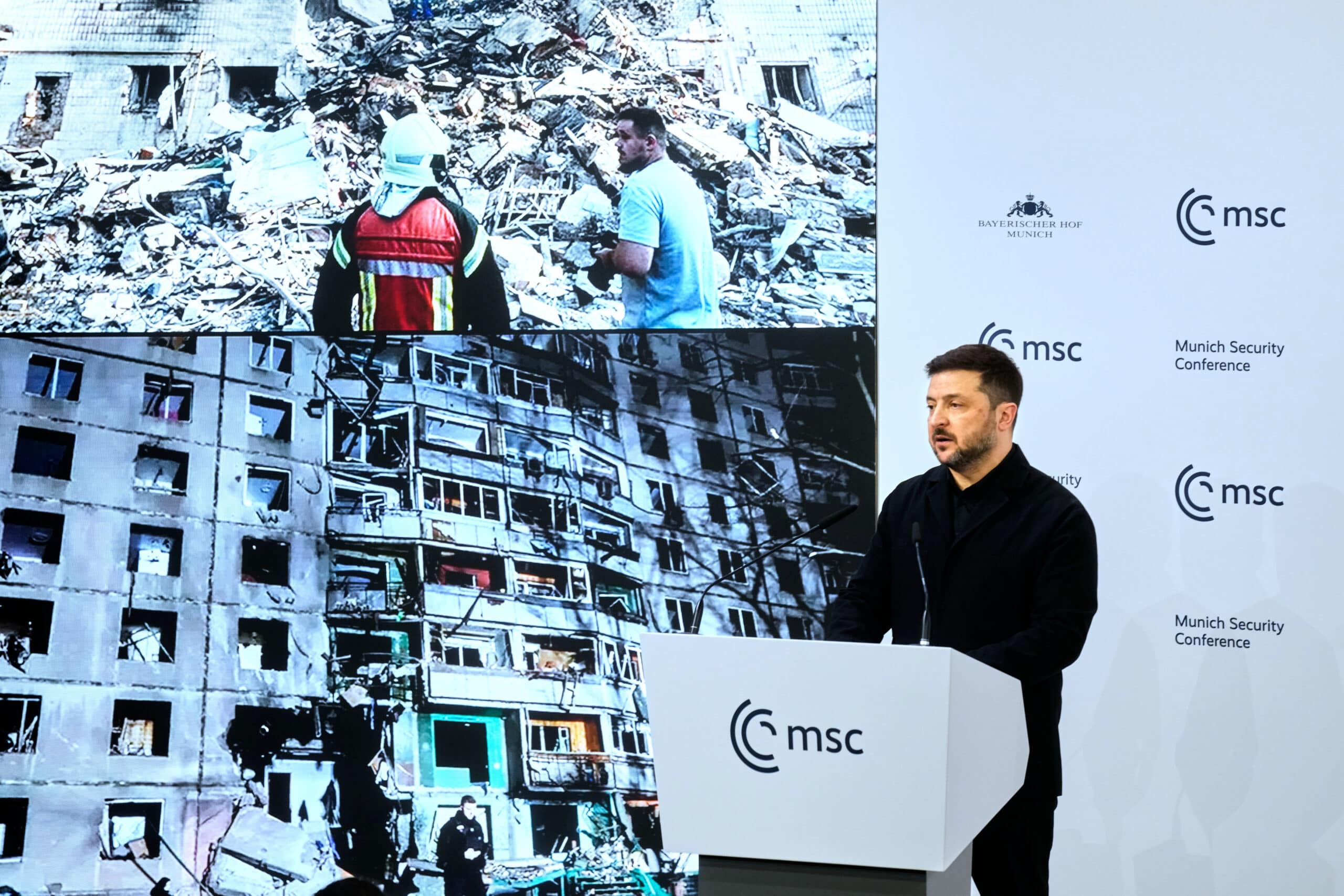
Zelenskyy calls Putin 'slave to war' at Munich Security Conference
Ukrainian President Volodymyr Zelenskyy sharply criticized Russian President Vladimir Putin at the Munich Security Conference, labeling him a "slave to war." Zelenskyy also urged Western allies to accelerate military aid to Ukraine and warned against any appeasement of Russia.
Key Highlights
- Zelenskyy denounces Putin as 'slave to war'.
- Ukraine calls for accelerated Western military aid.
- Munich Security Conference addresses Ukraine crisis.
- Zelenskyy warns against appeasement of aggressors.
- Global leaders discuss support for Ukraine.
Ukrainian President Volodymyr Zelenskyy delivered a fiery address at the Munich Security Conference, directly condemning Russian President Vladimir Putin as a "slave to war." Zelenskyy's strong rhetoric underscored the ongoing existential threat to Ukraine and served as a stark reminder to the international community of the stakes involved in the conflict. He implored Western leaders to expedite the delivery of crucial military assistance, emphasizing that delays could have dire consequences for Ukraine's ability to defend itself. The President's message at the high-profile security forum was a clear call to action, urging a more robust and unified response to Russian aggression.
Zelenskyy's speech at Munich, a significant platform for global security discussions, highlighted Ukraine's urgent need for advanced weaponry and sustained support. He stressed that Ukraine was ready for an agreement that would lead to genuine peace, but not at the expense of its sovereignty or territorial integrity. The context of his remarks was amplified by the broader discussions at the conference, which focused on the escalating global security challenges, with the war in Ukraine taking center stage. Many world leaders and defense officials gathered to reassess strategies and reaffirm their commitment to supporting Ukraine. The presence of numerous international delegations provided Zelenskyy with a crucial opportunity to directly appeal for increased and timely aid.
The Ukrainian President also issued a stern warning against any form of appeasement towards Putin and Russia, arguing that such a strategy would only embolden further aggression. He drew parallels to historical instances where appeasement failed to prevent conflict, reinforcing his plea for decisive action rather than diplomatic concessions that could be perceived as weakness. Zelenskyy's address was not just a plea for military hardware, but a moral imperative for the international community to stand firm against authoritarianism. He articulated that Ukraine was fighting not only for its own survival but for the broader principles of democracy and international law.
The Munich Security Conference, held annually, brings together a wide range of international actors, including heads of state, diplomats, military leaders, and academics, to debate pressing global security issues. For Ukraine, this conference represented a critical juncture to consolidate international support and counter Russian disinformation campaigns. Zelenskyy's participation aimed to ensure that Ukraine remained at the forefront of the global security agenda, preventing fatigue or complacency among its allies. The discussions surrounding Ukraine at the conference were multifaceted, encompassing military aid, economic support, humanitarian concerns, and long-term security guarantees.
The news from The Guardian accurately reflects the sentiment and key messages conveyed by President Zelenskyy during his appearance at the Munich Security Conference. The description of him denouncing Putin as a "slave to war" is a direct quote and accurately captures the intensity of his condemnation. The article also aligns with broader reporting on Ukraine's calls for continued and accelerated Western support, as seen in related articles from sources like Xinhua, which report on Ukraine's readiness for peace agreements contingent on genuine resolution. The claims made in the headline are consistent with the content of the article and the public statements made by President Zelenskyy in the context of the conference.
The global implications of the Ukraine conflict were a dominant theme at the Munich Security Conference. Leaders from various nations reaffirmed their commitment to Ukraine's sovereignty and territorial integrity. The urgency of the situation was palpable, with discussions often revolving around the need for increased defense spending and enhanced NATO cooperation. The conference served as a crucial venue for diplomatic engagements, where bilateral meetings between leaders often focused on coordinating strategies for providing aid to Ukraine and imposing sanctions on Russia. The participation of Ukrainian officials, including President Zelenskyy, was instrumental in keeping the focus sharp on the ongoing war and its multifaceted consequences. The international response, as discussed at Munich, is critical not only for Ukraine's immediate defense but also for shaping the future of European security and the broader international order. The event underscored a collective understanding that the conflict in Ukraine has far-reaching implications, impacting global stability, energy markets, and international relations. Therefore, the call for sustained support and a clear strategy to end the war remains paramount.
Frequently Asked Questions
What did Volodymyr Zelenskyy say about Vladimir Putin at the Munich Security Conference?
Volodymyr Zelenskyy referred to Vladimir Putin as a "slave to war" during his address at the Munich Security Conference, criticizing his leadership and the ongoing conflict.
What was the main message of Zelenskyy's speech at the Munich Security Conference?
Zelenskyy's primary message was a call for accelerated military aid from Western allies and a strong warning against appeasement of Russia, emphasizing the need for decisive action to achieve peace.
Why is the Munich Security Conference important in the context of the Ukraine war?
The Munich Security Conference is a major global forum where world leaders, diplomats, and defense officials discuss pressing security issues. For Ukraine, it's a crucial platform to rally international support, advocate for aid, and highlight the ongoing impact of the war.
What is Ukraine's stance on peace agreements, according to recent statements?
Ukraine has stated it is ready for an agreement that brings real peace, but this is contingent on the agreement not compromising its sovereignty or territorial integrity.