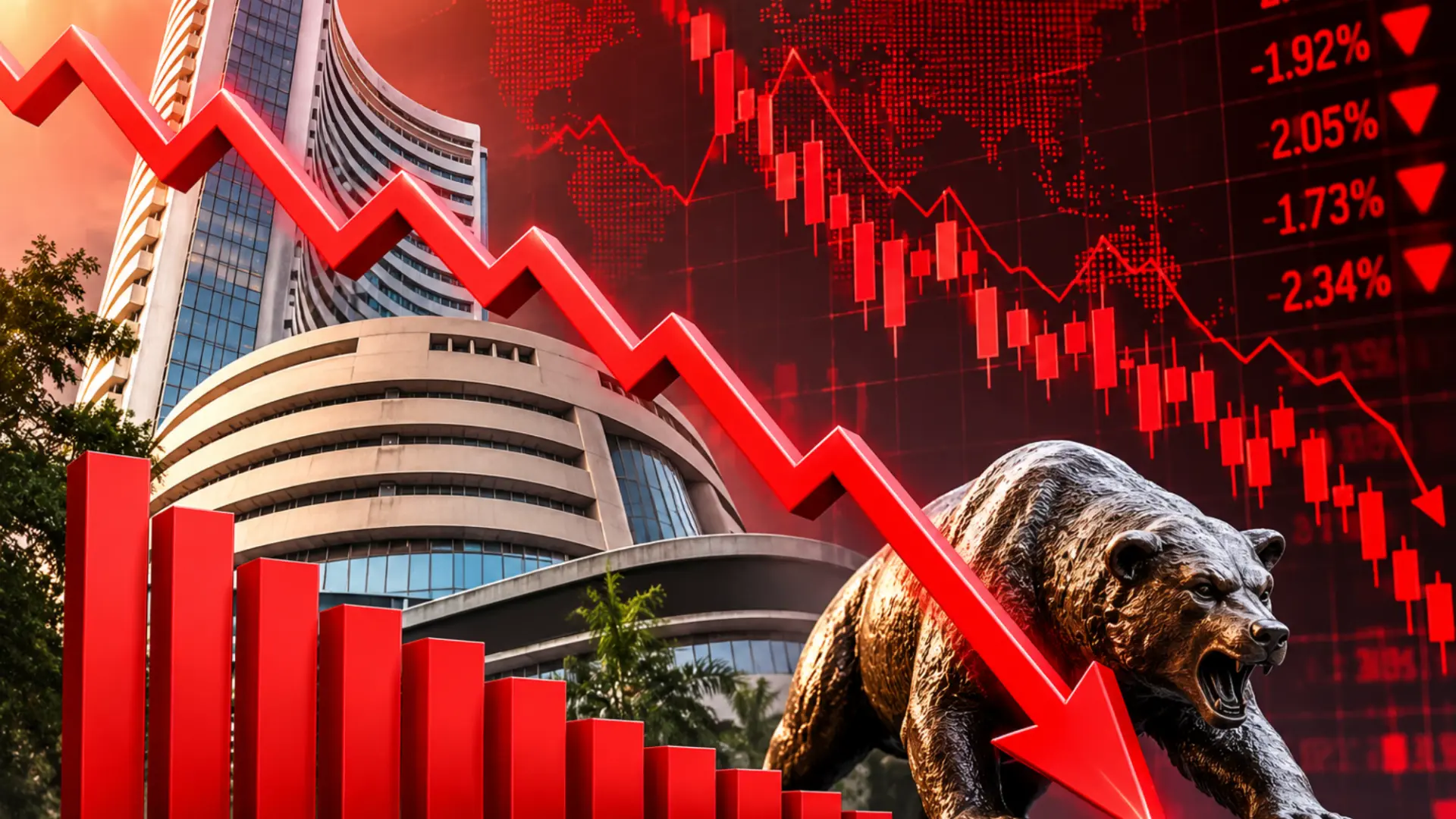
Sensex, Nifty Plunge Over 2% Amid US-Iran Tensions and Oil Price Surge
Indian stock markets, including the Sensex and Nifty, experienced a significant decline on July 8, 2026, due to escalating US-Iran tensions and a sharp rise in crude oil prices. The market plunge erased billions in investor wealth, with major indices closing down over 2%. The geopolitical developments, coupled with rising oil prices, heightened inflation concerns and led to widespread risk aversion among investors.
Key Highlights
- Sensex and Nifty fell over 2% on July 8, 2026.
- US-Iran tensions escalated, impacting global markets.
- Crude oil prices surged, with Brent crude nearing $80 per barrel.
- Indian markets experienced broad-based selling across sectors.
- Investors grew concerned about inflation and geopolitical risks.
On July 8, 2026, Indian equity markets witnessed a significant downturn, with the benchmark Sensex and Nifty indices plunging over 2%. This sharp decline was primarily attributed to escalating geopolitical tensions between the United States and Iran, which in turn triggered a surge in global crude oil prices. The developments led to widespread risk aversion among investors, resulting in a broad-based sell-off across various sectors.
The primary catalyst for the market crash was the statement by U.S. President Donald Trump on July 8, 2026, declaring that the interim agreement or ceasefire with Iran was "over.". This declaration followed a series of retaliatory strikes between the US and Iran, particularly concerning incidents in the Strait of Hormuz, a crucial global energy transit route. The perceived breakdown of the fragile truce reignited fears of a potential return to full-blown conflict and disrupted global energy supplies.
Consequently, crude oil prices experienced a significant rally. Brent crude, the global oil benchmark, surged by approximately 5-8%, with prices nearing or exceeding $78-$80 per barrel on July 8, 2026. This spike in oil prices has a direct and considerable impact on India, a nation heavily reliant on crude oil imports. The rise in oil prices fuels concerns about a widening import bill, potential pressure on the rupee, increased inflationary risks, and a squeeze on corporate profit margins, particularly for energy-intensive sectors.
The Indian stock market reacted sharply to these developments. The BSE Sensex tanked by 1,677.12 points, or 2.15%, to close at 76,503.60, while the NSE Nifty50 fell by 516.65 points, or 2.12%, to settle at 23,882.05. Several reports indicate this was the worst session for the Indian indices in over three months. The selling pressure was broad-based, with almost all sectoral indices ending in negative territory, including financials, information technology, auto, FMCG, oil and gas, and aviation. Some of the major laggards included stocks like InterGlobe Aviation, Maruti Suzuki, Hindustan Unilever, Bajaj Finance, and Mahindra & Mahindra.
Analysts noted that the heightened geopolitical tensions and rising oil prices overshadowed positive factors such as Foreign Institutional Investor (FII) activity and improving macro fundamentals. The India VIX, a measure of market volatility, surged significantly, reflecting increased fear and uncertainty among investors.
Globally, stock markets also reacted negatively. Major Asian markets like South Korea's Kospi and Japan's Nikkei 225 traded lower, while U.S. markets ended mixed or lower on July 8, 2026, with the Dow Jones Industrial Average experiencing a notable decline.
The BusinessLine, the source of the article, is a reputable Indian business daily known for its credibility and in-depth analysis of markets. The reporting aligns with numerous other financial news outlets, confirming the core facts of the market downturn, the reasons behind it (US-Iran tensions, oil prices), and the scale of the decline. The headline's claim of a 2% sink is accurate, and the explanation is grounded in verifiable events. The article is not sensationalized and provides a factual account of market movements driven by geopolitical events.
Frequently Asked Questions
What caused the Indian stock markets (Sensex and Nifty) to fall sharply on July 8, 2026?
The Indian stock markets experienced a sharp decline primarily due to escalating tensions between the US and Iran, coupled with a significant surge in crude oil prices. US President Donald Trump's statement that the ceasefire with Iran was "over" acted as a major trigger, intensifying geopolitical fears and leading to a sell-off.
How much did the Sensex and Nifty fall on July 8, 2026?
On July 8, 2026, the BSE Sensex tanked by 1,677.12 points, or 2.15%, to close at 76,503.60. The NSE Nifty50 fell by 516.65 points, or 2.12%, to settle at 23,882.05, marking one of the steepest single-day declines in over three months.
What was the impact of the US-Iran tensions on crude oil prices?
The escalating US-Iran tensions led to a significant surge in crude oil prices. Brent crude, the global benchmark, rose by approximately 5-8%, nearing or exceeding $78-$80 per barrel on July 8, 2026. This price increase was driven by fears of potential supply disruptions in the Middle East.
Why are rising crude oil prices a concern for India's economy?
India is a major importer of crude oil. Rising oil prices increase the country's import bill, put pressure on the rupee, fuel inflation, and can negatively impact corporate profit margins and the fiscal deficit, making it a significant economic concern.