India Secures Major Trade Deals at G7: UK FTA July 15, EU by Year-End
India achieved significant trade progress at the recent G7 Summit, with the India-UK Free Trade Agreement set to commence on July 15, 2026. Negotiations for the India-EU FTA are slated for formal signing by year-end, while talks with the US and Canada also show substantial momentum towards finalisation. These agreements promise to boost India's global economic engagement and bolster bilateral trade ties.
Key Highlights
- India-UK FTA implemented July 15, enhancing bilateral trade significantly.
- India-EU Free Trade Agreement targeted for formal signing by end-2026.
- US President Trump signals India-US trade deal 'very close' to finalisation.
- India and Canada aim to conclude CEPA negotiations by year-end 2026.
- PM Modi attended G7 Summit in France, engaging with global leaders.
- Agreements set to boost India's exports and strengthen economic partnerships.
India has made significant strides in its international trade agenda, securing major agreements and advancing crucial negotiations during and immediately after the G7 Summit in France, which Prime Minister Narendra Modi attended as an outreach partner. The news, published by Hindustan Times, highlights several key developments that are set to bolster India's economic ties with some of the world's largest economies.
One of the most concrete outcomes is the India-United Kingdom Comprehensive Economic and Trade Agreement (CETA), which is confirmed to enter into force on July 15, 2026. This landmark agreement, which concluded negotiations on May 6, 2025, and was signed on July 24, 2025, is poised to significantly boost bilateral trade and investment between India and the UK. The CETA provides zero-duty access for approximately 99% of India's exports to the UK, covering nearly 100% of trade value. Beyond goods, the agreement is also expected to substantially expand services exports across 137 sub-sectors, including IT/ITES, professional, education, and business services. Furthermore, a related Agreement on Social Security, also known as the Double Contribution Convention (DCC), will simultaneously come into effect on July 15, 2026. This is a significant gain for Indian professionals working temporarily in the UK, as it extends the period of exemption under DCC from three to five years, reinforcing their mobility and competitiveness.
Another major development concerns the India-European Union Free Trade Agreement (FTA). European Commission President Ursula von der Leyen, following her meeting with Prime Minister Modi, stated that the EU would formally sign a landmark trade deal with India by the end of 2026. Negotiations for this comprehensive FTA concluded on January 27, 2026, marking a pivotal moment in EU-India relations after years of discussions. The EU is India's largest trading partner, with bilateral trade in goods reaching €120 billion in 2024. This agreement is anticipated to potentially double EU goods exports to India by 2032 and involves the elimination or reduction of tariffs on over 96% of EU goods exports, offering privileged access to India's vast market.
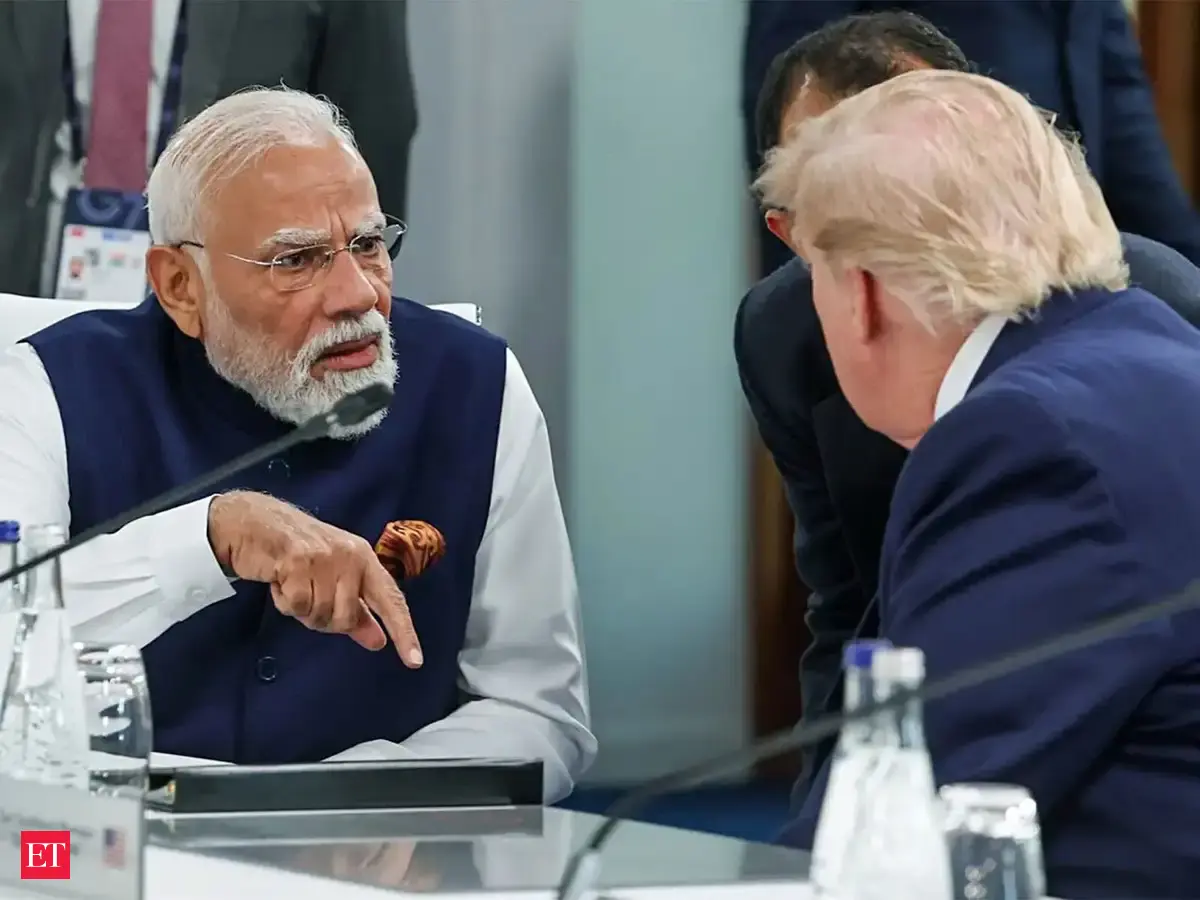
Discussions with the United States also yielded positive signals regarding trade. US President Donald Trump, after bilateral talks with Prime Minister Modi on the sidelines of the G7 Summit, indicated that Washington and New Delhi were 'very close' to finalising a long-awaited trade agreement. This reflects fresh momentum in India-US trade talks, with both sides actively pushing for an interim trade deal aimed at easing tariff frictions and improving market access. An interim trade agreement framework between the two nations was announced in February 2026. The US was India's second-largest trading partner in the fiscal year 2025-26, highlighting the strategic importance of this bilateral trade relationship.
Beyond these major economies, India also made progress in its trade discussions with Canada. Following a meeting between PM Modi and Canadian Prime Minister Mark Carney at the G7 Summit, both leaders reaffirmed their shared objective of concluding negotiations for a Comprehensive Economic Partnership Agreement (CEPA) in 2026. They agreed to expedite these negotiations with the aim of doubling two-way trade by 2030 and deepening cooperation across various sectors including energy, defence, and investment. This commitment follows previous engagements, including a joint statement in March where both leaders expressed satisfaction with negotiation progress.
These developments underscore India's active engagement in shaping its global trade landscape and strengthening economic partnerships. The G7 Summit provided a crucial platform for these high-level discussions, aligning with India's broader economic diplomacy goals of boosting exports, attracting investments, and integrating further into global supply chains. Such trade agreements are vital for India's economic growth trajectory, supporting various domestic sectors, MSMEs, farmers, and innovators, and contributing to the vision of 'Viksit Bharat 2047' (Developed India 2047).
Frequently Asked Questions
What is the key announcement regarding the India-UK Free Trade Agreement?
The India-United Kingdom Comprehensive Economic and Trade Agreement (CETA) is officially set to be implemented and enter into force on July 15, 2026. This agreement will provide zero-duty access for nearly all of India's exports to the UK and expand services trade.
When is the India-EU Free Trade Agreement expected to be signed?
European Commission President Ursula von der Leyen has stated that the landmark India-EU Free Trade Agreement is expected to be formally signed by the end of 2026. Negotiations for this deal were concluded on January 27, 2026.
What was the outcome of PM Modi's meeting with US President Trump regarding trade?
During their meeting at the G7 Summit, US President Donald Trump indicated that India and the United States are 'very close' to finalising a long-awaited bilateral trade agreement. This signals significant progress in ongoing trade negotiations aimed at easing tariff barriers and enhancing market access.
What progress was made on the India-Canada trade deal at the G7 Summit?
India and Canada agreed to expedite negotiations for a Comprehensive Economic Partnership Agreement (CEPA) and aim to conclude the talks by the end of 2026. The objective is to double bilateral trade between the two countries by 2030.
Why are these trade deals important for India?
These trade agreements are crucial for India as they are expected to significantly boost India's exports, attract foreign investment, and strengthen economic partnerships with major global economies. They will create new opportunities for Indian businesses, farmers, MSMEs, and professionals, contributing to India's overall economic growth and development goals.