Icy Satellites: Plume Dynamics and Ocean Implications | Quick Digest
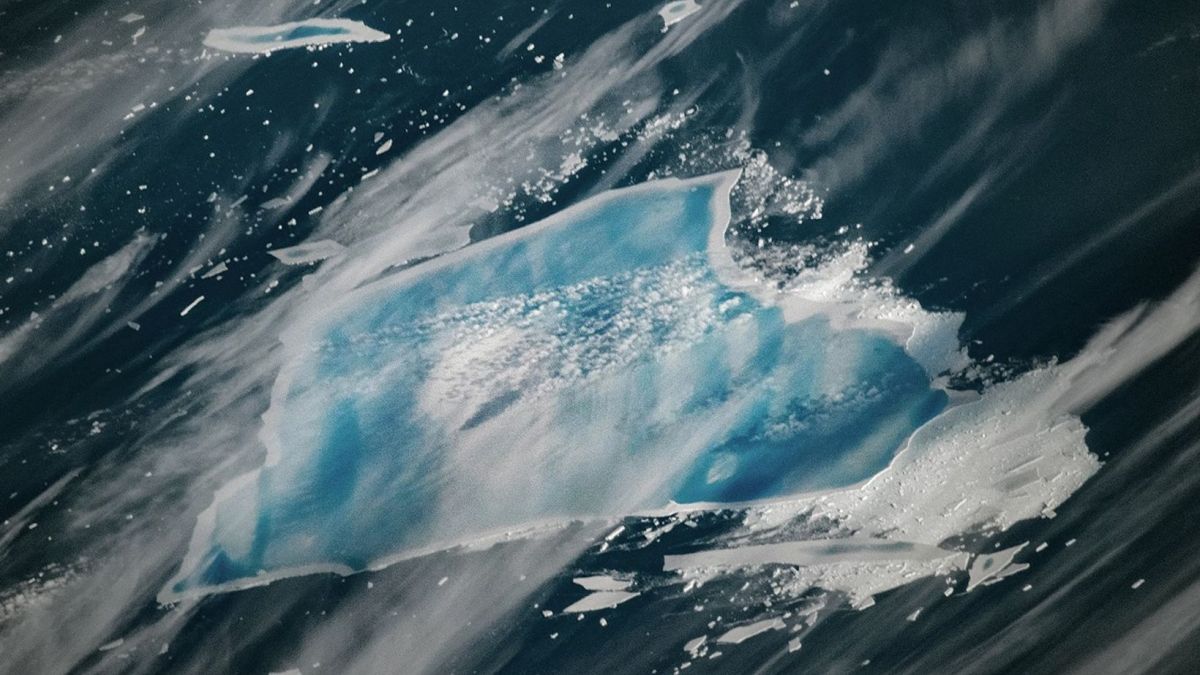
This scientific preprint explores the behavior of fluid plumes in rotating, multi-layered systems, applying these models to understand internal processes within icy moons like Europa and Enceladus. It sheds light on the complex interactions between fluid dynamics and the geological evolution of these ocean worlds. The research aims to improve predictions for upcoming space missions.
Analyzes fluid plume dynamics in rotating, stratified environments.
Models implications for internal oceans and ice shells of icy satellites.
Published as a preprint on ESS Open Archive, awaiting peer review.
Contributes to understanding habitability of ocean worlds.
Highly specialized research in planetary science and fluid dynamics.
Results are provisional until formally peer-reviewed and published.
The article titled "Evolution of a point plume in a rotating unstratified fluid overlain by a stratified layer: scaling and implications for icy satellites" is a scientific research paper published on the ESS Open Archive. The ESS Open Archive is a community server dedicated to accelerating the open discovery and dissemination of Earth, environmental, and space science research by sharing early outputs, including preprints and presentations. A preprint is a full research report that has not yet undergone formal peer review by a scientific journal. While preprints enable rapid sharing of scientific findings and can gather early feedback, their content has not been rigorously vetted for methodology, validity, or reliability by independent experts. Therefore, the findings presented in this article should be considered provisional until they are peer-reviewed and published in a traditional scientific journal.
The research itself focuses on complex fluid dynamics, specifically the evolution of point plumes in rotating, multi-layered fluid systems. These models are then applied to infer processes occurring within icy satellites, such as Jupiter's moon Europa or Saturn's moon Enceladus, which are known to harbor subsurface oceans beneath thick ice shells. Understanding the dynamics of these internal oceans and their interaction with the ice shell is crucial for assessing the potential habitability of these extraterrestrial bodies and for guiding future space missions like NASA's Europa Clipper. This area of planetary science is active and well-established, with numerous studies exploring similar fluid and ice dynamics in icy ocean worlds. The article's title accurately reflects its highly specialized and technical scientific content, and there is no indication of sensationalism or inaccuracy in its framing as a research paper.
While the ESS Open Archive is a credible platform for sharing early scientific work, and the research topic is scientifically sound, the specific claims and conclusions of this particular article are awaiting the rigorous verification that comes with peer review. The relevance to an Indian audience is indirect, as it contributes to global scientific knowledge in astrobiology and planetary science.
Read the full story on Quick Digest