Mysuru Conducts District-Level Pulse Polio Drive on June 28, 2026
Mysuru district successfully launched its Pulse Polio programme on June 28, 2026, as part of a nationwide immunization drive. Targeting children aged 0-5 years, the campaign emphasizes continued vigilance against polio despite India's polio-free status, with dedicated booths and door-to-door visits planned.
Key Highlights
- District-level Pulse Polio programme inaugurated in Mysuru on June 28, 2026.
- Part of a nationwide drive targeting children aged 0-5 years.
- Campaign includes booth-based vaccination and subsequent door-to-door visits.
- India remains polio-free but maintains vigilance due to global risks.
- Thousands of vaccinators and booths deployed for extensive coverage.
- Emphasis on reaching high-risk areas and migrant populations.
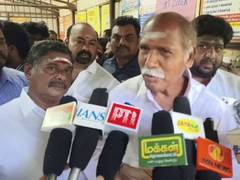
The district of Mysuru, Karnataka, successfully inaugurated its Pulse Polio programme on June 28, 2026, underscoring India's ongoing commitment to maintaining its polio-free status. The event, reported by Star of Mysore, saw Narasimharaja MLA Tanveer Sait formally launching the vaccination drive at the PH Colony in Badamakan. This district-level initiative is a critical component of a broader, synchronized Pulse Polio campaign taking place across Karnataka and several other states in India, including Telangana and Andhra Pradesh, on the same day.
The programme primarily targets children in the age group of 0-5 years, aiming to administer oral polio vaccine (OPV) drops to ensure maximum immunity against the poliovirus. In Mysuru alone, the campaign is set to cover approximately 2,19,521 children within this age bracket. To achieve this extensive coverage, authorities have established a robust infrastructure, deploying 1,641 vaccination booths, 6,772 vaccinators, and 328 supervisors across the district. Health and Family Welfare Officer Dr. P.C. Kumaraswamy, present at the Mysuru inauguration, highlighted the importance of such continuous public health efforts.
The Pulse Polio campaign typically follows a multi-day schedule. The first day, June 28, is dedicated to booth-based vaccinations, where parents are encouraged to bring their eligible children to designated centers. Following this, health workers undertake intensive door-to-door visits for the subsequent two to three days (June 29 to July 1 in Mysuru and Bengaluru, June 29-30 in Telangana and Tirupati) to identify and vaccinate any children who might have missed the initial booth-based drive. This meticulous approach ensures that no child is left unprotected, particularly those in vulnerable and hard-to-reach communities such as migrant settlements, construction labor camps, and brick kiln clusters, which Mysuru district has proactively identified as 1,396 high-risk areas.
India achieved the monumental feat of being declared polio-free by the World Health Organization (WHO) on March 27, 2014, following no reported cases of wild poliovirus for five consecutive years. However, the continuation of the Pulse Polio programme is not an indication of a resurgence of the disease within the country. Instead, it is a crucial precautionary measure necessitated by the ongoing circulation of the wild poliovirus in neighboring countries like Pakistan and Afghanistan. Global eradication efforts are still underway, and until polio is completely wiped out worldwide, India must maintain a high level of population immunity and sensitive surveillance to prevent re-infection.
The history of the Pulse Polio Immunization programme in India dates back to 1995, when it was officially launched as a nationwide initiative. The very first dose of oral polio vaccine was administered on March 16, 1995, a date now observed annually as National Immunization Day. Over the decades, the programme, spearheaded by the Ministry of Health and Family Welfare and the National Health Mission, has evolved into one of the largest public health campaigns globally, annually immunizing approximately 170 million children. This massive undertaking involves millions of health workers and volunteers, often supported by international organizations like WHO and UNICEF, working tirelessly to reach every eligible child, even in challenging terrains.
Beyond fixed vaccination booths, strategic transit booths are also set up at high-footfall locations such as railway stations, bus stands, and major tourist destinations like Mysore Palace, Mysuru Zoo, and Chamundi Hill. This ensures that children who are traveling with their families are also covered, minimizing the chances of missing out on this vital immunization. The collaborative effort involves various government departments, including Women and Child Development, Education, Transport, and Police, alongside voluntary organizations, all working towards the common goal of public health.
The continued success of the Pulse Polio programme is a testament to India's robust public health infrastructure and its unwavering commitment to protecting its youngest citizens. It serves as a model for other large-scale immunization efforts, demonstrating the effectiveness of sustained vigilance, comprehensive planning, and community participation in achieving and maintaining significant public health milestones. The 'Star of Mysore' article, in particular, contextualizes this national effort within the local framework of Mysuru, highlighting local leadership and resource deployment, including a mention of 'Namma Clinics' providing treatments for various ailments in the city. The program reaffirms that even after achieving eradication, continued preventive measures are essential to safeguard against global health threats.
Frequently Asked Questions
When was the latest Pulse Polio programme conducted in Mysuru?
The latest district-level Pulse Polio programme in Mysuru was held on June 28, 2026, as part of a nationwide immunization drive.
Why does India continue to conduct Pulse Polio drives if it is officially polio-free?
India continues to conduct Pulse Polio drives as a crucial precautionary measure. Although declared polio-free by the WHO in 2014, the wild poliovirus still circulates in neighboring countries like Pakistan and Afghanistan, necessitating ongoing vigilance and high population immunity to prevent re-infection.
What is the target age group for children receiving polio drops during the campaign?
The Pulse Polio programme specifically targets children in the age group of 0-5 years for administering oral polio vaccine (OPV) drops.
What is National Immunization Day, and when is it observed in India?
National Immunization Day (NID) is observed annually in India on March 16th, commemorating the launch of the first Pulse Polio Programme in 1995. It serves to promote vaccination awareness and reinforce the importance of immunization against vaccine-preventable diseases.
How are children in high-risk or transit areas covered during the Pulse Polio campaign?
In addition to fixed vaccination booths, special measures are taken to cover children in high-risk areas (like migrant settlements) and transit locations (such as railway stations, bus stands, and tourist spots). Mobile teams and dedicated booths at these points ensure that no child misses the vaccination.