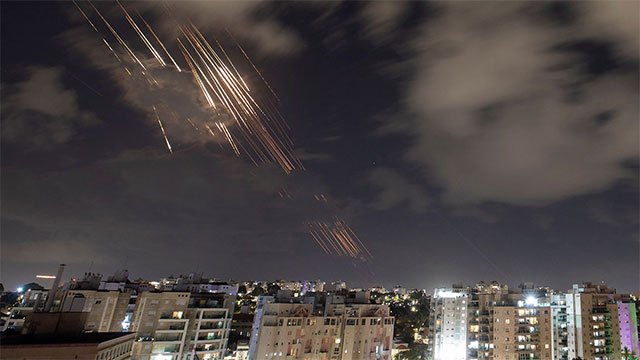
Iran Strikes Kuwait, Bahrain Amid US Tensions; Ceasefire at Risk
Iran launched missile and drone attacks on Kuwait and Bahrain on June 28, 2026, in retaliation for U.S. airstrikes on Iranian territory. This escalation threatens a fragile ceasefire agreement, with both sides accusing the other of violations amidst ongoing conflict over the Strait of Hormuz.
Key Highlights
- Iran's Revolutionary Guard launched drone and missile attacks on Kuwait and Bahrain.
- Attacks were in direct response to U.S. airstrikes on Iranian targets.
- Kuwait and Bahrain reported intercepting Iranian projectiles.
- The attacks jeopardize a fragile US-Iran ceasefire agreement.
- Control of the Strait of Hormuz remains a key point of contention.
- U.S. President Trump issued stern warnings to Iran regarding its actions.
On Sunday, June 28, 2026, Iran's paramilitary Revolutionary Guard launched a series of drone and missile attacks targeting Bahrain and Kuwait. These strikes were explicitly stated by Tehran as a direct response to recent U.S. airstrikes that had hit Iranian territory. The events mark a significant escalation in the ongoing regional conflict, often referred to as the '2026 Iran war,' and have severely strained an already fragile ceasefire agreement between the United States and Iran.
The U.S. airstrikes, which preceded Iran's retaliatory actions, occurred on Friday and Saturday, June 26-27, 2026. U.S. Central Command (CENTCOM) confirmed these strikes, stating they targeted Iranian military surveillance infrastructure, communication systems, air defense sites, drone storage facilities, and minelayer capabilities. These American actions were themselves a response to what the U.S. described as continued Iranian aggression against commercial shipping in the vital Strait of Hormuz, including an attack on the Panama-flagged oil tanker Kiku.
Following the Iranian strikes, both Kuwait and Bahrain confirmed being targeted. Kuwait's military reported that its air defenses successfully intercepted incoming Iranian drones and missiles, though reports from June 3, 2026, mentioned significant material damage and injuries at Kuwait International Airport, which could be related to these broader ongoing hostilities. Bahrain's Interior Ministry stated that Iranian strikes damaged a residential building near its international airport, but thankfully, no fatalities were reported in that specific incident. Iran's Revolutionary Guard specifically claimed to have 'destroyed eight important US military facilities at the Ali al-Salem base in Kuwait and at the Fifth Fleet naval base in Port Salman in Bahrain,' signaling a deliberate targeting of American assets in the region.
The timing of these attacks is critical, as they occurred despite an interim deal or a 'memorandum of understanding' that had been reached between the U.S. and Iran in mid-June, mediated by Pakistan. This agreement aimed to establish a lasting end to the war and ensure safe passage through the Strait of Hormuz. However, both the U.S. and Iran have accused each other of violating the terms of this ceasefire. Iranian Foreign Ministry spokesperson Esmaeil Baqaei asserted that Iran's national security and dignity are non-negotiable and that its right to self-defense is inherent.
The Strait of Hormuz remains a central flashpoint in this conflict. The U.S. Navy-overseen multinational maritime body recently announced an expansion of a shipping route near Oman, intended to facilitate traffic, setting up a new point of contention with Tehran. Iran has consistently asserted its sole authority over the Strait, a critical global choke point for oil and natural gas, and has previously attacked vessels attempting to use alternative routes. This control is viewed by Iran as its most powerful leverage in negotiations and deterrence against its adversaries.
U.S. President Donald Trump weighed in on the escalating tensions, issuing stark warnings to Iran via social media. He stated that the U.S. had 'struck Iranian missile and drone storage locations, and coastal radar sites, for violating the Cease Fire Agreement, AGAIN!' He further warned that there might come a point when the U.S. would be 'forced to militarily complete the job,' threatening that 'If that happens, the Islamic Republic of Iran will no longer exist!' These aggressive statements underscore the grave nature of the current situation and the potential for further, broader conflict in the region.
The global community has expressed alarm over the escalating violence. The United Nations' International Maritime Organization had previously suspended efforts to evacuate ships and sailors from the Persian Gulf due to attacks on vessels, highlighting the impact on international commerce and safety. The ongoing conflict has already led to skyrocketing global oil prices and thousands of civilian deaths, making the current escalation a matter of critical international concern for stability and economic impact.
Frequently Asked Questions
What prompted Iran to attack Kuwait and Bahrain?
Iran's Revolutionary Guard stated that the attacks on Kuwait and Bahrain were carried out in retaliation for recent U.S. airstrikes on Iranian territory. These U.S. strikes were, in turn, a response to Iranian aggression against commercial shipping in the Strait of Hormuz.
What targets did Iran hit in Kuwait and Bahrain?
Iran's Revolutionary Guard claimed to have targeted and destroyed 'eight important US military facilities' at the Ali al-Salem air base in Kuwait and the Fifth Fleet naval base in Port Salman in Bahrain. Kuwait reported intercepting missiles and drones, and Bahrain's Interior Ministry indicated damage to a residential building near its airport.
How do these attacks affect the US-Iran ceasefire?
The attacks by both Iran and the U.S. are severely jeopardizing a fragile ceasefire agreement or 'memorandum of understanding' established earlier in June. Both sides are accusing the other of violating the terms of this deal, leading to a dangerous escalation of hostilities.
What is the significance of the Strait of Hormuz in this conflict?
The Strait of Hormuz is a critical global waterway for oil and natural gas shipments, and control over it is a major point of contention. Iran insists on its authority over the Strait, viewing it as a key strategic asset and leverage in its conflict with the U.S. and its allies. Disruptions in the Strait have significant global economic consequences.
What was U.S. President Trump's reaction to the escalation?
President Trump issued a stern warning, stating that the U.S. had struck Iranian targets for violating the ceasefire and cautioning that if the U.S. were 'forced to militarily complete the job,' the 'Islamic Republic of Iran will no longer exist!'