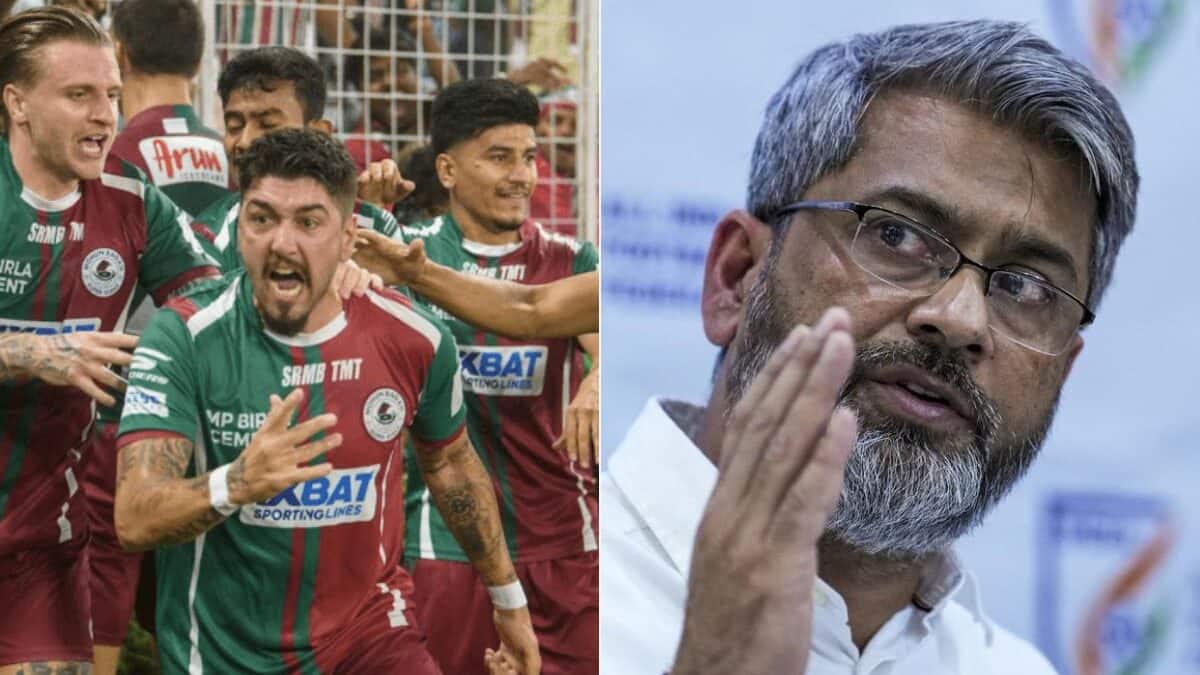
India's Unity Cup 2026 Squad Faces Visa Race After Mohun Bagan Pullout
The Indian national football team is grappling with a last-minute crisis for the Unity Cup 2026 in London after Mohun Bagan Super Giant withdrew seven players. Five new players have been added to the squad, racing against time for visa clearances ahead of their opening match against Jamaica on May 27. This dispute highlights ongoing club-versus-country tensions within Indian football.
Key Highlights
- Unity Cup 2026, a four-nation tournament, is being held in London from May 26-30.
- India faces Jamaica in the semi-finals on May 27, followed by a potential final or third-place playoff.
- Mohun Bagan Super Giant withdrew seven players citing injury compensation issues outside FIFA window.
- AIFF added five new players, now urgently seeking their visas for the tournament.
- The tournament is FIFA Tier 1, offering ranking points, despite being outside the official window.
- The controversy has sparked debate on player welfare and administrative friction in Indian football.
The Indian national football team finds itself embroiled in a significant administrative and logistical challenge ahead of the Unity Cup 2026 in London. The four-nation international friendly tournament, scheduled to run from May 26 to May 30 at The Valley, home of Charlton Athletic FC, features India, Nigeria, Jamaica, and Zimbabwe. India is set to play Jamaica in the second semi-final on May 27 (00:00 IST, May 28), with the winners progressing to the final on May 30.
The crisis stems from Mohun Bagan Super Giant (MBSG) withdrawing seven of its players from the preliminary national squad just days before the team's departure. The club cited long-standing concerns over player welfare, potential injuries, and the All India Football Federation's (AIFF) alleged refusal to compensate for injuries sustained outside the official FIFA international match window. The FIFA international window is set from June 1 to June 9, and the Unity Cup falls outside this period, which according to MBSG, leaves players unprotected by FIFA's Club Protection Programme regarding injury compensation.
However, the AIFF has strongly refuted MBSG's claims, stating that all clubs, including Mohun Bagan Super Giant, were informed about India's participation in the Unity Cup as early as April 10. The federation highlighted that MBSG players even cooperated with the biometric visa application process. AIFF Deputy Secretary General M Satyanarayan stated that Mohun Bagan made a sudden 'U-turn' on May 20, just hours before the team's scheduled flight, informing the federation that their players would only be released during the FIFA window. The AIFF also emphasized that the Unity Cup 2026 has received official FIFA authorization as a Tier 1 international competition, meaning any ranking points earned would hold full value, making it a crucial tournament for India, currently ranked 136th globally.
As a direct consequence of MBSG's withdrawal, the Indian team departed for London with a significantly reduced squad of 18 players. To address this shortage, the AIFF made a last-minute addition of five players to the squad: Jamshedpur FC midfielder Mohammed Sanan Kundoyi, Bengaluru FC's Ricky Meetei Haobam and Fanai Lalremtluanga, Mumbai City FC forward Vikram Partap Singh, and NorthEast United midfielder Macarton Louis Nickson. These players are now in a "race against time" to secure their visas, with the AIFF working to fast-track the process. Failure to obtain their visas by Monday (May 25, 2026) could make them unavailable for India's opening match against Jamaica on May 27.
This incident is not an isolated one, reflecting a recurring friction between clubs and the national federation in Indian football. Previous disputes have arisen over player releases for non-FIFA window commitments, notably concerning injuries to players like Subhasish Bose and Ashique Kuruniyan, for which clubs claimed inadequate compensation. Such controversies have often led to public disagreements and left players caught between club loyalties and national duty, drawing criticism regarding the overall management of Indian football.
Despite these challenges, the Unity Cup offers a vital opportunity for the Indian team, led by coach Khalid Jamil, to gain international exposure against higher-ranked opponents like Nigeria (26th) and Jamaica (71st). A strong performance could help the Blue Tigers rebuild momentum after recent disappointments in FIFA World Cup and AFC Asian Cup qualification campaigns. The tournament also marks India's first senior men's tour of England in 24 years, adding to its significance.
In conclusion, while the core claims of the Sportstar article – the Unity Cup, the Jamaica clash, and players racing against time – are accurate and well-corroborated by multiple credible sources, the underlying context reveals a deeper, ongoing struggle within Indian football administration regarding player release, welfare, and the contentious FIFA international window policy. The immediate focus remains on securing the visas for the five newly added players to ensure India can field a competitive squad in the Unity Cup. The long-term challenge for Indian football remains resolving the fundamental disagreements between the AIFF and its clubs to avoid such last-minute embarrassments.
Frequently Asked Questions
What is the Unity Cup 2026 and where is it being held?
The Unity Cup 2026 is a four-nation international friendly football tournament featuring India, Nigeria, Jamaica, and Zimbabwe. It is scheduled to take place from May 26 to May 30, 2026, at The Valley in London, England.
Why did Mohun Bagan Super Giant withdraw its players from the India squad for the Unity Cup?
Mohun Bagan Super Giant withdrew seven players citing concerns over player welfare, potential injuries, and the lack of compensation from the AIFF for injuries sustained outside the official FIFA international match window (June 1-9). They argue that the club would be financially responsible for any injuries in this period.
What is the AIFF's stance on the Mohun Bagan player withdrawal?
The AIFF has refuted Mohun Bagan's claims, stating that clubs were informed about the Unity Cup dates and player requirements since April. They also highlighted that Mohun Bagan players cooperated with visa biometrics and that the tournament has FIFA Tier 1 authorization, meaning it offers ranking points despite being outside the FIFA window.
Who are the five new players added to the Indian squad and what is their current situation?
The five new players added are Mohammed Sanan Kundoyi (Jamshedpur FC), Ricky Meetei Haobam (Bengaluru FC), Fanai Lalremtluanga (Bengaluru FC), Vikram Partap Singh (Mumbai City FC), and Macarton Louis Nickson (NorthEast United). They are currently in a race against time to get their visas fast-tracked to be eligible for the tournament, especially the first match against Jamaica on May 27.
How important is the Unity Cup for the Indian national football team?
The Unity Cup is highly important for the Indian team as it offers valuable international exposure against higher-ranked opponents and provides full FIFA ranking points due to its Tier 1 authorization. It serves as an opportunity for the team to rebuild momentum and test tactical approaches after recent qualification disappointments.