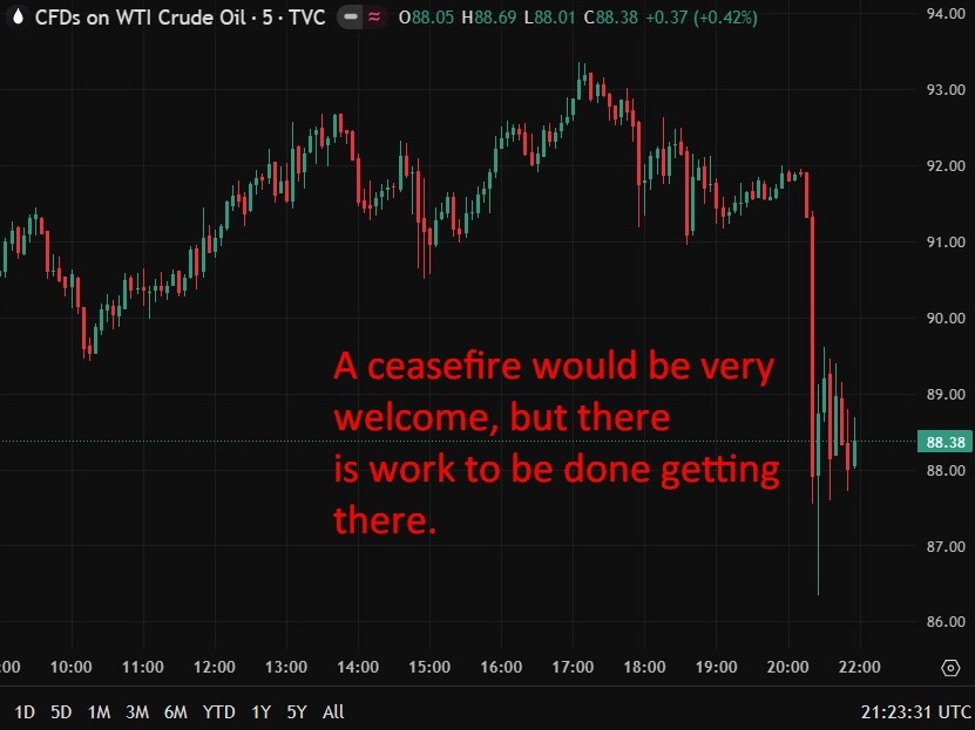
Iran Demands US Base Exit, Hormuz Control for Ceasefire Talks
Iran has presented a stringent set of conditions for a ceasefire with the US, including the closure of all American military bases in the Gulf, control over the Strait of Hormuz to levy transit fees, and comprehensive reparations for wartime damages. These tough demands aim to raise the bar for any potential truce negotiations, even as indirect diplomatic efforts continue through intermediaries.
Key Highlights
- Iran demands closure of all US military bases in the Persian Gulf.
- Tehran seeks to impose transit fees on ships using the Strait of Hormuz.
- Iran insists on full reparations for damages from US and Israeli attacks.
- Negotiations are indirect, with US proposing a 15-point ceasefire plan.
- Iran also demands lifting of all sanctions and end to Israeli strikes on proxies.
- US dismisses Iran's conditions as "unrealistic and excessive".
Iran has put forth a series of robust and far-reaching demands as conditions for a potential ceasefire with the United States, significantly escalating the bar for any renewed negotiations. Central to these demands is the insistence on the **closure of all American military bases situated in the Persian Gulf region**, a move that would fundamentally alter the geopolitical landscape of the Middle East.
Another critical condition laid out by Tehran involves establishing a **new framework for the strategic Strait of Hormuz**, a vital chokepoint for global oil transit. Iran seeks to gain effective control over this waterway, enabling it to collect transit fees from ships passing through, drawing parallels to how Egypt manages the Suez Canal. Reports suggest that Iran is actively studying or has even begun implementing a system to charge vessels, with some lawmakers indicating fees of up to $2 million per ship. This demand has significant global implications for energy markets and international shipping.
Beyond these, Iran is also pressing for **comprehensive financial compensation or reparations for damages incurred from recent attacks**, attributed to both the United States and Israel. Iranian officials, including Foreign Minister Abbas Araghchi, have asserted that these attacks violate international law and warrant significant payouts for material and moral damages, including strikes on nuclear facilities. This aligns with statements from former IRGC chief Mohsen Rezaei, who indicated that Iran would continue its war until such demands, along with sanctions relief and non-interference guarantees, are met.
Furthermore, Tehran insists on the **lifting of all existing sanctions** imposed on the country as a prerequisite for any agreement to end the conflict. The demands also include a **halt to Israel's military campaign against Iran-aligned groups, particularly Hezbollah** in Lebanon. Iran has also maintained its position on **retaining its ballistic missile program without any negotiations or limitations**.
These tough conditions come in response to a **15-point ceasefire plan reportedly proposed by the US President Donald Trump's administration**. This proposal, which included conditions such as strict curbs on Iran's nuclear program, an end to support for proxy groups, and ensuring the Strait of Hormuz remains an open international waterway, was conveyed to Iran through intermediaries, including Pakistan and Egypt. Despite Trump's claims of productive conversations and Iran being eager for a deal, Iranian military spokesmen have publicly mocked or denied direct engagement, insisting that the US is 'negotiating with themselves'.
US and Arab officials, familiar with the ongoing indirect discussions, have largely dismissed Iran's extensive demands as 'ridiculous', 'unrealistic', and 'excessive', suggesting they complicate negotiations and make a resolution more difficult. While Iran's official stance remains firm, there have been hints of potential private flexibility, with reports suggesting Iran might consider halting its ballistic missile program for five years, reducing uranium enrichment, and allowing IAEA inspections, as well as possibly agreeing to stop funding regional proxy groups. However, such flexibility is reportedly being viewed as an opening move, with the official position remaining unyielding.
The increased influence of the Islamic Revolutionary Guard Corps (IRGC) within Iran's leadership, particularly following the death of former Supreme Leader Ali Khamenei, is seen as a key factor in the hardening of Iran's negotiating stance. The ongoing war, now in its fourth week, has seen joint US-Israeli strikes on Iran and retaliatory attacks on US and Israeli interests across the Middle East, intensifying regional tensions and highlighting the global significance of these ceasefire talks.
The situation remains highly fluid, with the international community closely watching diplomatic efforts and military maneuvers. The resolution of these demands will have profound implications for regional stability, global energy security, and the future of US-Iran relations.
Frequently Asked Questions
What are Iran's primary demands for a ceasefire with the US?
Iran's main demands for a ceasefire include the closure of all US military bases in the Persian Gulf, the right to collect transit fees from ships passing through the Strait of Hormuz, and comprehensive reparations for damages caused by US and Israeli attacks.
Why is control over the Strait of Hormuz a key demand for Iran?
The Strait of Hormuz is a globally critical chokepoint for oil transit. Iran views control over it, including the ability to levy transit fees, as a strategic and financial asset that could help offset wartime costs and assert its authority in the region.
Are the US and Iran directly negotiating a ceasefire?
While the US has reportedly sent a 15-point ceasefire proposal to Iran, discussions are primarily indirect, facilitated by intermediaries such as Pakistan and Egypt. Iran has publicly denied direct negotiations and mocked US diplomatic efforts.
What is the US reaction to Iran's demands?
US officials have largely dismissed Iran's conditions as 'unrealistic', 'excessive', and 'ridiculous', indicating that such demands significantly complicate the prospects for a resolution to the conflict.
What other conditions has Iran put forward for a truce?
In addition to base closures and Hormuz control, Iran also demands the lifting of all sanctions, an end to Israeli strikes on proxy groups like Hezbollah, and guarantees against future military action, while insisting on retaining its ballistic missile program.