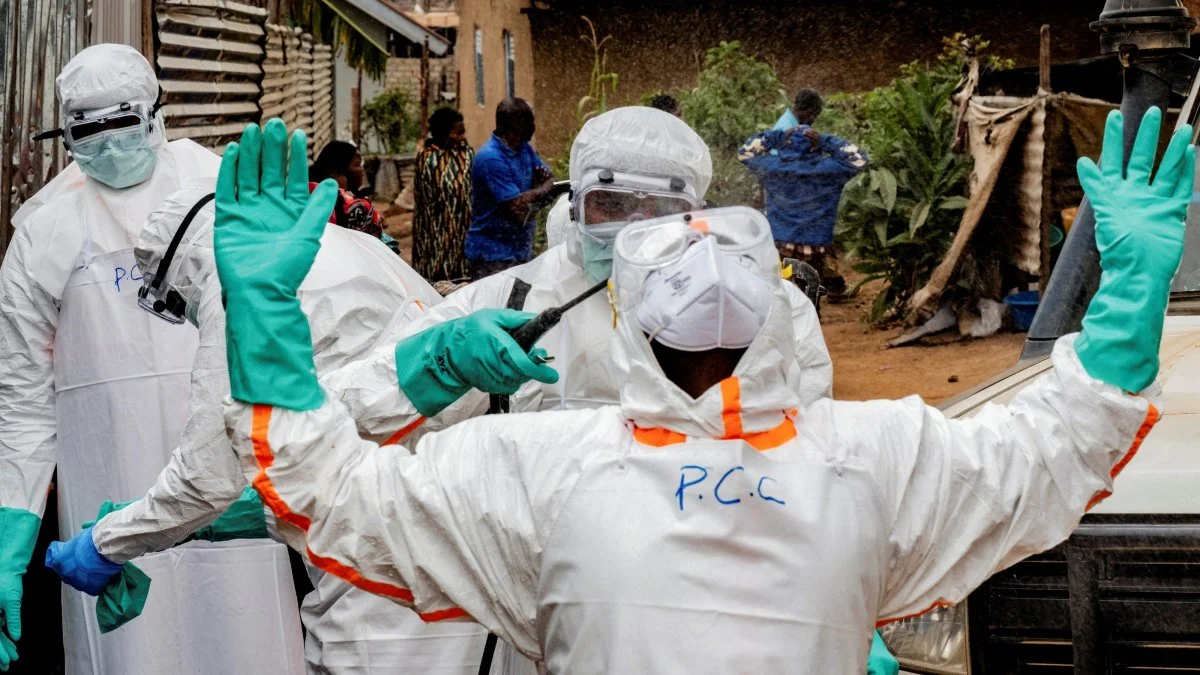
Ebola containment challenged by distrust in Congo
Health workers in the Democratic Republic of Congo face significant challenges in containing the Ebola outbreak due to deep-seated distrust within communities. This distrust, fueled by historical grievances, misinformation, and a strained humanitarian situation, leads to attacks on health workers and hinders crucial contact tracing and treatment efforts. The current outbreak, caused by the rare Bundibugyo virus, is the deadliest and fastest-growing in Congo's history, making containment a critical global health concern.
Key Highlights
- Distrust hinders Ebola contact tracing and treatment in Congo.
- Attacks on health workers escalate risks and slow containment.
- Bundibugyo virus outbreak is Congo's deadliest and fastest growing.
- Humanitarian crisis and insecurity exacerbate response challenges.
- Community engagement and trust-building are vital for control.
The Ebola outbreak in the Democratic Republic of Congo (DRC) is facing severe challenges in its containment, primarily driven by a growing distrust among local communities towards health workers and governmental/aid organizations. This lack of faith is leading to direct confrontations, including attacks on medical facilities and personnel, which in turn critically impedes essential public health efforts like contact tracing and treatment. The current epidemic, caused by the Bundibugyo strain of the Ebola virus, has become the deadliest and fastest-growing in the DRC's history, surpassing previous outbreaks in its rapid spread and mortality rate. As of August 15, 2026, the DRC had reported over 4,600 confirmed cases with more than 2,100 deaths. The outbreak has spread across six provinces, affecting 54 health zones.
The roots of this distrust are complex and deeply embedded. Decades of conflict, political instability, and a history of exploitation have eroded confidence in authorities and external aid agencies. Misinformation and disinformation circulating within communities often portray Ebola as a hoax or a tool of external control, further fueling suspicion and resistance to health interventions. This is compounded by a severe humanitarian crisis in eastern Congo, characterized by widespread poverty, food insecurity, and ongoing violence, which weakens the already fragile health system and limits access to essential services.
Health workers on the front lines are bearing the brunt of this mistrust. They are often met with anger and denial when trying to trace contacts of infected individuals or when implementing necessary precautions, such as safe and dignified burials. In some instances, health workers have been forced to withdraw from communities, leaving them "flying blind" in their efforts to break chains of transmission. The World Health Organization (WHO) and UNICEF have stressed the critical need to build trust through community engagement, working with local leaders, influencers, and religious figures to disseminate accurate information and counter misinformation.
The Bundibugyo virus strain presents additional challenges, as there are currently no approved vaccines or specific treatments. While clinical trials for potential treatments are underway, containment relies heavily on traditional public health measures, which are being severely hampered by the prevailing distrust. The situation is particularly dire in densely populated displacement camps like Kpangba, where poor sanitation and high population density create fertile ground for rapid virus transmission, further complicated by the insecurity that often restricts humanitarian access.
Despite these immense challenges, international organizations like UNICEF and the WHO are scaling up their response, classifying the outbreak as a Level 3 emergency – their highest classification. Their efforts include reinforcing infection prevention in health facilities, strengthening community surveillance, providing essential supplies, and focusing on risk communication and community engagement to build trust. The success of these interventions hinges on overcoming the deep-seated mistrust and ensuring that affected communities feel heard and protected. The mission led by the WHO Director-General and Africa CDC Director-General in August 2026 highlighted the urgency for a community-led response, emphasizing early detection, contact tracing, access to care, and robust support for frontline workers. Uganda's successful containment of its outbreak, which involved early detection, rapid contact tracing, and trusted community engagement, serves as a crucial lesson for the ongoing response in the DRC. The international community's continued funding and support are vital to address this escalating health crisis and prevent further spread to neighboring countries.
This outbreak is not confined to the DRC; cases have also been reported in Uganda, underscoring the regional threat and the need for coordinated cross-border surveillance and preparedness. The Democratic Republic of the Congo has faced numerous Ebola outbreaks since 1976, and while past experiences offer valuable lessons, the current situation is exacerbated by a more complex mix of insecurity, humanitarian need, and profound community distrust. The fight against this deadliest and fastest-growing Ebola outbreak demands not only medical and logistical interventions but also a concerted, long-term effort to rebuild trust and ensure that communities are active participants in their own health and safety.
Frequently Asked Questions
What is causing the current Ebola outbreak in the Democratic Republic of Congo?
The current Ebola outbreak in the Democratic Republic of Congo is caused by the Bundibugyo strain of the Ebola virus, which is a rarer type for which there are no approved vaccines or specific treatments available yet.
Why are health workers struggling to contain the Ebola outbreak in Congo?
Health workers are struggling due to deep-seated distrust within communities, fueled by historical grievances, misinformation, and the ongoing humanitarian crisis. This distrust leads to attacks on health workers and resistance to crucial containment efforts like contact tracing and treatment.
What are the main challenges in combating this Ebola outbreak?
The main challenges include community distrust and hostility towards health workers, the spread of misinformation, insecurity in affected regions, a severe humanitarian crisis, and the lack of approved vaccines or treatments for the Bundibugyo virus strain. The outbreak is also the fastest-growing and deadliest in Congo's history.
How is the international community responding to the Ebola outbreak in Congo?
Organizations like WHO and UNICEF are scaling up their response, classifying it as a Level 3 emergency. Efforts include reinforcing infection prevention, strengthening community surveillance, providing supplies, and focusing on risk communication and community engagement to build trust. International funding and support are crucial.