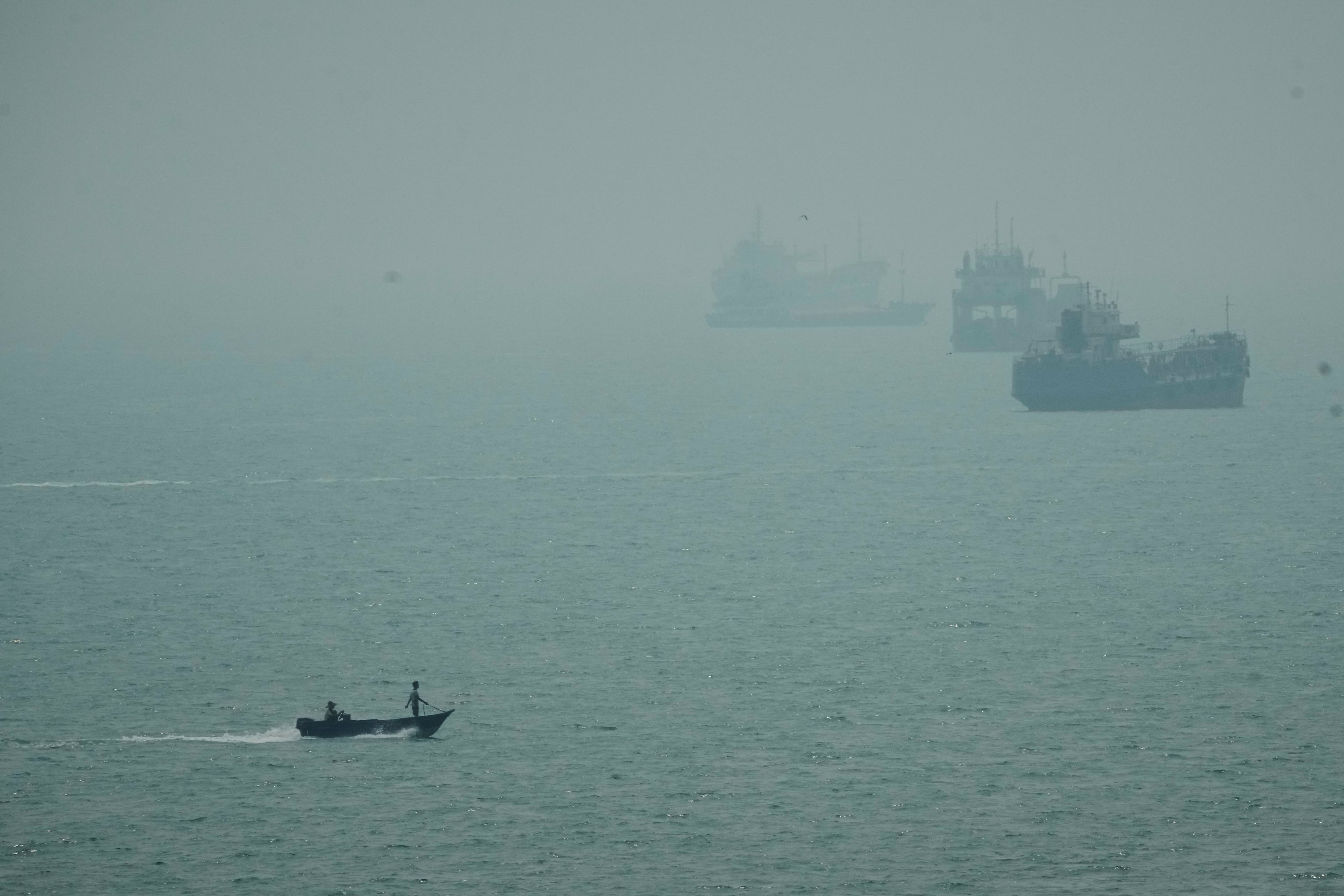
Iran Claims Seizure of US Underwater Drone in Strait of Hormuz
Iran's Revolutionary Guards claim to have captured a US unmanned underwater vehicle (UUV) in the Strait of Hormuz. The US confirmed an incident involving a malfunctioning drone, stating it was an older model with no sensitive data. This comes amidst heightened tensions and a blockade in the critical waterway.
Key Highlights
- Iran Guards claimed capture of a US unmanned underwater vehicle.
- US confirmed incident, called it a malfunctioning older drone.
- Incident occurred in the strategic Strait of Hormuz.
- Iran identified the vessel as an Anduril Dive-LD.
- Claims of 'smartest' submarine disputed by US as 'older model'.
- Event highlights ongoing US-Iran tensions in the region.
On Tuesday, September 8, 2026, Iran's Revolutionary Guards (IRGC) announced they had captured a United States unmanned underwater vehicle (UUV) at the entrance to the strategic Strait of Hormuz. Iranian state media and IRGC statements described the vessel as 'one of the most modern, unmanned, and smart submarines' of the US military, claiming it was equipped with the latest technology and delivered to the US Navy in 2025. The IRGC asserted the capture was the result of a 'complex intelligence and operational action' and pledged to release photographs and video footage of the seized asset.
However, the US Central Command (CENTCOM) presented a contrasting account. A CENTCOM spokesperson confirmed an incident involving an underwater drone, but stated that the device had 'malfunctioned more than a day ago' and was essentially 'dead in the water' when Iran intervened. The US military further clarified that the drone was an 'older model' that did not collect sensitive data and carried no classified sonar or radar equipment.
The vessel in question has been identified by Iranian state media as an Anduril Dive-LD, a large autonomous underwater vehicle built by the California defense firm Anduril Industries. According to industry reports and Anduril's specifications, the Dive-LD is a three-ton autonomous underwater vehicle capable of operating at depths of up to 6,000 meters and can function autonomously for up to 10 days, with mission durations potentially extended to several weeks. Its intended missions include subsurface reconnaissance and surveillance, seabed mapping, mine detection, and inspection of submarine cables and pipelines. The US military has been increasingly investing in unmanned naval systems for surveillance, intelligence gathering, and tracking adversary vessels without risking personnel.
This incident unfolds amidst significantly heightened tensions in the Middle East, with Iran maintaining a blockade of the Strait of Hormuz since a war began in late February. The Strait is a vital global chokepoint, handling approximately a fifth of the world's oil and liquefied natural gas exports. Iran has asserted its intention to collect fees from ships passing through the strait for services like environmental protection, a move strongly opposed by Washington, which has responded with its own counter-blockade on Iranian ports.
The 'capture' of the drone is not an isolated event but rather another instance in a series of confrontations involving unmanned vessels between Iran and the US. In 2022, the Iranian military seized US Navy Saildrone Explorer surveillance and patrol drones on at least two occasions in the Arabian Gulf and Red Sea, which were later released after US intervention. The current incident further escalates the ongoing geopolitical friction, with Iran signaling a sharper military posture, including recent claims of targeting US aircraft carriers and destroyers with ballistic missiles, which the US denied hitting.
While Iranian officials are portraying the seizure as a significant intelligence and operational triumph, the US is downplaying its importance, emphasizing the drone's malfunction and lack of sensitive information. The disparity in narratives highlights the propaganda aspect inherent in such geopolitical incidents, with both sides attempting to control the perception of events. The timing of this incident, alongside ongoing blockades and counter-blockades, underscores the volatile security environment in a region critical to global energy supplies and maritime trade.
Frequently Asked Questions
What exactly did Iran claim to capture?
Iran's Revolutionary Guards claimed to have captured a US unmanned underwater vehicle (UUV), often referred to as a 'submarine drone', in the Strait of Hormuz.
How did the US respond to Iran's claim?
The US Central Command (CENTCOM) confirmed an incident involving an underwater drone, stating that the vessel had malfunctioned 'more than a day ago' and was an 'older model' that did not carry sensitive data or classified equipment.
What type of vessel was the 'submarine drone' identified as?
Iranian state media identified the vessel as an Anduril Dive-LD, a large autonomous underwater vehicle designed for various missions including reconnaissance, mapping, and mine detection.
Why is the Strait of Hormuz significant?
The Strait of Hormuz is a critical global chokepoint, through which approximately one-fifth of the world's oil and liquefied natural gas exports pass. Its security is vital for global energy markets and maritime trade.
Is this the first time Iran has seized a US drone?
No, this is not the first such incident. Iranian forces have previously seized US Navy Saildrone Explorer surveillance and patrol drones in the region in 2022.