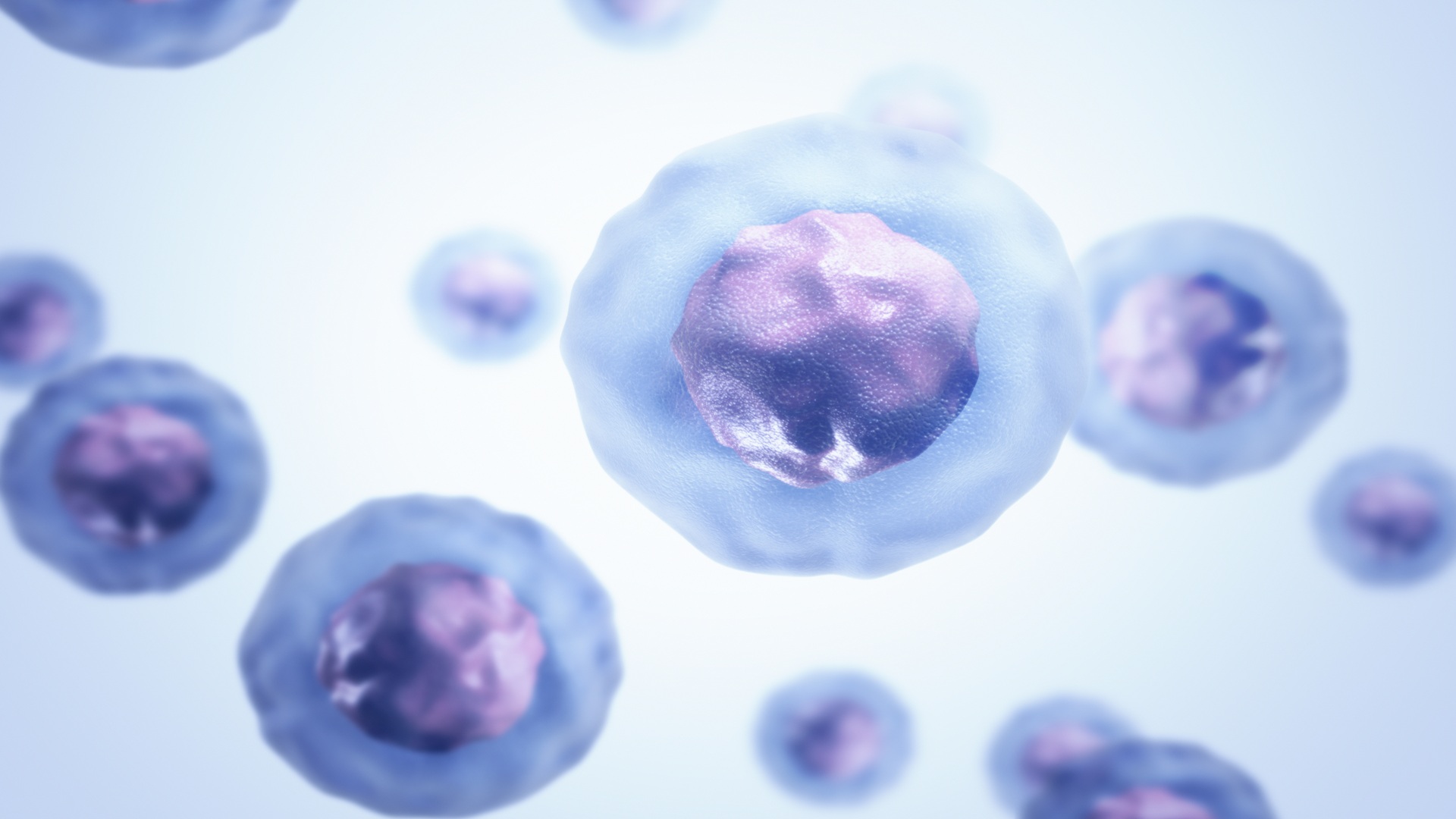
First Synthetic Cell, 'SpudCell,' Achieves Complete Life Cycle
Scientists at the University of Minnesota have created 'SpudCell,' the world's first synthetic cell built entirely from non-living chemical components to complete a full life cycle. This breakthrough demonstrates growth, genome replication, division, and selection, marking a significant advance in synthetic biology with global implications for medicine and engineering.
Key Highlights
- SpudCell is the first synthetic cell built bottom-up from non-living components.
- It exhibits a complete life cycle: growth, genome replication, and division.
- Research team led by Professors Kate Adamala and Aaron Engelhart.
- The cell has a minimal 90 kbp genome, smaller than previous estimates.
- Potential applications include drug development and new materials.
- Distinction made from J. Craig Venter's 2010 synthetic cell.
Scientists at the University of Minnesota, led by Associate Professors Kate Adamala and Aaron Engelhart of the College of Biological Sciences, have announced a groundbreaking achievement: the creation of SpudCell, the world's first synthetic cell capable of completing a full life cycle from entirely non-living chemical components. This milestone, widely reported from July 1st to 3rd, 2026, marks a significant advance in the field of synthetic biology.
Unlike previous work, notably J. Craig Venter's 2010 creation of a synthetic cell, which involved transplanting a synthetic genome into an existing bacterial cell, the University of Minnesota team's SpudCell was constructed from the 'bottom-up.' This means it was assembled wholly from purified, non-living chemical components, rather than modifying a pre-existing biological organism.
SpudCell demonstrates all the fundamental behaviors associated with a biological cell's life cycle. It is capable of growth, genome replication, resource acquisition (feeding), genetically encoded division, and even undergoes selection and competition across multiple generations. This achievement, as stated by Professor Adamala, proves that the most fundamental functions of life, like growth and replication, do not necessitate a 'mysterious magical spark.'
A notable characteristic of SpudCell is its novel division mechanism. While natural cells rely on an internal scaffolding called a cytoskeleton for division, SpudCell sidesteps this complexity. Instead, proteins gather at the membrane surface, creating mechanical stress that ultimately causes the cell to split. This innovative approach addresses a long-standing challenge in synthetic cell research.
Furthermore, SpudCell possesses an exceptionally minimal genome, comprising just 90 kilobase pairs (kbp). This is remarkably smaller than the human genome (approximately 3 million kbp) and even below the previously speculated minimal genome size of 113 kbp required for a living cell. The genome is organized across seven separate DNA plasmids, offering a modular structure that allows researchers to independently 'program' various functions of the cell.
Despite these advancements, SpudCell is still in its nascent stages and has certain limitations. It is reliant on the surrounding liquid medium for essential nutrients and components, and unlike natural cells, it cannot produce its own protein-making machinery, regulate its metabolism, or efficiently clear waste. Moreover, SpudCells currently last only a few generations and their ability to evolve spontaneously over many generations, a key characteristic of natural life, is debated among experts. The research paper detailing SpudCell is currently a preprint, undergoing peer review, with some reports indicating an initial rejection from a top academic journal.
Nonetheless, the potential applications of this breakthrough are vast and globally significant. It could revolutionize biological engineering, leading to innovations in medicine, such as the development of novel drugs and therapies, and the creation of advanced industrial materials. The ability to engineer biology from scratch could also enable the development of programmable organisms for specific functions, from combating diseases to environmental applications like carbon capture.
The relevance of synthetic biology, and this discovery, to India is particularly pertinent. India is rapidly expanding its bioeconomy, with an ambitious target to become a global biotech powerhouse. Synthetic biology offers pathways for India to advance in precision biotherapeutics, sustainable agriculture (e.g., nitrogen-fixing microbes), and environmental solutions (e.g., converting greenhouse gases into valuable proteins). Government initiatives and a growing number of educational institutes and incubators are fostering synthetic biology research and entrepreneurship across the country. The open-source approach adopted by Professor Adamala and the launch of Biotic, a public-benefit institution aimed at shared infrastructure and global participation, aligns with India's potential for collaborative scientific advancements. This work lays a foundational 'chassis' for future international efforts to address pressing global challenges.
Frequently Asked Questions
What is SpudCell and how is it different from previous synthetic cells?
SpudCell is the world's first synthetic cell created by scientists at the University of Minnesota that completes a full life cycle while being built entirely from non-living chemical components from the 'bottom-up'. This differs significantly from earlier synthetic cells, such as J. Craig Venter's 2010 creation, which involved transplanting a synthetic genome into an existing, live bacterial cell.
What does it mean for SpudCell to have a 'complete life cycle'?
A 'complete life cycle' for SpudCell signifies its ability to perform fundamental biological functions including growth, replication of its genome, taking in nutrients ('feeding'), dividing into new cells, and undergoing a process similar to natural selection and competition over multiple generations.
What are the potential applications of this synthetic cell breakthrough?
This breakthrough holds immense potential for biological engineering and could revolutionize various fields. Applications include developing new medicines and therapies, creating advanced industrial materials, and designing programmable organisms for specific purposes such as capturing carbon or producing biofuels.
What are some current limitations of SpudCell?
Despite its capabilities, SpudCell is still a primitive system. It is currently dependent on external nutrients and components provided in its liquid environment, and it cannot yet produce its own protein-making machinery, regulate its metabolism, or effectively eliminate waste like natural cells. Its ability to evolve over many generations without intervention is also a subject of ongoing scientific discussion.
How is this discovery relevant to India?
India has a rapidly growing bioeconomy and aims to be a global leader in synthetic biology. This research could pave the way for advancements in India's healthcare sector (precision biotherapeutics), agriculture (smart proteins, nitrogen-fixing microbes), and environmental solutions (converting greenhouse gases). The open-source approach of SpudCell's developers aligns with India's potential for collaborative scientific innovation.