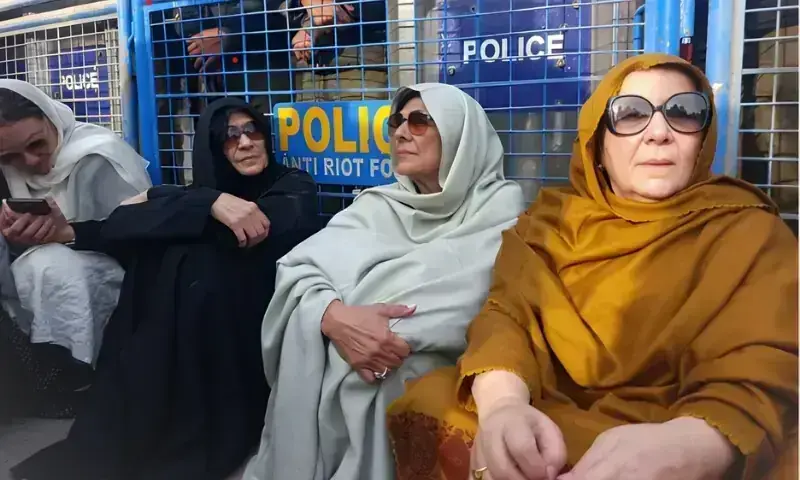
Imran Khan's family alleges mistreatment in jail, claims 'vendetta'
Imran Khan's family has accused Pakistan's Army Chief Asim Munir of orchestrating a campaign of mistreatment against the former Prime Minister in jail. Allegations include psychological torture and denial of basic rights, framed as a personal vendetta. This comes amid ongoing political instability in Pakistan.
Key Highlights
- Imran Khan's family alleges mistreatment by Army Chief Asim Munir.
- Claims include psychological torture and denial of rights.
- Allegations suggest a personal vendetta against Khan.
- The situation is unfolding amidst Pakistan's political turmoil.
- Family members have voiced concerns through media.
- Khan remains incarcerated on multiple charges.
The family of former Pakistani Prime Minister Imran Khan has leveled serious accusations against the country's powerful Army Chief, General Asim Munir, alleging that Khan is enduring "unimaginable mistreatment" under his "vengeful instructions." These claims, reported by the Times of India and echoed in other Indian media outlets like NDTV and WION, paint a grim picture of Khan's incarceration in Adiala jail. The family asserts that the mistreatment goes beyond standard judicial proceedings and constitutes a targeted campaign of psychological torture and denial of basic rights, driven by a personal vendetta on Munir's part.
According to these reports, Khan's sisters have been particularly vocal in expressing their concerns. They have alluded to what they describe as a "lethal plan" by Asim Munir to eliminate Imran Khan, raising alarms about his safety and well-being. The allegations extend to claims that other officials, such as Mohsin Naqvi, might be involved in a broader "Asim Munir regime" that is actively targeting Khan and his family, even extending to alleged threats against Khan's sisters. This suggests a coordinated effort to silence and neutralize the political opposition led by Khan.
These allegations surface at a time of significant political flux in Pakistan. The country has been grappling with economic instability, political polarization, and ongoing legal battles involving Imran Khan and his Pakistan Tehreek-e-Insaf (PTI) party. Khan has been incarcerated on various charges, which his party and supporters maintain are politically motivated. The renewed accusations from his family add another layer of complexity to the already volatile political landscape, potentially exacerbating tensions between civilian leadership and the powerful military establishment.
The Times of India article, and related reports, highlight the gravity of the family's claims by framing them as a direct consequence of the Army Chief's alleged personal animosity towards Khan. This narrative suggests that the legal and judicial processes Khan is facing are not impartial but are influenced by a directive from the highest echelons of the military. The use of terms like "vengeful instructions" and "lethal plan" in the media coverage indicates a high degree of alarm and urgency from the family and the news outlets reporting on their behalf. The intent appears to be to draw international attention to Khan's plight and to pressure the Pakistani authorities to ensure his humane treatment and fair trial.
Further context provided by articles from NDTV and WION suggests that these allegations are not isolated incidents but are part of a pattern of perceived persecution. The mention of Mohsin Naqvi, who has held significant interim government positions, being involved in threatening Khan's sisters, implies a broader network of individuals allegedly acting under Munir's influence. This narrative seeks to establish a clear chain of command and accountability, directly linking the alleged mistreatment of Imran Khan to the Army Chief. The implications of such allegations are substantial, potentially undermining the legitimacy of the current government and further eroding public trust in state institutions.
India.Com also points to potential significant decisions being made regarding Imran Khan's future, hinting at ongoing legal and political developments that could impact his ongoing incarceration. While the specific nature of these decisions remains unclear from the provided context, it suggests that the political maneuvering surrounding Imran Khan is far from over. The family's public statements and the media's amplification of these claims are likely intended to influence these upcoming decisions and to garner sympathy and support for Khan both domestically and internationally.
The veracity of these claims is difficult to ascertain definitively without independent verification from Pakistan, which can be challenging given the country's political climate and media freedom. However, the consistent reporting across multiple Indian news outlets, citing the family's statements and interviews, indicates a coordinated effort to bring these allegations to the forefront. The focus on General Asim Munir suggests that the family believes he is the central figure responsible for Imran Khan's alleged suffering. This narrative positions the conflict not just as a legal dispute but as a high-stakes power struggle between political figures and the military establishment, with Imran Khan as the primary victim.
For an audience in India, this story is highly relevant due to the historical complexities and geopolitical significance of the India-Pakistan relationship. Political instability and internal power struggles within Pakistan often have regional implications. Furthermore, Imran Khan has historically held a certain level of public recognition in India, making news concerning his well-being and political future of interest. The allegations, if true, would also highlight concerns about human rights and the rule of law within Pakistan, topics that resonate with Indian audiences.
Frequently Asked Questions
What are the main allegations made by Imran Khan's family?
Imran Khan's family alleges that he is enduring "unimaginable mistreatment" and "psychological torture" in jail, orchestrated by Pakistan's Army Chief, General Asim Munir, out of personal vengeance.
Who is General Asim Munir and what is his alleged role?
General Asim Munir is the Chief of Army Staff of Pakistan. Imran Khan's family claims he is personally directing a campaign of mistreatment against Imran Khan from his position of power.
Why are these allegations significant?
These allegations are significant because they accuse the head of Pakistan's powerful military of politically motivated persecution, adding to the country's existing political instability and raising concerns about human rights and the rule of law.
What is the broader political context of these claims?
The claims emerge amidst Imran Khan's ongoing incarceration on multiple charges, which his party asserts are politically motivated. This occurs during a period of significant political and economic challenges in Pakistan, with the military often playing a crucial role in the country's affairs.