US denies Iran missile interceptor hit Kuwait airport; Iran blamed for drone strike
The US military has refuted Iran's claim that a malfunctioning US missile interceptor damaged Kuwait International Airport, asserting instead that Iran deliberately attacked the airport with drones. The incident resulted in one death and multiple injuries, causing temporary airport closure and damage to facilities. Kuwait has condemned the attacks and expelled Iranian diplomats.
Key Highlights
- US denies Iran's claim of a Patriot missile causing damage at Kuwait airport.
- Iran is accused of deliberately striking Kuwait International Airport with drones.
- The attack resulted in one death and multiple injuries, disrupting airport operations.
- Kuwait condemned the aggression and expelled Iranian diplomats.
- This incident is part of escalating tensions between Iran and the US.
- Kuwait has resumed partial operations at its airport.
The United States military has categorically denied claims made by Iran that a malfunctioning American Patriot missile interceptor was responsible for the damage at Kuwait International Airport. In a stern refutation, the U.S. Central Command (CENTCOM) stated that Iran's assertions were "totally false" and that Iran itself carried out a "deliberate, calculated, and unjustified attack" on the civilian airport using drones.
According to Iranian state-affiliated media, the Islamic Revolutionary Guard Corps (IRGC) had claimed that their internal investigations revealed no Iranian fire directed at the airport. Instead, they alleged that American Patriot missiles, after failing to intercept incoming Iranian targets, impacted the terminal building. The IRGC further stated that it had attacked a U.S. base in Kuwait and the U.S. Fifth Fleet headquarters in Bahrain in retaliation for a U.S. overnight attack on its communications tower on Qeshm Island.
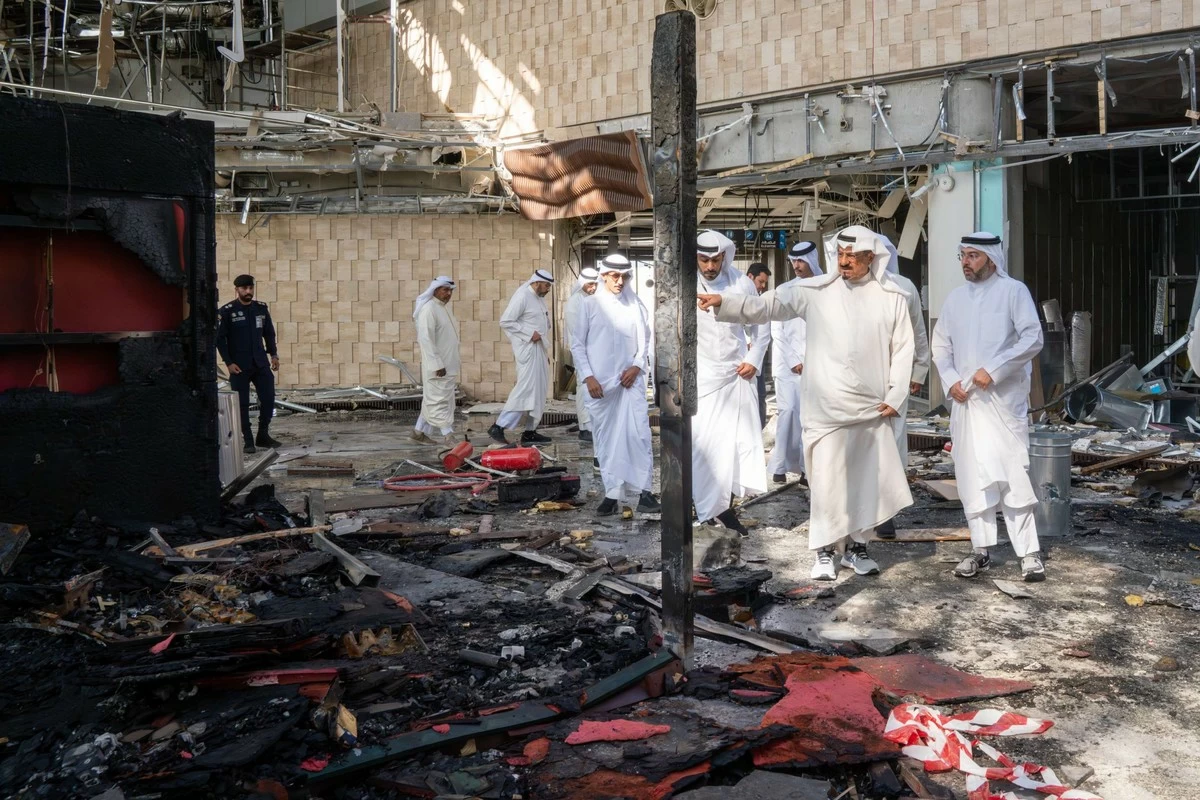
Kuwait authorities confirmed that Iranian drones and missiles did strike Kuwait International Airport on Wednesday, June 3, 2026. The attack resulted in the death of one person, an Indian national, and left at least 63 others injured, including passengers and airport workers. The incident led to the temporary suspension of air traffic, with flights being diverted to alternative airports, and caused significant damage to Terminal 1 of the airport, including a collapsed roof. Kuwait's Directorate General of Civil Aviation released footage showing the immediate aftermath of the attack, depicting smoke and people running for cover.
In response to the aggression, Kuwait's Ministry of Foreign Affairs condemned the attacks, stating that they targeted vital and civilian infrastructure, including diplomatic missions. Kuwait also summoned the charge d'affaires of the Iranian Embassy to lodge an official protest and subsequently expelled two Iranian diplomats.
The incident underscores the escalating tensions between Iran and the United States, occurring within the context of a fragile ceasefire that has been tested by exchanges of strikes. While Iran claimed responsibility for attacks on U.S. military assets in Kuwait and Bahrain, the U.S. reported intercepting missiles and drones launched toward regional allies and conducting retaliatory strikes on Iranian positions. The U.S. military stated that Iranian missiles launched toward Kuwait failed to hit their targets or broke apart en route.
Kuwait Airways has since resumed flights from Terminal 4 of the airport after authorities evaluated the damages. The Patriot missile defense system is a ground-based, mobile system designed to detect, track, and engage threats such as drones, cruise missiles, and short-range ballistic missiles. It consists of radar, engagement control stations, missile launchers, and Patriot missiles, with various upgrades like PAC-2 and PAC-3 versions.
The news is specific to Kuwait and involves international relations between Iran and the United States, with implications for regional stability. The direct impact on an Indian national who was killed, and the broader geopolitical context, makes it relevant to an Indian audience. The incident highlights the ongoing conflict and the risks to civilian infrastructure in the region.
Frequently Asked Questions
What caused the damage at Kuwait International Airport?
Kuwaiti authorities and the US military state that Iranian drones and missiles struck the airport. Iran, however, claims the damage was caused by a malfunctioning US Patriot missile interceptor.
Did a US missile interceptor damage Kuwait Airport?
No, US Central Command (CENTCOM) has explicitly denied this claim, stating it is 'totally false' and that Iran deliberately attacked the airport with drones.
What were the consequences of the attack on Kuwait Airport?
The attack resulted in one death (an Indian national) and at least 63 injuries. It caused significant damage to Terminal 1 of the airport, leading to the temporary suspension of all flights. Kuwait has also expelled two Iranian diplomats.
What is the Patriot missile defense system?
The Patriot system is a ground-based, mobile missile defense interceptor deployed by the United States and other nations to detect, track, and engage threats like drones, cruise missiles, and short-range ballistic missiles.