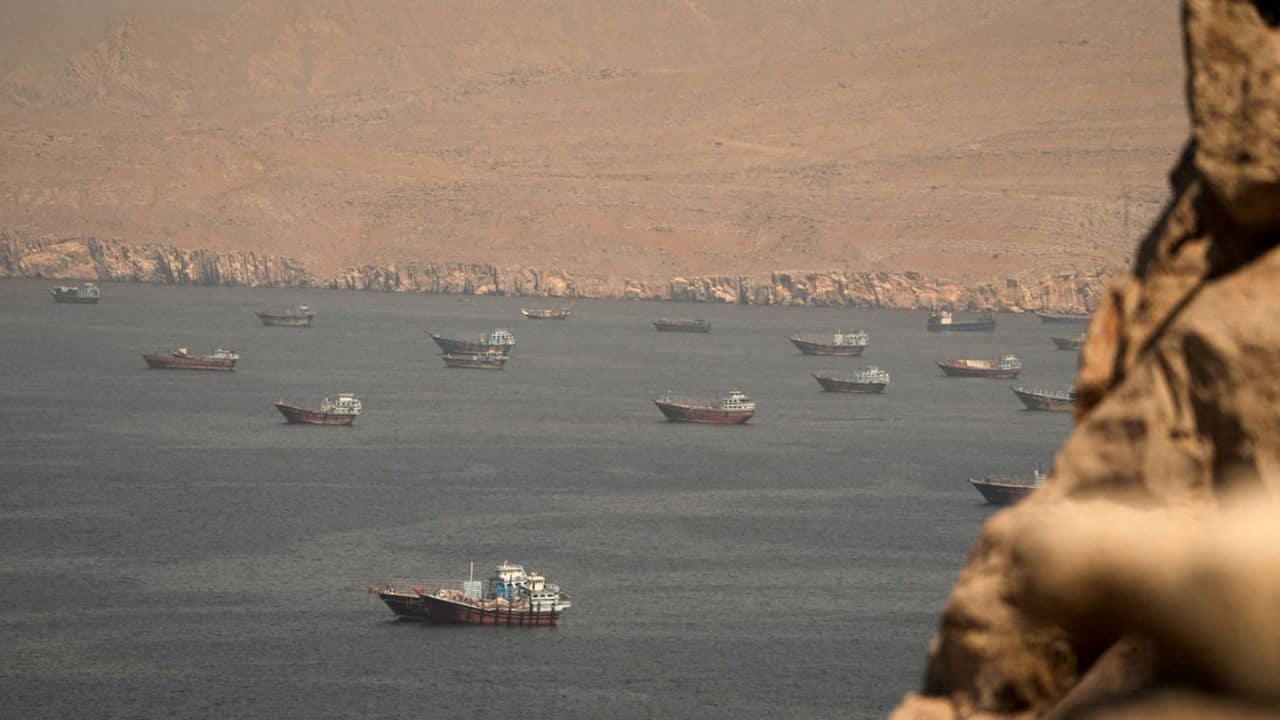
Trump's Hormuz Claim Ignites Iran's Fury Amidst Escalating Conflict
Former President Donald Trump recently suggested declaring the Strait of Hormuz US territory, provoking a sharp rebuke from Iran. This statement escalates tensions amid an ongoing US-Iran conflict, a naval blockade, and significant disruption to global oil shipments through the critical waterway.
Key Highlights
- Donald Trump suggested declaring Strait of Hormuz as US territory.
- Iran strongly rejected Trump's claim, asserting its sole control.
- Remarks made during an ongoing US-Iran conflict and naval blockade.
- Strait of Hormuz vital for global oil trade, currently facing disruptions.
- Trump's statement delivered at a New York political rally, causing uncertainty.
- International community closely monitoring rising tensions in the Middle East.
Former President Donald Trump has recently ignited a fresh wave of geopolitical tension by suggesting that the United States would 'pretty soon' declare the strategically vital Strait of Hormuz a territory of the United States, a statement that immediately drew strong condemnation and rejection from Iran. This provocative remark was made during a political rally in Long Island, New York, on Friday, August 14, 2026.
Trump's comments come amidst an escalating and ongoing conflict with Iran, which reportedly began around February 28, 2026. The United States has implemented a naval blockade of Iranian ports, a measure Trump asserts gives the U.S. 'total control' over the waterway, stating, 'No ships get through unless we want them to'. This blockade has severely impacted shipping traffic through the Strait of Hormuz, with reports indicating that commercial vessel transits have fallen to extremely low levels, or even a near standstill on some days.
The Strait of Hormuz is a critical choke point for global energy supplies, with approximately one-fifth of the world's seaborne oil and liquefied natural gas (LNG) shipments typically passing through it. The disruption to this vital artery has contributed to a sharp rise in global fuel prices, creating economic pressure on working Americans, a fact Trump acknowledged while arguing the ongoing conflict was necessary to prevent Iran from obtaining nuclear weapons.
Iran's response to Trump's declaration was swift and unequivocal. Deputy Foreign Minister Kazem Gharibabadi categorically rejected the American president's assertions, emphasizing that the Strait of Hormuz 'has been Iranian, is Iranian, and will remain Iranian.' He asserted that the waterway 'will only be closed and opened under Iran's command,' and cannot be seized 'by tweet, an aircraft carrier, an executive order, or an election speech'. Gharibabadi further stated that Iran would continue to enforce its blockade until Washington accepts its 'strategic defeat' and ceases what he termed 'fanciful delusions'.
Notably, some reports highlighted the ambiguous nature of Trump's original statement. Several news outlets mentioned that he made the remark 'with a chuckle' during his speech, and it was 'unclear how seriously Trump intended the remark or whether it represented a new policy position'. One White House official was even reported to have clarified that Trump was 'joking'. However, regardless of the former President's intent, the implications of such a statement from a major global leader were taken seriously by Iran and the international community.
The broader context reveals a deeply entrenched standoff between Washington and Tehran. Efforts to de-escalate tensions, including a preliminary peace deal and a memorandum of understanding signed in June to reduce hostilities, have reportedly fallen apart due to disagreements over control of the Strait and other contentious issues. The United States Treasury Secretary Scott Bessent has also indicated plans for unprecedented 'economic isolation' measures against Iran in the near future, further intensifying the pressure. Vice President JD Vance outlined a two-fold goal for the administration: stabilizing US energy prices and preventing Iran from acquiring nuclear weapons.
This ongoing confrontation, marked by military blockades, economic sanctions, and heightened rhetoric, underscores the precarious geopolitical situation in the Middle East. The Strait of Hormuz remains a central flashpoint, with both the U.S. and Iran asserting conflicting claims of control. For an Indian audience, the developments are particularly relevant given India's significant reliance on oil imports that traverse this critical waterway, making stability in the region crucial for its energy security and economic interests.
Frequently Asked Questions
What did Donald Trump say about the Strait of Hormuz?
During a recent political rally, Donald Trump stated that 'pretty soon' he would declare the Strait of Hormuz a territory of the United States after defeating Iran. He also claimed the U.S. already has 'total control' through a naval blockade.
How did Iran respond to Trump's remarks?
Iran swiftly rejected Trump's claim, with Deputy Foreign Minister Kazem Gharibabadi asserting that the Strait of Hormuz is and will remain Iranian territory, and its opening or closing is solely under Iran's command. He stated it 'cannot be seized by tweet' or military force.
Why is the Strait of Hormuz so important?
The Strait of Hormuz is a critical global chokepoint for oil and natural gas shipments, through which approximately 20% of the world's seaborne oil supplies typically pass. Its control and navigability are crucial for global energy security and trade.
Is there currently a conflict between the US and Iran?
Yes, reports indicate an ongoing conflict between the US and Iran since around February 2026, marked by a US naval blockade on Iranian ports, economic pressure, and stalled negotiations over regional stability and nuclear programs.
What are the implications for global shipping and oil prices?
The ongoing tensions and the US naval blockade have severely disrupted shipping traffic through the Strait of Hormuz, with reports of vessels at a near standstill. This disruption has led to a sharp rise in global oil and fuel prices.