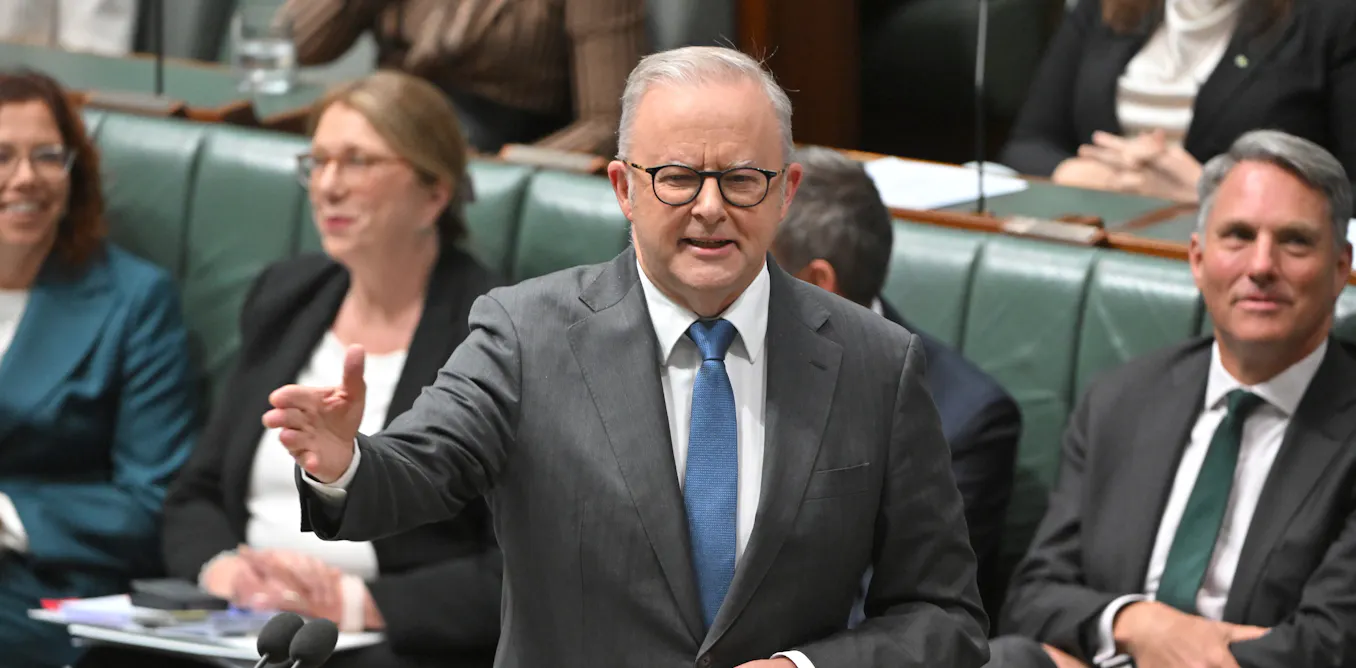
Australia's Albanese warns of prolonged economic shock from Middle East war
Australian Prime Minister Anthony Albanese has warned that the economic shocks from the ongoing Middle East war will be felt for months, impacting fuel prices and supply chains. He urged citizens to conserve fuel and consider using public transport, emphasizing the need for collective resilience.
Key Highlights
- Economic shocks from the Middle East war will impact Australia for months.
- Prime Minister Albanese urges fuel conservation and public transport use.
- Government implementing measures to stabilize fuel prices and supply.
- Australia is not an active participant but is affected by global energy prices.
- Economic challenges are a result of global supply chain disruptions.
- Call for collective resilience and responsible fuel consumption.
Australian Prime Minister Anthony Albanese has issued a stark warning that the nation will continue to experience economic repercussions from the ongoing conflict in the Middle East for several months to come. In a rare national address delivered via television and radio on Wednesday, April 1, 2026, Albanese acknowledged the significant economic shocks stemming from the war, which have led to the biggest historical spikes in petrol and diesel prices. He emphasized that while Australia is not an active participant in the conflict, all Australians are feeling the effects through higher energy costs, impacting farmers, truck drivers, small businesses, and families.
The Prime Minister urged citizens to play a role in mitigating the impact by conserving fuel. Specifically, he encouraged those who can to switch to public transport, such as trains, buses, and trams, for their commutes. This measure aims to preserve fuel reserves for critical industries, rural communities, and individuals who have no alternative but to drive. Albanese also advised against unnecessary fuel consumption, such as overfilling vehicles.
To address the immediate economic strain, the Australian government has implemented several measures. These include a temporary halving of the fuel excise, reducing the tax on every litre of petrol by 26 cents until July, and eliminating heavy vehicle road user charges. The government is also working to stabilize fuel prices by increasing domestic refining capacity and securing additional fuel imports through regional trade partnerships. Treasurer Jim Chalmers indicated that small businesses affected by the crisis would receive easier access to credit, recognizing the broader economic impact of rising operational costs and global uncertainty.
The conflict, which has disrupted key global supply routes like the Strait of Hormuz, has led to widespread volatility in global energy markets. Australia, which imports approximately 90% of its fuel, has experienced surges in petrol prices and localized shortages as a direct consequence. The situation has been described as a global energy crisis, with analysts warning of potential further price increases if the conflict escalates.
Prime Minister Albanese positioned his address alongside other significant national moments, such as the COVID-19 pandemic and the 2008 global financial crisis, highlighting the gravity of the current situation. The government has invoked its National Fuel Security Plan, a four-stage plan indicating that while stricter demand reduction measures are not yet in place, the nation is prepared to take further steps if the global situation deteriorates. The government is also introducing emergency laws to underwrite private sector fuel purchases from international markets, providing insurance for companies facing escalating prices.
The economic outlook for Australia, while generally resilient, faces challenges from these global supply-driven pressures. Even before this latest crisis, inflation had been a concern, remaining above the Reserve Bank of Australia's target. The war's impact on fuel prices complicates the RBA's policy path, potentially leading to sustained higher interest rates.
In solidarity with the federal government's efforts, some state governments have introduced measures to ease the burden on households. Victoria and Tasmania have waived public transport fares for a period to help insulate residents from surging fuel costs. These initiatives aim to reduce demand on fuel by encouraging greater use of public transportation, thereby freeing up fuel for essential services and industries.
Albanese emphasized that while the government is taking action, no administration can completely eliminate the pressures caused by such a global event. He called for collective resilience and a shared national effort to navigate these uncertain times.
Frequently Asked Questions
What is the main economic impact of the Middle East war on Australia?
The main economic impact is felt through significantly higher fuel prices, disruptions to supply chains, and an overall increase in the cost of living, which the Prime Minister stated will persist for months.
Why is Australia, not a direct participant in the war, affected by its economic consequences?
Australia is affected because the conflict has disrupted global oil supplies, particularly through key shipping routes like the Strait of Hormuz. As Australia imports a large portion of its fuel, it is directly exposed to the resulting surge in international oil prices and reduced availability.
What measures is the Australian government taking to address the economic impact?
The government has temporarily halved the fuel excise, eliminated heavy vehicle road user charges, is working to increase domestic fuel production and secure imports, and is providing easier access to credit for small businesses. State governments are also offering free public transport to reduce fuel demand.
What is Prime Minister Albanese's advice to the Australian public?
Prime Minister Albanese is urging Australians to conserve fuel by using public transport where possible, avoiding unnecessary fuel consumption, and to be mindful of the needs of critical industries and communities.