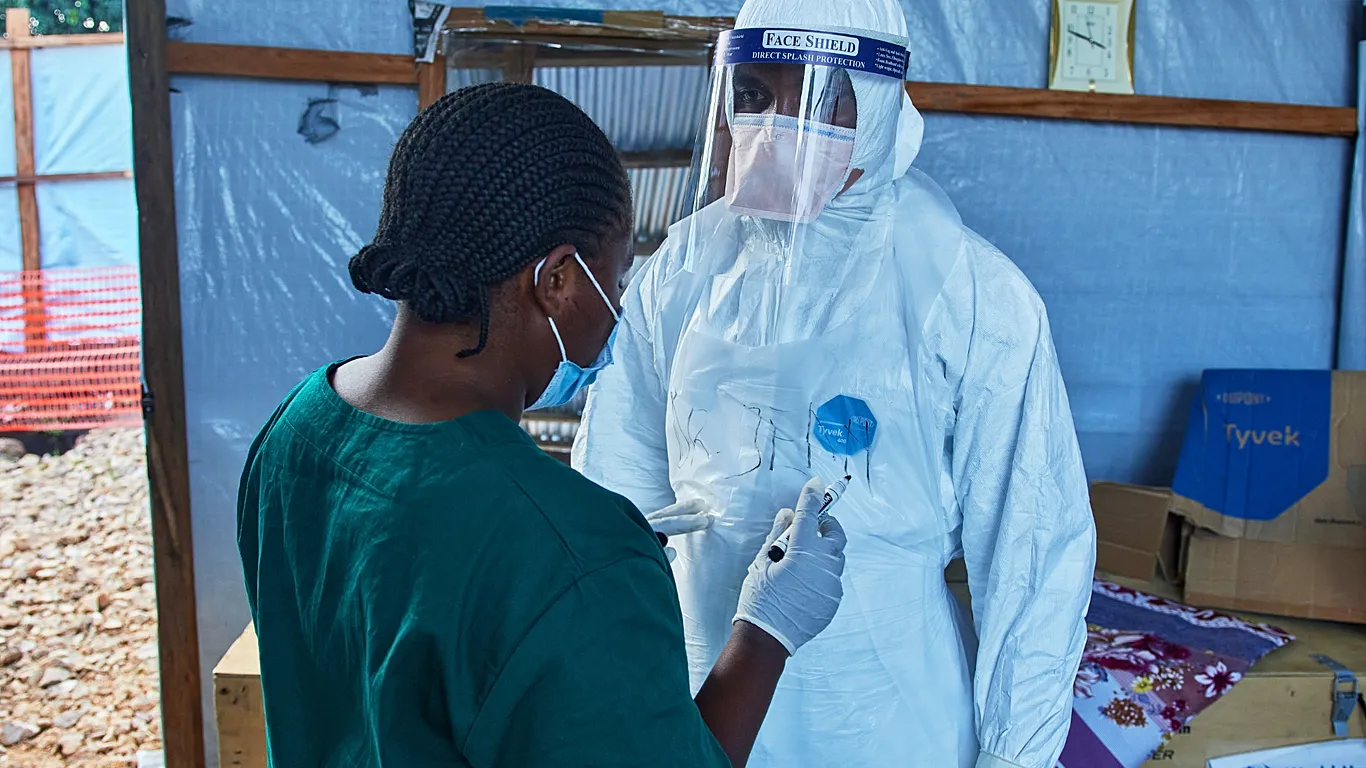
DRC Ebola: 75 Medics Infected in Rapidly Spreading Outbreak
The Democratic Republic of Congo is battling its 17th and fastest-spreading Ebola outbreak, with 75 healthcare workers infected since May 2026. The World Health Organization declared it a Public Health Emergency of International Concern as cases and deaths escalate rapidly amidst conflict and misinformation.
Key Highlights
- DRC declared 17th Ebola outbreak in Ituri Province on May 15, 2026.
- 75 healthcare workers infected with Ebola, 17 deaths reported by WHO.
- Outbreak caused by Bundibugyo virus, lacking specific vaccine or treatment.
- Over 3,800 cases and 1,700 deaths recorded by early August 2026.
- Declared a Public Health Emergency of International Concern (PHEIC).
- Conflict and misinformation severely hinder response efforts and contact tracing.
The Democratic Republic of Congo (DRC) is currently grappling with its 17th and fastest-spreading Ebola outbreak, which was officially declared on May 15, 2026, originating in the northeastern Ituri Province. This particular outbreak is caused by the Bundibugyo virus, a species of Ebola for which no licensed vaccine or specific treatment currently exists, significantly complicating the global response efforts. Recognizing the severity and potential for international spread, the World Health Organization (WHO) officially designated this outbreak a Public Health Emergency of International Concern (PHEIC) on May 17, 2026, emphasizing the critical need for international coordination and cooperation in the response.
A critical and concerning aspect of this unfolding crisis is the high rate of infection among healthcare workers, who are at the forefront of the fight against the disease. As of mid-June 2026, the WHO confirmed that 75 healthcare professionals had been infected with the Bundibugyo strain of Ebola since the outbreak began, with a tragic toll of 17 deaths among them. This substantial impact on medical personnel highlights the profound vulnerabilities within the DRC's already strained health system, which is often characterized by limited staffing and inconsistent supplies of crucial protective equipment. Many of these frontline workers were likely exposed to the virus before the outbreak was officially identified and before comprehensive protective measures could be fully implemented. The immense dangers faced by these responders are evident, with some initially experiencing fear for their own lives and the safety of their families. Despite these formidable challenges, many healthcare workers continue their dedicated efforts, driven by their professional commitment and oath to care for others.
The scale of the outbreak has escalated rapidly since its declaration. By July 30, 2026, official reports indicated a total of 3,605 confirmed cases and 1,587 deaths, reflecting a crude case fatality ratio of 44%. The situation further deteriorated by August 3, 2026, with the number of confirmed cases in the DRC reaching 3,823 and deaths totaling 1,709, making it the fastest-growing Ebola outbreak ever recorded in the country and the second-deadliest in history, surpassed only by the devastating 2014-2016 West African outbreak. Data from the most recent complete reporting week in July revealed the highest weekly numbers to date, with 567 reported cases and 296 deaths, underscoring the intensifying pace of transmission.
The geographic spread of the virus has also been a significant concern. While the outbreak originated in Ituri Province, it has since expanded to affect five additional provinces, impacting 49 health zones across the DRC. Ituri remains the most severely affected region, accounting for 88% of all confirmed cases and 82.6% of reported deaths nationwide. Beyond the DRC's borders, the outbreak initially spread to neighboring Uganda, which reported 20 confirmed cases and two deaths. However, Uganda successfully declared an end to its Ebola outbreak on July 28, 2026, after completing 42 days without new cases, a testament to its effective containment strategies. Despite this regional success, imported cases from the DRC have been reported in more distant countries, including a US citizen medically evacuated to Germany for treatment and another case identified in France.
Response efforts are severely hampered by a complex interplay of humanitarian challenges and security issues in eastern DRC. This includes ongoing armed conflict, significant population displacement, and widespread misinformation, all of which create a challenging environment for disease control. The pervasive insecurity restricts access to affected communities and further weakens an already fragile health infrastructure. Misinformation and deep-seated distrust have fueled resistance to vital public health measures, such as safe burial practices, and have even led to violent attacks on Ebola treatment facilities, severely impeding containment efforts. Aid workers have highlighted the difficulties in contact tracing, reporting that they can only manage to reach approximately a quarter of individuals who have come into contact with Ebola patients. Some communities, unfortunately, disbelieve the existence of Ebola entirely and resort to traditional healers, inadvertently contributing to the virus's further spread. Compounding these challenges, issues such as unpaid risk allowances for Ebola response workers have led to protests and significant frustration among those on the front lines, potentially impacting morale and operational effectiveness.
Given the absence of approved countermeasures for the Bundibugyo virus, current response strategies rely heavily on comprehensive public health interventions. These include early case detection, stringent infection prevention and control protocols within healthcare settings, rigorous contact tracing, strict adherence to safe burial practices, and deep, empathetic community engagement. The WHO and its international partners are providing crucial support through the deployment of technical experts, the provision of essential medical supplies, and laboratory assistance, emphasizing that robust community engagement is paramount to successfully controlling the spread of the disease. Despite the extremely challenging circumstances, a substantial scaling up of all response activities is considered absolutely essential to effectively manage and ultimately overcome this rapidly evolving outbreak.
This ongoing crisis in the DRC serves as a stark reminder of the persistent global health security threats posed by infectious diseases, especially in regions already burdened by conflict and underdeveloped infrastructure. The high infection rate among healthcare workers tragically underscores the immense sacrifices made by frontline responders and highlights the urgent need for robust support systems and resources to protect them, enabling them to bring this critical outbreak under control.
Frequently Asked Questions
What is the current status of the Ebola outbreak in the Democratic Republic of Congo (DRC)?
As of early August 2026, the Democratic Republic of Congo is experiencing its 17th and fastest-spreading Ebola outbreak, with over 3,800 confirmed cases and more than 1,700 deaths. The World Health Organization (WHO) has declared it a Public Health Emergency of International Concern (PHEIC).
Which strain of Ebola is causing this outbreak, and are there treatments or vaccines available?
This outbreak is caused by the Bundibugyo virus, a species of Ebola for which there are currently no licensed vaccines or specific treatments. Response efforts rely heavily on public health measures like early detection, infection control, and community engagement.
How many healthcare workers have been infected with Ebola in the DRC outbreak?
As of mid-June 2026, 75 healthcare workers have been infected with Ebola since the outbreak began in May, and 17 of them have tragically died. This highlights the significant risks faced by frontline medical personnel.
What are the main challenges faced in controlling the Ebola outbreak in the DRC?
Controlling the outbreak is challenging due to ongoing armed conflict, large-scale population displacement, and widespread misinformation. These factors hinder access to affected communities, fuel resistance to public health measures, and contribute to attacks on treatment facilities.
Has the Ebola outbreak spread beyond the Democratic Republic of Congo?
Yes, the outbreak initially spread to neighboring Uganda, although Uganda successfully declared an end to its outbreak in late July 2026. Imported cases linked to the DRC outbreak have also been reported in countries like Germany and France.