Comet C/2025 R3 PanSTARRS: Will it be 2026's 'Great Comet'? | Quick Digest
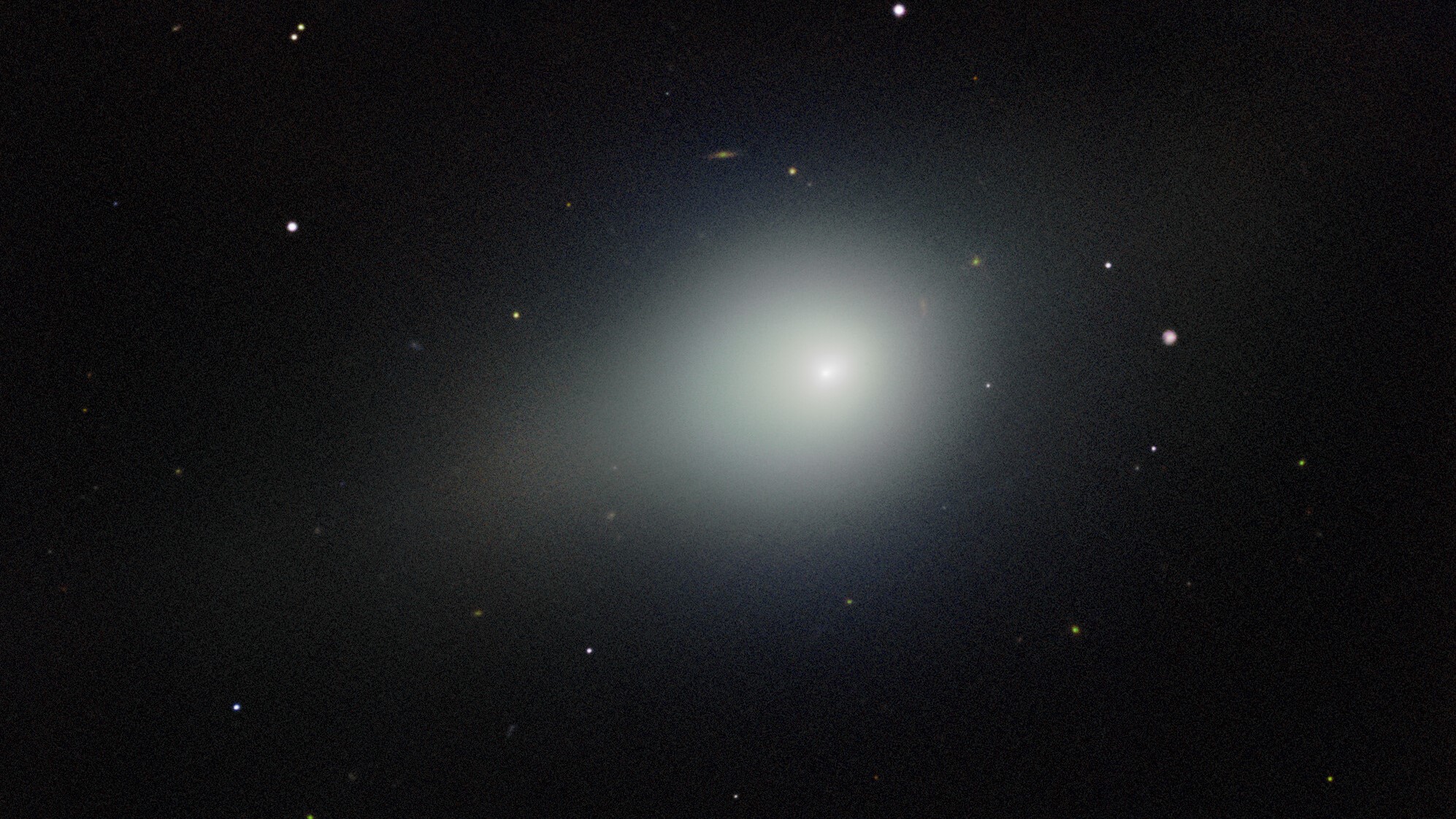
Comet C/2025 R3 (PanSTARRS), discovered in September 2025, is set for close approaches to the Sun and Earth in April 2026. While predictions vary, it might become bright enough for naked-eye visibility, potentially earning the informal title of 'Great Comet' for the year.
Comet C/2025 R3 (PanSTARRS) was discovered on September 8, 2025.
It will reach perihelion (closest to Sun) on April 20, 2026.
Closest approach to Earth is on April 27, 2026.
Brightness predictions range from binocular-only to naked-eye visibility.
Its 'Great Comet' status is uncertain due to cometary unpredictability.
Forward scattering effect could enhance its visibility.
Comet C/2025 R3 (PanSTARRS), discovered on September 8, 2025, by the Panoramic Survey Telescope and Rapid Response System in Hawaii, is generating excitement among astronomers and skywatchers for its potential to become the 'Great Comet' of 2026. The long-period comet, believed to originate from the Oort Cloud, is slated for two significant close approaches in April 2026. It will first reach its perihelion, or closest point to the Sun, on April 20, at a distance of approximately 47.4 million miles (76.3 million kilometers), positioning it between the orbits of Mercury and Venus. A week later, on April 27, the comet will make its closest approach to Earth, passing within about 44 million miles (70.8 million kilometers).
The question of whether C/2025 R3 will indeed be a 'great comet'—a term for exceptionally bright comets easily visible to the naked eye—remains a subject of scientific observation and prediction. While some forecasts suggest it could reach a magnitude of 8, requiring binoculars or a small telescope for observation, other models are more optimistic, predicting a brightness of magnitude 2.5 to 3, which would make it visible to the unaided eye under dark skies. However, the intrinsic brightness of comets is notoriously unpredictable, making definitive pronouncements challenging. A phenomenon known as 'forward scattering,' where the comet passes almost directly between Earth and the Sun, could potentially boost its apparent brightness by reflecting more sunlight towards observers. Observers in the Northern Hemisphere may have the best viewing opportunities in the predawn sky in late April, while those in the Southern Hemisphere might catch it after sunset in early May.
The ongoing observations aim to refine these predictions, as C/2025 R3 continues its journey towards the inner solar system, making it a highly anticipated astronomical event for 2026.
Read the full story on Quick Digest