Pakistan's AI Disinformation Against India Over Iran Navy Ship Sinking Exposed
Pakistan launched a coordinated disinformation campaign against India after a US strike sank Iran's IRIS Dena frigate. The campaign falsely accused India of betraying Iran by leaking the ship's location, using deepfake videos and Pakistani social media networks, which Indian authorities quickly exposed.
Key Highlights
- US submarine sank Iran's IRIS Dena frigate off Sri Lanka's coast on March 4, 2026.
- IRIS Dena was returning from Indian-hosted naval exercises when attacked.
- Pakistan launched disinformation campaign accusing India of betraying Iran.
- #IndiaBetraysIran hashtag pushed false claims using AI-generated deepfakes.
- Indian fact-checkers debunked the propaganda as Pakistani-origin.
- Incident highlights ongoing India-Pakistan information warfare.
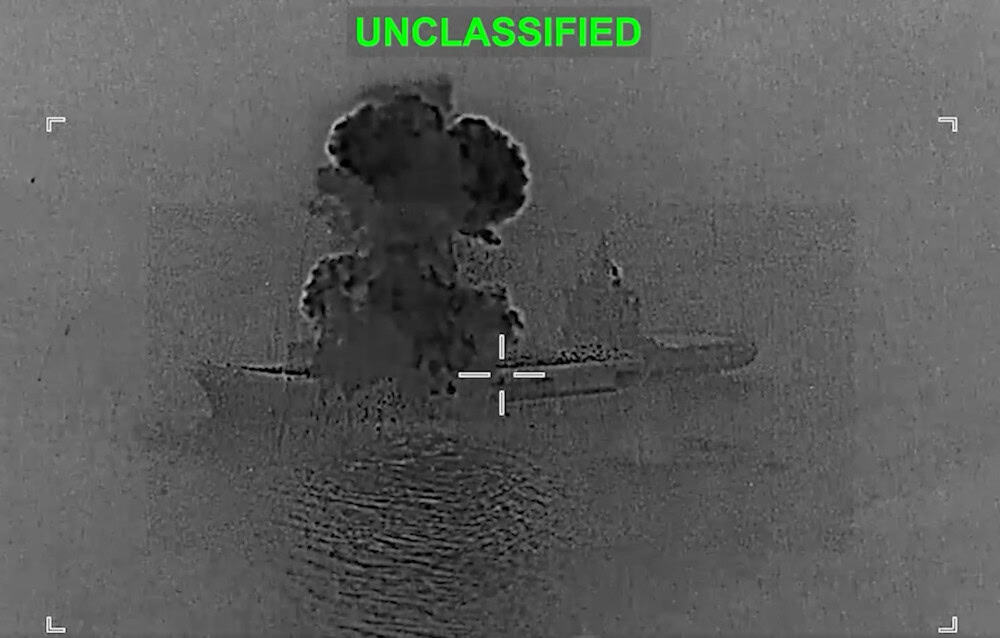
On March 4, 2026, the Iranian Navy frigate IRIS Dena was torpedoed and sunk by the United States Navy's Los Angeles-class submarine USS Charlotte in international waters off the southern coast of Sri Lanka. The incident, which occurred approximately 19-20 nautical miles off Galle, resulted in significant casualties, with at least 87 Iranian sailors reportedly killed, 61 missing, and 32 rescued by the Sri Lankan Navy. The IRIS Dena, a Moudge-class frigate, was returning to Iran after participating in the International Fleet Review 2026 and the MILAN 2026 multinational naval exercise, both hosted by India in Visakhapatnam.
US Defense Secretary Pete Hegseth confirmed the strike, emphasizing that Iranian vessels were not safe even in international waters. The United States Indo-Pacific Command also refuted Iranian claims that the Dena was unarmed at the time of the attack. Iran vehemently condemned the strike, labeling it an 'atrocity at sea' and expressing concerns about the potential for the US-Iran conflict to expand beyond the Middle East.
In the immediate aftermath of the sinking, a sophisticated and coordinated disinformation campaign, primarily originating from Pakistan-based networks, swiftly emerged across social media platforms. The campaign actively promoted the hashtag #IndiaBetraysIran, spreading false allegations that India had provided sensitive intelligence, specifically the coordinates or location data of the IRIS Dena, to the United States or Israel, thereby enabling the submarine attack. The propagation of these false claims was significantly amplified through the use of an AI-generated deepfake video. This manipulated footage deceptively showed India's Army Chief General Upendra Dwivedi making fabricated statements about India's alleged involvement in leaking the ship's location. Open-source intelligence (OSINT) analyses by Indian groups and threat intelligence platforms traced the origin of this campaign to a March 4 post by a social media account named @TacticalTribun, an entity noted for frequent username changes, suggesting malicious intent.
The disinformation narrative gained traction through manual amplification, with approximately 40% of the active users and networks identified in spreading the content being traced back to Pakistan. However, Indian authorities, including the Press Information Bureau (PIB) Fact Check unit, promptly debunked these allegations. They publicly flagged the viral clip as a deepfake and a coordinated propaganda effort originating from Pakistan, describing the claims as 'false and baseless' and designed to mislead the public. Indian officials highlighted that the campaign was a 'Type II targeted disinformation operation' aimed at undermining India's international credibility, particularly among Muslim-majority countries and Global South audiences, and straining India-Iran relations.
India's official stance reiterated its neutrality regarding the US-Iran conflict and emphasized maritime safety. Authoritative sources confirmed that the IRIS Dena had not sought any assistance from India after the declaration of war, and was operating in international waters at the time of the attack, having departed from Indian territory days earlier. The sinking of the IRIS Dena and the subsequent disinformation campaign have also spurred discussions within India regarding its aspiration to be a 'Net Security Provider' in the Indian Ocean Region, highlighting the complex geopolitical challenges and information warfare dynamics in the maritime domain. This incident further underscores a broader pattern of information warfare between India and Pakistan, where advanced tools like AI-generated content and manipulated visuals are frequently employed to disseminate anti-India narratives during periods of heightened geopolitical tension.
Frequently Asked Questions
What was the IRIS Dena incident?
The IRIS Dena incident refers to the sinking of the Iranian Navy frigate IRIS Dena by a US Navy submarine, the USS Charlotte, in international waters off the coast of Sri Lanka on March 4, 2026.
Why was India implicated in the IRIS Dena sinking by Pakistan?
Pakistan launched a disinformation campaign, primarily on social media, falsely accusing India of betraying Iran by sharing the IRIS Dena's location data with the United States or Israel, which allegedly enabled the attack.
How did Pakistan's disinformation campaign against India get exposed?
The campaign was exposed by Indian OSINT groups and fact-checking units like the PIB Fact Check, which identified the use of AI-generated deepfake videos and traced the origin of the false narrative to Pakistan-based networks.
What was the significance of IRIS Dena's presence near India?
The IRIS Dena had recently participated in the International Fleet Review and MILAN 2026 naval exercises hosted by the Indian Navy in Visakhapatnam, highlighting India's role in regional maritime engagements before the attack occurred as it was returning home.
What is the broader context of this disinformation campaign?
This incident is part of a larger pattern of information warfare between India and Pakistan, where both sides, particularly Pakistan in this case, use digital platforms and advanced tools like AI to spread propaganda and influence perceptions during geopolitical tensions.