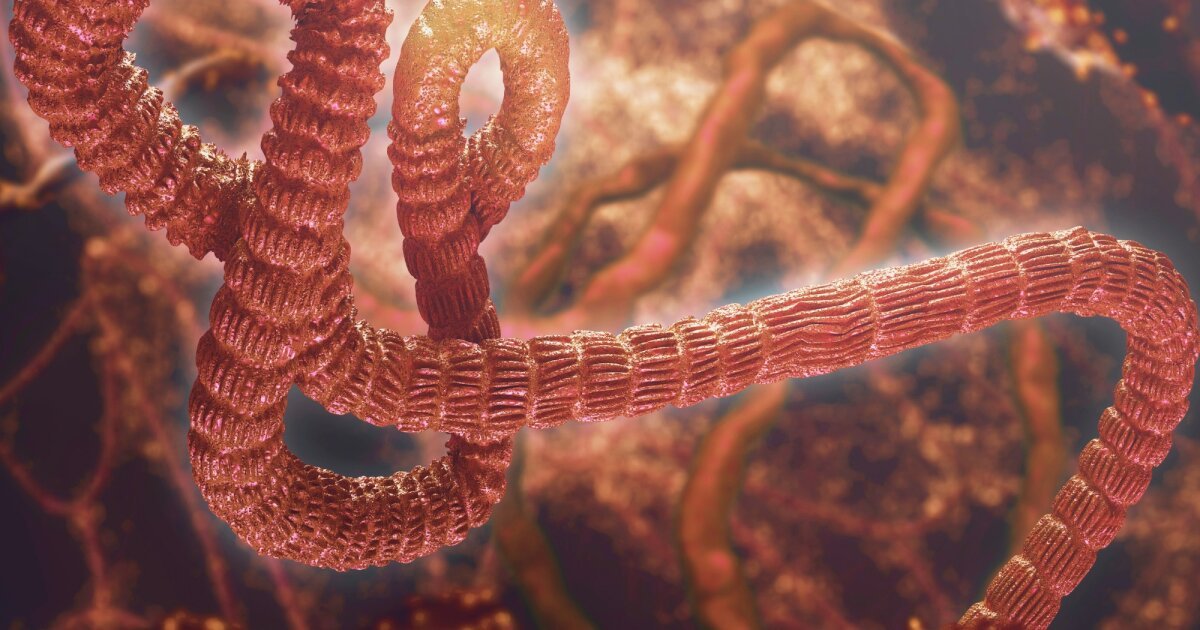
Ebola Bundibugyo Outbreak: New Vaccines, Treatments Under Development
An urgent global effort is underway to develop vaccines and treatments for a new Ebola outbreak of the Bundibugyo strain in DRC and Uganda. While existing vaccines target the Zaire strain, promising candidates for Bundibugyo are entering trials, with emergency funding accelerating the research amidst challenging security conditions.
Key Highlights
- Bundibugyo Ebola outbreak declared in DRC and Uganda in May 2026.
- No approved vaccines or treatments specifically for Bundibugyo strain exist currently.
- Three vaccine candidates for Bundibugyo are receiving emergency funding.
- IAVI, Oxford/Serum Institute of India, and Moderna are developing vaccines.
- Monoclonal antibodies and antivirals are prioritized as potential treatments.
- Security challenges in affected regions hinder clinical trial efforts.
An active outbreak of Ebola virus disease caused by the Bundibugyo strain (BDBV) was officially declared in the Democratic Republic of Congo (DRC) and Uganda in May 2026. This outbreak has triggered an urgent global 'race' to develop specific vaccines and treatments, as currently there are no licensed therapeutics or vaccines specifically approved for the prevention and treatment of this particular Bundibugyo virus species.
The Guardian article, published on June 4, 2026, highlights the immediate response to this crisis, detailing the efforts of scientists and researchers to find rapid solutions.
**Current Outbreak and Challenges:**
The World Health Organization (WHO) declared a public health emergency of international concern on May 17, 2026, due to the Bundibugyo outbreak affecting DRC and Uganda. As of late May 2026, the DRC reported 282 confirmed Bundibugyo virus cases and 42 deaths, primarily in Ituri, North Kivu, and South Kivu provinces, while Uganda reported 11 confirmed cases in Kampala. The outbreak is occurring in a complex environment characterized by a humanitarian crisis, remote and densely populated areas, ongoing insecurity, and significant population movement, all of which complicate response efforts and clinical trials. A critical four-week detection gap between the presumed index case and laboratory confirmation also suggests a low clinical index of suspicion among healthcare providers, exacerbated by co-circulating arboviruses and influenza-like illnesses that mask initial Ebola symptoms.
**Vaccine Development for Bundibugyo:**
While two vaccines, Ervebo® (rVSV-ZEBOV) and Zabdeno®/Mvabea® (Ad26.ZEBOV and MVA-BN-Filo), are prequalified by WHO and approved by regulatory bodies like the FDA for the more common Zaire ebolavirus species, they are not licensed for Bundibugyo virus. Limited evidence exists regarding their cross-protection against Bundibugyo, leading WHO to recommend that Ervebo® only be used in carefully designed research settings for this outbreak.
In response to the Bundibugyo specific challenge, the Coalition for Epidemic Preparedness Innovations (CEPI) has awarded $60 million in emergency funding to three vaccine developers. Key candidates include:
* **IAVI's rVSV Bundibugyo vaccine:** Considered the "most promising candidate vaccine" by the WHO, this single-dose vaccine uses similar technology to Ervebo. The WHO anticipates it will take seven to nine months before doses are ready for clinical trials.
* **Oxford University and Serum Institute of India's ChAdOx1 Bundibugyo vaccine:** This candidate could potentially be available faster, with trials within two to three months, although additional animal data is required to support its prioritization. Experts suggest a single-dose version for contacts and a two-dose strategy for high-risk, unexposed groups.
* **Moderna vaccine:** The Guardian article mentions Moderna as a developer, indicating their involvement in the ongoing vaccine race.
**Treatment Development for Bundibugyo:**
For the Zaire ebolavirus, two monoclonal antibody treatments, Inmazeb™ (atoltivimab-maftivimab-odesivimab) and Ebanga™ (ansuvimab), are FDA-approved and have shown to improve survival, especially with early administration. These treatments use laboratory-made antibodies to help the immune system target the virus. However, these existing treatments are not assumed to be effective against the Bundibugyo strain.
WHO advisory groups have prioritized several candidate therapeutics for evaluation in clinical trials for Bundibugyo virus disease. These include:
* **Monoclonal antibodies:** MBP134 and Maftivimab are being considered, mimicking the effects of the immune system.
* **Antiviral drugs:** Remdesivir, approved for COVID-19 treatment, has shown mixed results for Ebola but hints at potential benefits if administered early. Another antiviral, obdeldesivir, is being tested as a prevention drug, potentially offering up to 100% protection in animal studies.
Experts stress that all identified products for Bundibugyo should be used exclusively within clinical trials to generate robust data and ensure safe, ethical, and effective research.
**Relevance to India:**
While Ebola outbreaks are typically confined to Africa, the development of vaccines and treatments has global health implications. The involvement of the Serum Institute of India in developing the Oxford vaccine candidate demonstrates India's contribution to global health security and epidemic preparedness. For an Indian audience, this story is important as it highlights international scientific collaboration, the continuous threat of emerging infectious diseases, and the role India plays in addressing global health crises, reinforcing the need for robust research and development infrastructure globally, including in India.
Frequently Asked Questions
What is the current Ebola outbreak about?
The current Ebola outbreak, declared in May 2026, is caused by the Bundibugyo virus (BDBV) species and is affecting the Democratic Republic of Congo (DRC) and Uganda.
Are there approved vaccines or treatments for the Bundibugyo Ebola strain?
No, there are currently no licensed vaccines or specific treatments approved for the Bundibugyo Ebola virus strain. Existing approved vaccines and treatments, like Ervebo® and Inmazeb™, target the Zaire ebolavirus.
What vaccines and treatments are being developed for Bundibugyo Ebola?
Several candidates are in development for Bundibugyo Ebola. Vaccine candidates include the IAVI rVSV Bundibugyo vaccine, the Oxford University/Serum Institute of India ChAdOx1 Bundibugyo vaccine, and a Moderna candidate. Potential treatments being prioritized for trials include monoclonal antibodies (MBP134, Maftivimab) and antivirals (remdesivir, obdeldesivir).
How long will it take for new Bundibugyo Ebola vaccines to be ready?
The WHO estimates that the most promising vaccine candidate, IAVI's rVSV Bundibugyo vaccine, could take seven to nine months before doses are ready for clinical trials. The Oxford/Serum Institute candidate might be ready for trials within two to three months, but requires further animal data.
How is India involved in combating the Bundibugyo Ebola outbreak?
India, through the Serum Institute of India, is collaborating with Oxford University on the development of the ChAdOx1 Bundibugyo vaccine candidate, which is among the prioritized vaccines for this outbreak.