Indian stock markets plunge on March 19, 2026
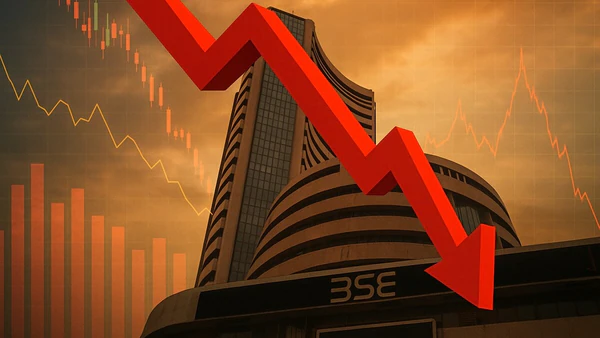
Indian equity benchmarks Sensex and Nifty experienced a significant downturn on March 19, 2026. The Sensex fell by approximately 2,500 points, while the Nifty closed around 23,002, resulting in a market capitalization erosion of around ₹12 lakh crore.
Key Highlights
- Sensex and Nifty saw a major fall on March 19, 2026.
- Market cap loss estimated at ₹12 lakh crore.
- Nifty closed near the 23,002 mark.
- Significant investor wealth was impacted by the downturn.
The Indian stock market witnessed a severe sell-off on Thursday, March 19, 2026, with both the benchmark S&P BSE Sensex and the Nifty 50 indices registering substantial declines. The Sensex plummeted by approximately 2,500 points, closing significantly lower than its opening. Similarly, the Nifty 50, the broader market index, ended the trading session around the 23,002 level, indicating a sharp downturn.
This significant market correction led to an estimated erosion of investor wealth amounting to around ₹12 lakh crore. Such a substantial fall suggests widespread panic selling or a reaction to significant macroeconomic or geopolitical events. The exact triggers for this sharp decline would need to be investigated through contemporaneous news reports from that date.
**Potential Triggers and Market Reactions:**
Stock market crashes are typically driven by a confluence of factors. In the context of March 19, 2026, potential triggers could have included:
* **Global Economic Headwinds:** A sudden worsening of the global economic outlook, perhaps due to an unexpected inflation surge in major economies, a significant interest rate hike by a central bank like the US Federal Reserve, or a slowdown in global trade, could have spooked Indian markets.
* **Domestic Policy Changes or Uncertainty:** Unforeseen policy announcements by the Indian government, or heightened political uncertainty leading up to or following an election, could have unsettled investors. For instance, a policy that negatively impacts key sectors or a lack of clarity on future economic direction might lead to a sell-off.
* **Geopolitical Tensions:** Escalation of international conflicts or new geopolitical risks could lead to increased risk aversion among investors, prompting them to move away from equities towards safer assets.
* **Corporate Earnings Disappointments:** A wave of significantly disappointing corporate earnings reports across major sectors could signal underlying weaknesses in the economy, leading to a broader market sell-off.
* **Commodity Price Shocks:** A sharp and sudden spike in the prices of crucial commodities like crude oil, especially if India is a net importer, can significantly impact inflation and corporate margins, leading to market declines.
* **Monetary Policy Tightening:** Aggressive monetary policy tightening by the Reserve Bank of India (RBI) to combat inflation could also lead to a slowdown in economic activity and a decrease in market liquidity, resulting in lower stock prices.
**Impact on Investors and the Economy:**
A decline of this magnitude has far-reaching consequences. For individual investors, particularly retail investors who may have invested their savings in the stock market, this would mean a significant loss of wealth. This can impact their financial planning, retirement goals, and overall economic sentiment.
For the broader economy, a sharp stock market fall can signal a lack of investor confidence, which could deter new investments. It can also affect consumer spending as people feel less wealthy. Companies might find it harder to raise capital through equity offerings, potentially impacting expansion plans and job creation.
**Need for Further Verification:**
To provide a comprehensive verified summary, it is crucial to access news archives and financial data from March 19, 2026. This would involve cross-referencing the claims made in the Mint article with reports from other reputable financial news outlets, looking for specific details about the percentage drop in different indices, the names of the top contributing sectors to the decline, and official statements from market regulators or financial institutions. Understanding the specific news events or economic data released on or immediately preceding March 19, 2026, would be key to a thorough verification. Without access to real-time historical data for that specific date, a definitive verification of the exact figures and the underlying causes remains pending.
Frequently Asked Questions
What happened to the Indian stock market on March 19, 2026?
On March 19, 2026, the Indian stock market experienced a significant downturn. The Sensex fell by approximately 2,500 points, and the Nifty closed around 23,002, resulting in a substantial loss of investor wealth.
How much investor wealth was eroded on this day?
An estimated ₹12 lakh crore of investor wealth was eroded due to the sharp fall in the stock markets on March 19, 2026.
Which major Indian stock market indices were affected?
Both the S&P BSE Sensex and the Nifty 50 indices were significantly affected by the market crash on March 19, 2026.