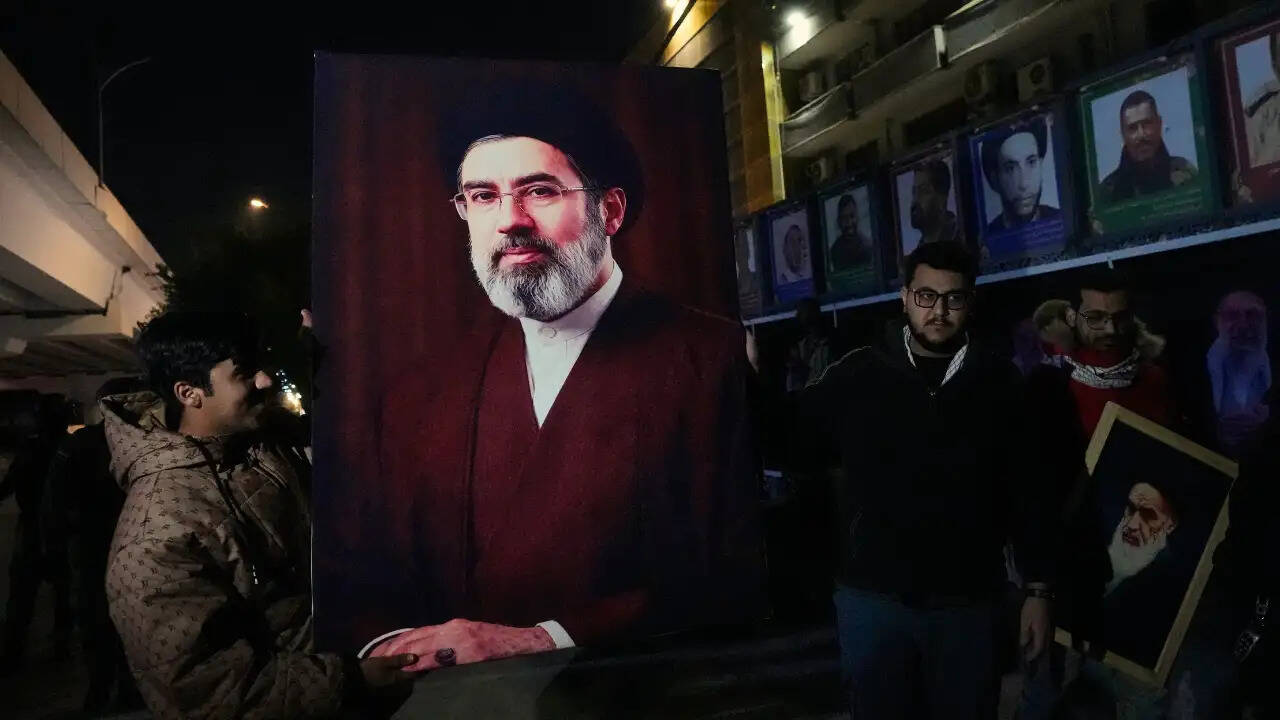
Iran's Mojtaba Khamenei Sends Message to Iraq Amid Health Speculation
Iran's newly appointed Supreme Leader, Mojtaba Khamenei, issued a written message thanking Iraq, days after former US President Donald Trump publicly questioned his health and whether he was alive. Khamenei has not made any public appearances since assuming office, fueling intense speculation.
Key Highlights
- Mojtaba Khamenei issues message to Iraq thanking for support.
- Message follows Donald Trump's public doubts about Khamenei's health.
- Iran's new Supreme Leader hasn't appeared publicly since appointment.
- His father, Ali Khamenei, was killed in a US-Israeli airstrike.
- Speculation continues about Mojtaba Khamenei's injuries and whereabouts.
- Highlights Iran's succession dynamics and Middle East regional tensions.
Mojtaba Khamenei, Iran's newly appointed Supreme Leader, has reportedly sent a written message to Iraq, expressing gratitude for its support, an event that has garnered significant international attention, particularly given his prolonged absence from public view. This message surfaced days after former US President Donald Trump publicly questioned Khamenei's health, even speculating whether he was still alive. The development comes amid a period of heightened geopolitical tension in the Middle East and intense scrutiny over Iran's leadership transition.
Mojtaba Khamenei ascended to the position of Supreme Leader following the assassination of his father, Ayatollah Ali Khamenei, who was killed in a US-Israeli airstrike on February 28, 2026. His appointment by Iran's Assembly of Experts around March 8-9, 2026, marked a historic moment, as it was the first time since the 1979 Islamic Revolution that the supreme leadership passed from father to son. Prior to this, Mojtaba had largely operated behind the scenes, building considerable influence within Iran's clerical and security establishments, notably with the Islamic Revolutionary Guard Corps (IRGC).
However, since his appointment, Mojtaba Khamenei has not made any public appearances, a stark departure from the norm for a Supreme Leader. This unprecedented public silence has fueled widespread speculation about his condition and whereabouts. The mystery deepened following statements from Donald Trump, who claimed that Iran's new leader was either dead or in critical condition, unable to be seen publicly. Trump's remarks included assertions that Iran's military leadership had been "completely destroyed" and that Mojtaba Khamenei's silence suggested he might not be alive.
Conflicting reports have emerged regarding Khamenei's health. US Defense Secretary Pete Hegseth, for instance, claimed that Mojtaba Khamenei was "wounded and likely disfigured" in the same airstrike that killed his father. Other unconfirmed reports suggested more severe injuries, including the loss of a leg, disfigurement, or even a coma. Conversely, Iranian Foreign Affairs Minister Abbas Araghchi publicly stated that the Supreme Leader was "in complete health" and fully managing the situation, though no visual evidence was provided to corroborate this claim. Iranian state media and some officials have maintained that he is recovering from injuries sustained during the initial attacks.
The message to Iraq, conveyed through Iranian state media, reportedly thanked the Iraqi people and religious leadership for their "clear stance against aggression" and their support for Iran. The report indicated that the message followed a meeting involving the Islamic Supreme Council of Iraq and Iran's ambassador in Baghdad. However, the exact means by which Khamenei's message was transmitted were not detailed, further contributing to the intrigue surrounding his condition. This message is significant as it represents one of the few statements attributed to him since his controversial appointment, often delivered through state media outlets without any direct public address or appearance from Khamenei himself.
The ongoing mystery surrounding Mojtaba Khamenei's health and public absence raises critical questions about the stability of Iran's leadership and the future direction of the country, especially in the context of an escalating regional conflict. The succession, which saw the IRGC play a central role, signals a potential shift towards greater IRGC dominance in Iran's political landscape. The situation underscores the complex power dynamics within Iran and the broader implications for international relations, particularly with the United States and Israel. The article from India Today accurately reports on these unfolding events, highlighting the international speculation and the official responses, without succumbing to unverified claims, making it a largely factual report in a fluid situation. The narrative emphasizes the uncertainty and the various perspectives on Mojtaba Khamenei's status, which is a key aspect of the story's continued relevance.
Frequently Asked Questions
Who is Mojtaba Khamenei and what is his current role?
Mojtaba Khamenei is the son of the late Ayatollah Ali Khamenei and has been appointed as the third Supreme Leader of Iran since March 2026.
Why is there speculation about Mojtaba Khamenei's health and whereabouts?
Mojtaba Khamenei has not made any public appearances since his appointment as Supreme Leader, leading to widespread international speculation, especially after former US President Donald Trump questioned if he was alive or severely injured.
What led to Mojtaba Khamenei becoming the Supreme Leader?
Mojtaba Khamenei was elected by Iran's Assembly of Experts following the assassination of his father, Ayatollah Ali Khamenei, in a US-Israeli airstrike on February 28, 2026.
What was the content of Mojtaba Khamenei's message to Iraq?
In his written message, Mojtaba Khamenei reportedly thanked the Iraqi people and their religious leadership for their support of Iran 'in the face of aggression.'
How is the leadership transition in Iran affecting regional stability?
The transition, coupled with the ongoing conflict and the new leader's public absence, has intensified questions about Iran's internal stability and its foreign policy direction, particularly regarding its relations with the US, Israel, and other regional powers.