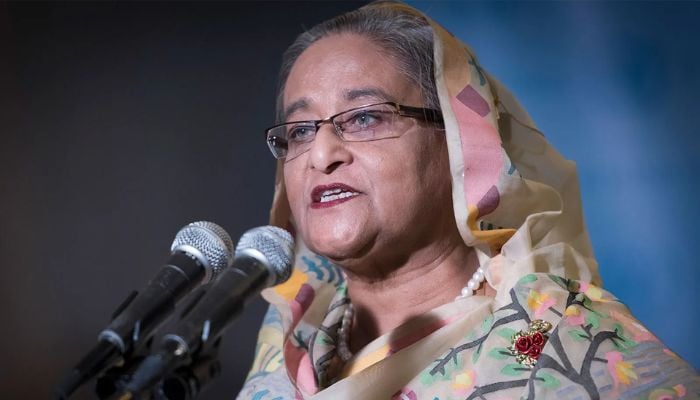
Sheikh Hasina Plans December Return to Bangladesh Amidst Death Sentence
Ousted Bangladeshi Prime Minister Sheikh Hasina, currently in exile in India, plans to return to Bangladesh around December with party colleagues to surrender to face legal proceedings. She faces a death sentence and other convictions, maintaining the charges are politically motivated. The Bangladesh government is actively seeking her extradition.
Key Highlights
- Sheikh Hasina, ousted PM, plans December return to Bangladesh.
- She intends to surrender with Awami League colleagues despite death sentence.
- Hasina fled Bangladesh in August 2024 following mass student protests.
- Bangladesh's ICT sentenced her to death in absentia in Nov 2025 for crimes against humanity.
- She also faces multiple corruption convictions and the Awami League is banned.
- Bangladesh government is pursuing her extradition from India.
Former Bangladeshi Prime Minister and Awami League chief, Sheikh Hasina, has declared her intention to return to Bangladesh from her exile in India around December, along with senior members of her now-banned party, to surrender to authorities. This significant announcement was made in an interview with Reuters, where Hasina stated her readiness to face potential arrest or even death upon her return, aiming to expose what she describes as politically motivated legal proceedings against her.
Hasina, aged 78, fled Bangladesh on August 5, 2024, following weeks of widespread student-led protests that escalated into a nationwide uprising against her government. These protests, initially sparked by the reinstatement of a civil service job quota system, quickly morphed into a broader anti-government movement. The subsequent crackdown by her government reportedly led to the deaths of hundreds of protesters.
After her resignation and departure, an interim government led by Nobel laureate Muhammad Yunus took power. In November 2025, Bangladesh's International Crimes Tribunal (ICT) convicted Hasina in absentia on charges of crimes against humanity, sentencing her to death. These charges were related to her alleged role in ordering lethal force against protesters during the 2024 uprising. Hasina has vehemently denied these charges, labeling the tribunal as 'rigged' and the proceedings as 'politically motivated.'
Beyond the death sentence, Hasina also faces multiple corruption convictions. In November 2025, a Bangladeshi court sentenced her to 21 years in jail across three corruption cases concerning irregularities in land allocations within a government housing project. Additionally, in February 2026, she received a 10-year rigorous imprisonment sentence in two other corruption cases related to land allocations. Her party, the Awami League, which she has led since 1981, was officially banned by the interim government in 2025.
The current government in Bangladesh, led by Prime Minister Tarique Rahman since February 2026, has been actively pursuing Hasina's extradition from India. State Minister for Foreign Affairs Shama Obaed Islam stated in July 2026 that diplomatic efforts are ongoing to bring Hasina back to Bangladesh to face trial, emphasizing that the people of Bangladesh want her to return and justice to be served. India, where Hasina sought refuge, has been examining Bangladesh's extradition requests, indicating a commitment to engaging constructively with the new Bangladeshi government and strengthening bilateral ties.
Hasina's decision to return and surrender is a high-stakes move that could further intensify the political climate in Bangladesh, which has been volatile since her ousting. Her intention is to use the court proceedings to highlight what she perceives as the 'farcical' nature of the legal system under the current administration. This development holds significant implications for the future of democracy and political stability in Bangladesh, a nation strategically important to India. Her return and subsequent trial would test the judicial independence and political landscape of the country, potentially influencing regional dynamics.
Frequently Asked Questions
Why is Sheikh Hasina planning to return to Bangladesh and surrender?
Sheikh Hasina plans to return to Bangladesh around December 2026 to surrender to authorities, despite facing a death sentence and other convictions. She aims to use the legal proceedings to expose what she alleges are politically motivated and 'farcical' charges against her.
What charges does Sheikh Hasina face in Bangladesh?
Sheikh Hasina faces a death sentence handed down in absentia by Bangladesh's International Crimes Tribunal in November 2025 for crimes against humanity, specifically related to the deadly crackdown on student protests in 2024. She also faces multiple jail sentences from corruption cases, including a 21-year term and a 10-year term.
When and why was Sheikh Hasina ousted from power?
Sheikh Hasina was ousted from power on August 5, 2024, when she resigned and fled to India following massive student-led protests. These demonstrations began over a civil service job quota system and escalated into a nationwide uprising against her government.
What is the Bangladesh government's stance on her return?
The current Bangladeshi government, led by Prime Minister Tarique Rahman, is actively seeking Sheikh Hasina's extradition from India. State Minister for Foreign Affairs Shama Obaed Islam confirmed that diplomatic efforts are ongoing to bring her back to face justice.
How does this situation impact India-Bangladesh relations?
The situation impacts India-Bangladesh relations significantly, as Hasina is in exile in India and Bangladesh has repeatedly urged India for her extradition. While India examines these requests, the outcome of her return could either further strain or potentially improve ties depending on how the situation unfolds and is managed diplomatically.