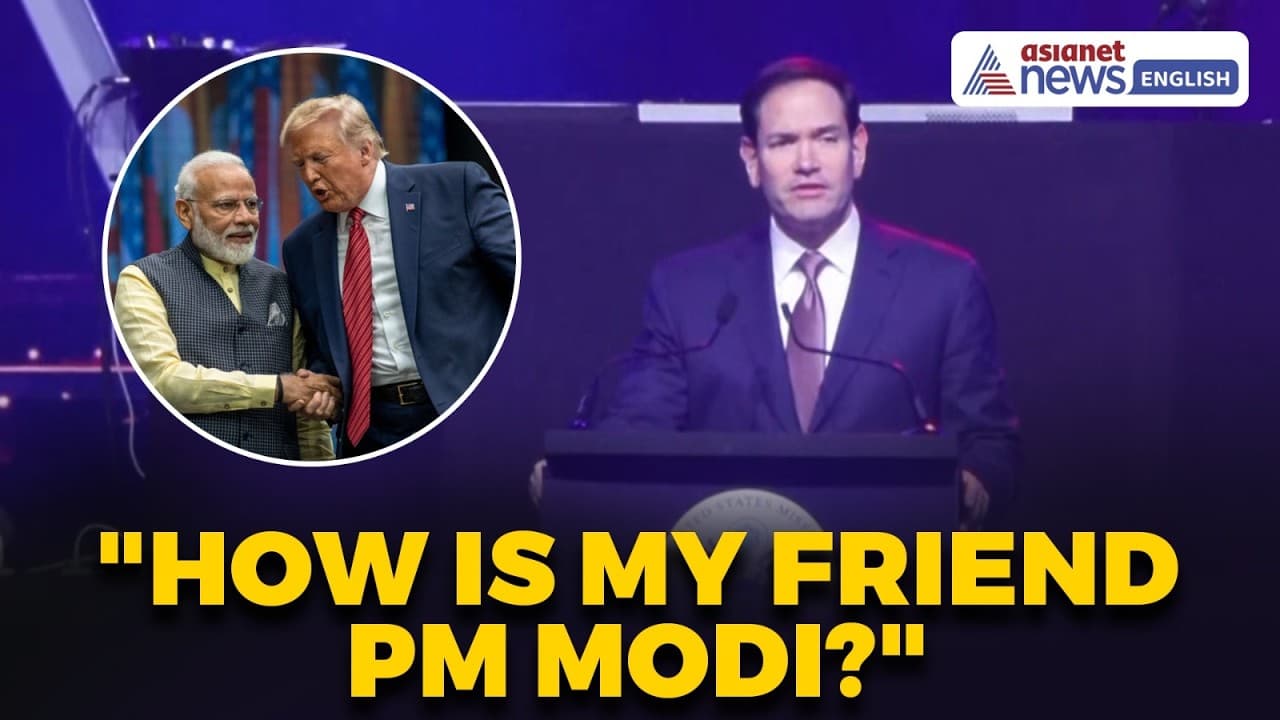
US-Iran Deal Nears: Rubio Cites 'Solid Framework' as Markets React
US Secretary of State Marco Rubio indicated a potential breakthrough in US-Iran negotiations, suggesting a 'solid framework' for a deal could be announced soon. The news boosted global markets, with oil prices falling and stocks rising. However, President Trump cautioned that a deal is not fully negotiated.
Key Highlights
- US-Iran deal progress reported by Secretary of State Marco Rubio.
- Global markets showed positive reaction to potential US-Iran agreement.
- President Trump emphasizes caution, stating deal is not yet finalized.
- Strait of Hormuz reopening and nuclear talks are key aspects.
- Negotiations are ongoing, with potential for an announcement 'maybe today'.
- India played a diplomatic role in the ongoing discussions.
In a significant development that sent ripples through global financial markets, U.S. Secretary of State Marco Rubio expressed cautious optimism about a potential deal with Iran, stating that a "solid framework" could be announced as early as May 25, 2026. Speaking to reporters in New Delhi, India, where he was on a diplomatic visit, Rubio indicated that while progress has been made, the finalization of an agreement is dependent on Iran's response. The news fueled a surge in global stock markets, with major indices in Europe and Asia experiencing notable gains. Concurrently, oil prices saw a significant drop, with Brent crude futures falling by nearly 6% to around $97 a barrel, reflecting market expectations of a de-escalation of tensions and the potential reopening of the Strait of Hormuz. President Donald Trump, however, tempered the burgeoning optimism by emphasizing that a deal is "not even fully negotiated yet" and that he would not sign a "bad deal." He reiterated his stance that the U.S. would either secure a "great and meaningful" agreement or walk away from negotiations entirely. The potential agreement, according to various reports, centers on a 60-day ceasefire extension, the phased reopening of the Strait of Hormuz, and a commitment to negotiate Iran's nuclear program. While a senior administration official confirmed a "framework" exists, no agreement has been formally signed, and its binding nature remains unclear. A diplomat familiar with the matter indicated that the proposal awaits Iran's approval. Key elements of the proposed framework include Iran reaffirming its commitment to never develop nuclear weapons, and the disposal of its enriched uranium stockpile. In exchange, the U.S. would begin to release frozen Iranian assets, and the U.S. naval blockade on Iranian ports would be lifted. The opening of the Strait of Hormuz is envisioned to be phased, with minesweeping operations commencing. Iran's official stance, as reported by its state media, is that while progress has been made on many points, the signing of a deal is not imminent. Iran stressed that the current proposal does not include immediate concessions on its nuclear program, but rather a pledge to negotiate the issue later. There are also differing perspectives on the control and reopening of the Strait of Hormuz, with Iran asserting that any mechanism concerning the waterway should be agreed upon by Iran, Oman, and bordering countries, with the U.S. having no role. The ongoing negotiations highlight the complex geopolitical dynamics at play, with both sides aiming to secure favorable terms. The article also touches upon the broader context of the Iran war, which began on February 28, 2026, and the ensuing global energy crisis. The involvement of India as a diplomatic venue underscores its growing role in international conflict resolution. Despite the optimistic market reactions, the ultimate success of these negotiations hinges on the ability of both the U.S. and Iran to bridge their remaining differences and arrive at a mutually acceptable agreement. The situation remains fluid, with further developments anticipated.
Frequently Asked Questions
What did US Secretary of State Marco Rubio say about a potential US-Iran deal?
Marco Rubio expressed cautious optimism, stating that a 'solid framework' for a deal could be announced soon, possibly 'maybe today,' and that there had been significant progress in negotiations.
How did global markets react to the news of potential US-Iran negotiations?
Global stock markets rose, and oil prices dropped significantly, indicating market optimism about a de-escalation of tensions and the potential reopening of the Strait of Hormuz.
Did President Trump confirm an imminent deal with Iran?
President Trump cautioned that a deal was not fully negotiated yet and reiterated that he would only sign a 'great and meaningful' agreement, or no deal at all.
What are the key elements of the potential US-Iran agreement?
The proposed framework includes a 60-day ceasefire, the phased reopening of the Strait of Hormuz, and commitments to negotiate Iran's nuclear program, alongside potential releases of frozen assets and lifting of sanctions.
What is Iran's perspective on the ongoing negotiations?
Iran has acknowledged progress but stated that a deal is not imminent, emphasizing that the current proposal focuses on ending the war and reopening maritime trade, with nuclear talks to be negotiated later. They also have differing views on the management of the Strait of Hormuz.