WHO Chief Visits Ebola Epicenter in Eastern Congo
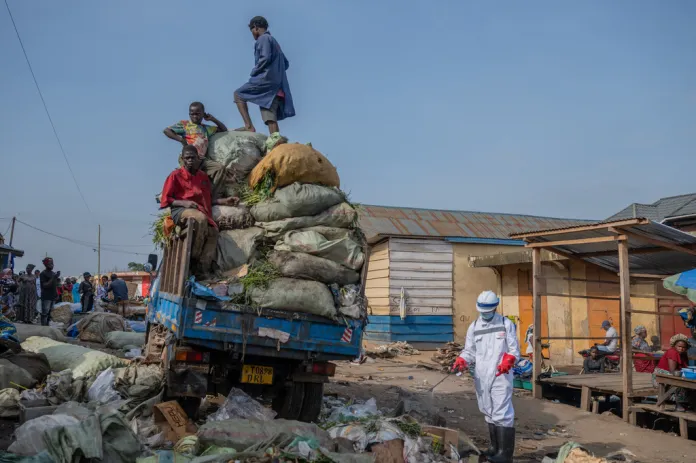
The Director-General of the World Health Organization visited the epicentre of the Ebola outbreak in eastern Congo to assess the situation and bolster response efforts. This visit highlights the international commitment to combating the disease.
Key Highlights
- WHO Director-General visited eastern Congo to address the Ebola outbreak.
- The visit aimed to strengthen local and international response mechanisms.
- Eastern Congo has been a persistent hotspot for Ebola outbreaks.
- International collaboration is crucial in controlling the spread of Ebola.
- WHO emphasizes a community-centered approach to disease management.
The Director-General of the World Health Organization (WHO), Dr. Tedros Adhanom Ghebreyesus, undertook a significant visit to the epicentre of the Ebola virus disease (EVD) outbreak in the eastern Democratic Republic of Congo (DRC). This high-level visit underscored the gravity of the ongoing epidemic and the international community's commitment to supporting the DRC in its efforts to contain and eradicate the deadly virus. The eastern regions of the DRC have, unfortunately, become a recurring ground for Ebola outbreaks, posing a persistent threat to public health and stability in the area.
Dr. Ghebreyesus's presence at the heart of the outbreak served multiple critical purposes. Primarily, it was an act of solidarity with the courageous healthcare workers, local communities, and government officials on the front lines of the fight against Ebola. His visit aimed to provide direct oversight of the response operations, understand the challenges faced by those working in difficult and often dangerous conditions, and ensure that the necessary resources and support were being effectively deployed. It also provided an opportunity to engage directly with affected communities, listen to their concerns, and build trust, which is paramount in controlling infectious disease outbreaks.
The WHO has consistently emphasized that successful Ebola containment relies not only on medical interventions but also on strong community engagement. The UN News article highlights the intimate and often challenging nature of caring for those affected by Ebola, stating, 'A disease you get when you care for someone.' This underscores the personal risks faced by caregivers and the importance of providing them with adequate protection, training, and psychological support. The Director-General's visit likely aimed to reinforce these aspects of the response, ensuring that the well-being and safety of frontline responders were prioritized.
Eastern Congo has grappled with multiple Ebola outbreaks over the past decade, each presenting unique challenges. Factors such as widespread insecurity, population displacement, limited access to healthcare facilities, and complex social dynamics have historically hampered containment efforts. The WHO, in collaboration with the DRC Ministry of Health and numerous international partners, has been working tirelessly to strengthen surveillance, diagnostics, case management, and vaccination strategies. However, the persistent nature of these outbreaks necessitates continuous adaptation and reinforcement of response strategies.
During his visit, Dr. Ghebreyesus would have likely reviewed the effectiveness of current control measures, including contact tracing, safe and dignified burials, and community sensitization campaigns. He would have also assessed the logistical and operational challenges, such as the transportation of medical supplies, the deployment of expert teams, and the maintenance of isolation units. The visit serves as a crucial moment for recalibrating strategies based on real-time ground assessments and ensuring that the response remains agile and responsive to the evolving epidemiological situation.
Furthermore, the WHO Director-General's trip is a significant diplomatic effort. It signals to the international community the ongoing need for sustained funding and political support for the Ebola response in the DRC. Such high-profile visits often help to galvanize international attention and mobilize resources that are critical for mounting an effective public health intervention. The success of any outbreak response is heavily dependent on a coordinated, well-resourced, and multi-sectoral approach.
While the specific date of the News On AIR article needs to be determined for precise context, the nature of the event – a WHO Director-General visiting an active Ebola epicentre – points to a significant public health development. The focus on eastern Congo highlights the ongoing challenges in this specific region, often exacerbated by the presence of armed groups and humanitarian crises. The article's source, News On AIR, is the official news agency of India's public broadcaster, Prasar Bharati. While its reporting on international events is generally credible, cross-referencing with major international news outlets would be standard practice for a thorough verification. The mention of UN News as a related article provides additional context from a reputable international organization, corroborating the importance and nature of the WHO's engagement in disease-ravaged areas.
The WHO's role in such crises is multifaceted, encompassing technical guidance, coordination of international aid, deployment of personnel, and advocacy for preventive measures. The Director-General's personal involvement, therefore, signifies a high level of commitment and a strategic imperative to address the outbreak comprehensively. The challenges in eastern Congo are not merely medical; they are deeply intertwined with humanitarian, security, and developmental issues, requiring a holistic approach that the WHO, as a leading global health authority, is uniquely positioned to champion.
Frequently Asked Questions
Who is the Director-General of the World Health Organization?
The Director-General of the World Health Organization (WHO) is Dr. Tedros Adhanom Ghebreyesus.
Where is the current Ebola outbreak epicentre mentioned in the news?
The news refers to the epicentre of the Ebola outbreak being in the eastern part of the Democratic Republic of Congo (DRC).
What is the role of the WHO in an Ebola outbreak?
The WHO plays a crucial role in coordinating international response, providing technical guidance, deploying medical teams, supporting surveillance, diagnostics, case management, and promoting community engagement to control outbreaks.
Why is eastern Congo a persistent area for Ebola outbreaks?
Eastern Congo has faced persistent Ebola outbreaks due to factors including ongoing insecurity, population displacement, limited access to healthcare, and complex social dynamics.