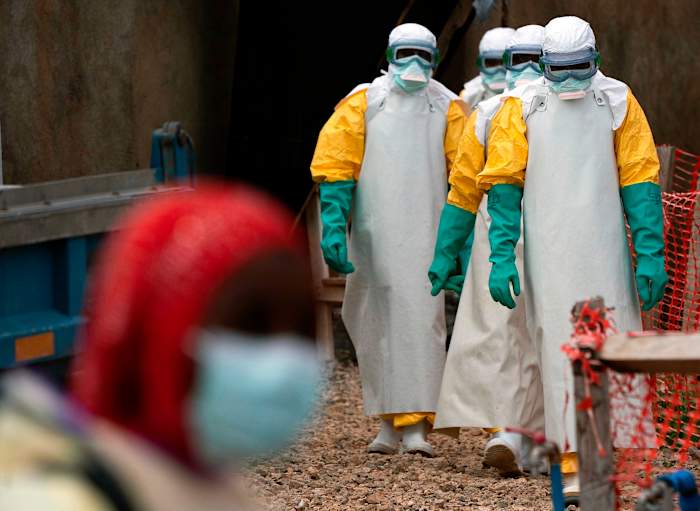
WHO declares Ebola (Bundibugyo strain) outbreak in DRC and Uganda a global health emergency
The World Health Organization (WHO) has declared the Ebola outbreak caused by the Bundibugyo strain in the Democratic Republic of the Congo (DRC) and Uganda a Public Health Emergency of International Concern (PHEIC). This designation highlights the extraordinary nature of the outbreak, the risk of international spread, and the need for coordinated global response. Notably, there are no approved vaccines or treatments for this specific strain of Ebola.
Key Highlights
- WHO declared Ebola (Bundibugyo strain) outbreak a global health emergency.
- The outbreak affects the Democratic Republic of the Congo and Uganda.
- No approved vaccines or treatments exist for the Bundibugyo strain.
- The declaration emphasizes international spread risk and the need for coordination.
- The move by WHO is a high-level alert for infectious disease threats.
The World Health Organization (WHO) has officially declared the ongoing Ebola outbreak, specifically caused by the Bundibugyo strain of the virus, in the Democratic Republic of the Congo (DRC) and Uganda as a Public Health Emergency of International Concern (PHEIC). This significant declaration, made on Sunday, May 17, 2026, marks the highest level of alert that the WHO can issue for an infectious disease threat. The decision was announced by WHO Director-General Tedros Adhanom Ghebreyesus and followed a meeting of independent experts, the Emergency Committee, who advised on the severity and international implications of the outbreak.
The PHEIC designation signifies that the outbreak is considered extraordinary, poses a substantial risk of international spread to other countries, and necessitates a coordinated global response. As of May 16, 2026, the outbreak in the DRC's Ituri Province had reported eight laboratory-confirmed cases, 246 suspected cases, and 80 suspected deaths. Uganda had also confirmed two cases, including one fatality, linked to individuals who had traveled from the DRC.
A key factor contributing to the concern and the rapid declaration is the specific strain of the virus involved: the Bundibugyo strain. This is a rare variant of Ebola, and crucially, there are currently no approved vaccines or specific treatments available for it. Previous outbreaks of the Bundibugyo virus were recorded in 2007 in Uganda and in 2012 in the DRC, but this current situation is considered particularly alarming due to its characteristics and spread.
The WHO's decision was also influenced by several concerning factors, including a high positivity rate among tested samples, the spread of the virus to urban centers like Kinshasa (DRC's capital) and Kampala (Uganda's capital), and clusters of unexplained deaths, suggesting community transmission that is difficult to track. The involvement of at least four healthcare workers who succumbed to the disease also heightened concerns regarding infection prevention and control measures within health facilities.
The WHO has stressed that while the situation is serious, it does not currently meet the criteria for a pandemic emergency, such as that seen with COVID-19. Consequently, the organization is advising against the imposition of international travel or trade restrictions, emphasizing that such measures can be counterproductive and harm affected communities. Instead, the WHO urges countries to strengthen surveillance, preparedness, and community engagement efforts.
The declaration of a PHEIC is a critical step in mobilizing international attention, political will, financial resources, and technical support to combat the outbreak effectively. It serves as a call to action for the global community to assist the DRC and Uganda in their response efforts, which include scaling up surveillance, enhancing contact tracing, improving laboratory testing, and strengthening healthcare capacity.
This declaration is notable for its speed. In past Ebola outbreaks, the PHEIC designation often followed months of deliberation and a more advanced stage of the epidemic. For instance, the 2014 West Africa Ebola epidemic was declared a PHEIC eight months after its onset, and the 2018-2020 DRC outbreak was declared a PHEIC nearly a year into its course. The swiftness of the current declaration underscores the WHO's assessment of the immediate and significant threat posed by this specific Bundibugyo Ebola outbreak.
While the PHEIC designation itself does not automatically provide additional funding, it acts as a powerful signal to the international community to provide the necessary resources. The response will require substantial financial and technical assistance, as highlighted by the release of $500,000 from the WHO's contingency fund for emergencies and the dispatch of medical supplies to the DRC.
The relevance of this story to an Indian audience, while indirect, lies in the global nature of public health emergencies. Pandemics and major disease outbreaks, regardless of their origin, can have ripple effects on international travel, trade, and global health security. India, as a major player in global health and a densely populated nation, has a vested interest in the effective containment of infectious disease outbreaks worldwide. Preparedness, information sharing, and international cooperation are crucial for mitigating risks to all nations, including India. The lessons learned from such outbreaks contribute to global strategies for preventing and responding to future health crises.
Frequently Asked Questions
What is a Public Health Emergency of International Concern (PHEIC)?
A PHEIC is the highest level of alert that the World Health Organization (WHO) can declare for an infectious disease outbreak. It signifies that the event is extraordinary, constitutes a public health risk to other countries through the international spread of disease, and requires a coordinated international response.
Why is the Bundibugyo strain of Ebola particularly concerning?
The Bundibugyo strain is concerning because it is a rare variant of the Ebola virus for which there are currently no approved vaccines or specific treatments available. This lack of direct medical countermeasures makes containment and treatment more challenging.
What are the implications of the WHO's PHEIC declaration for international travel and trade?
While the declaration highlights the risk of international spread, the WHO advises against imposing travel or trade restrictions. Instead, the focus is on strengthening surveillance, preparedness, and community engagement in affected and at-risk countries.
How does this Ebola outbreak compare to previous ones?
This declaration is notable for its speed. Previous PHEIC declarations for Ebola outbreaks often took months to be issued, whereas this one was declared just two days after the outbreak was confirmed, indicating a higher perceived urgency by the WHO.